

 SkillClick
Website Ranking Tracker to Monitor Your SEO Performance
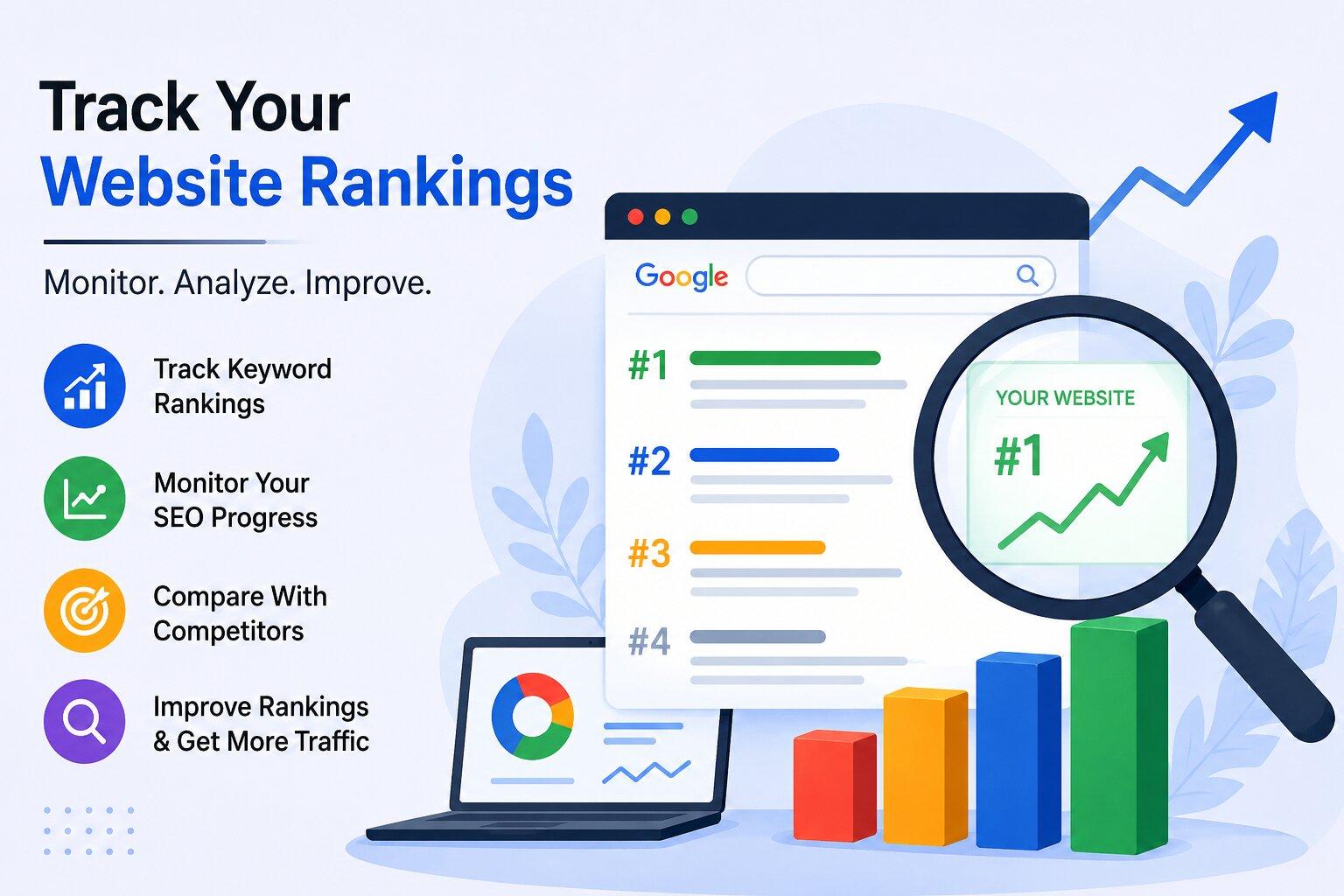
Tracking your website's search performance is an important part of SEO. After optimizing pages, creating content, and improving your website, you need to understand whether those efforts are helping your visibility in search results. A website ranking tracker can help you monitor how your important keywords and pages perform over time.
Checking rankings manually for every keyword can be difficult, especially when your website targets multiple search terms. A ranking tracker makes the process easier by helping you review keyword positions and identify changes in search visibility.
What Is a Website Ranking Tracker?
A website ranking tracker is a tool used to monitor where a website or web page appears in search results for specific keywords.
It can help you track information such as:
- Current keyword positions
- Ranking improvements or declines
- Historical ranking changes
- Keywords gaining visibility
- Pages ranking for important terms
- Competitor performance
- Search performance trends
The purpose of ranking tracking is not simply to focus on reaching the number one position. It helps you understand whether your SEO strategy is moving in the right direction and which pages may need further attention.
Why Is Website Ranking Tracking Important?
SEO results can change over time. A page may improve after content optimization, while another page may lose visibility because competitors have published stronger or more relevant content.
Using a website ranking tracker can help you identify these changes earlier.
For example, if an important keyword moves from position 25 to position 12, your page may be gaining visibility. This could indicate that recent content, technical, or internal linking improvements are having a positive effect.
On the other hand, a consistent ranking decline may be a reason to review:
- Search intent
- Content quality
- Page freshness
- Technical SEO issues
- Internal links
- Competitor content
- Changes in the search results
Ranking data gives you a clearer starting point for further analysis.
How to Use a Website Ranking Tracker
1. Choose Important Keywords
Start by tracking keywords that are relevant to your business, content, products, or services.
Avoid tracking hundreds of unrelated keywords just to collect more data. Focus on search terms that have a genuine connection to your SEO goals.
You can include:
- Primary keywords
- Long-tail keywords
- Service-related keywords
- Informational search queries
- Location-based keywords where relevant
A focused keyword list makes ranking data easier to understand.
2. Monitor Ranking Changes Over Time
Daily ranking changes do not always mean something is wrong. Search results can fluctuate because of competition, search personalization, location, and other factors.
Instead of reacting to every small change, look for meaningful trends over time.
For example, if a keyword gradually improves over several weeks, that trend may be more useful than a temporary one-position change.
3. Identify Your Best-Performing Pages
A website ranking tracker can help you understand which pages are gaining search visibility.
If one blog or landing page performs well for multiple relevant keywords, review what may be contributing to its performance.
Consider:
- Content depth
- Search intent match
- Internal links
- Backlinks
- Page updates
- Topic relevance
These insights can help you improve other important pages on your website.
4. Find Keywords That Are Close to Page One
Keywords ranking just outside the first page may represent useful optimization opportunities.
For example, a page ranking between positions 11 and 20 may benefit from a closer review of its content, search intent, internal linking, and overall topic coverage.
Before making changes, compare the page with the current search results. Look at what users are being shown and identify whether important information is missing from your content.
5. Compare Your Rankings With Competitors
Ranking data becomes more useful when combined with competitor analysis.
If competitors consistently rank above your website, review their pages to understand:
- What search intent they satisfy
- How their content is structured
- What topics they cover
- Whether their information is more current
- How they support the page with internal links and backlinks
The goal is not to copy competitor content. Use competitor research to identify gaps and create a better resource for users.
Common Mistakes to Avoid
Tracking Too Many Unimportant Keywords
Focus on keywords connected to your actual SEO goals.
Checking Rankings Without Taking Action
Ranking data is most useful when it leads to meaningful analysis and improvements.
Reacting to Every Small Fluctuation
Look for long-term trends instead of making major changes after every minor ranking movement.
Ignoring Search Intent
A page may be technically optimized but still struggle if it does not match what users are searching for.
Frequently Asked Questions
What is a website ranking tracker?
A website ranking tracker is a tool that helps monitor keyword positions and search visibility for a website over time.
How often should I check website rankings?
Regular monitoring is useful, but focus on meaningful trends rather than reacting to every small daily fluctuation.
Can a website ranking tracker improve SEO?
A ranking tracker does not directly improve SEO. It provides data that can help you identify opportunities and measure the impact of your optimization efforts.
Why are my keyword rankings changing?
Rankings can change because of competitor activity, content updates, search result changes, technical issues, and normal search fluctuations.
Final Thoughts
A website ranking tracker helps you monitor keyword performance and understand how your website's search visibility changes over time. By tracking important keywords, identifying ranking trends, reviewing high-performing pages, and finding optimization opportunities, you can make more informed SEO decisions.
The most valuable ranking data is data that leads to action. Combine keyword tracking with content analysis, technical SEO, competitor research, and regular updates to build a stronger long-term SEO strategy.
- Managerial Effectiveness!
- Future and Predictions
- Motivatinal / Inspiring
- Fitness and Wellness
- Medical & Health
- Manufacturing
- Ausbildung
- Real-Estate
- Food Industry
- Hospitality
- Online Games
- Sports
- Home Services
- Civil Engineering
- Safety and Protection
- Software Products & Services
- Fashion and Jewellery
- Artificial Intelligence
- Entrepreneurship
- Mentoring & Guidance
- Marketing
- Networking
- HR & Recruiting
- Literature
- Shopping
- Career Management & Advancement