

 SkillClick
HVLP vs. Airless Paint Sprayer: Which One Should You Buy?
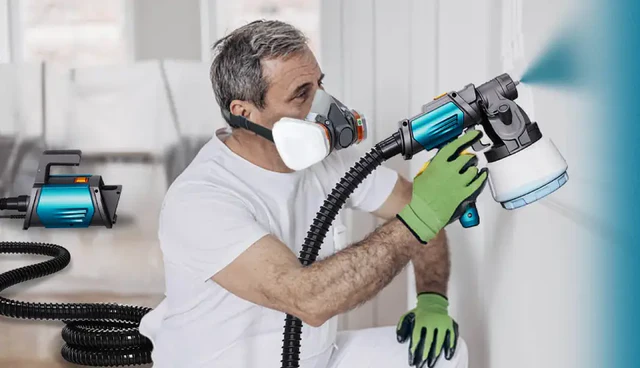
You’ve finally decided to ditch the paintbrush and roller. You’ve seen the smooth, factory-like finishes online, and you’re ready to invest in a sprayer. But as you start browsing, you hit a wall of confusing jargon: HVLP, Airless, turbine, piston pump, overspray, atomization…
It’s enough to make your head spin.
The most common dilemma for DIYers and professionals alike is choosing between HVLP vs Airless paint sprayers. Both tools will get paint onto a surface, but they go about it in fundamentally different ways. Choosing the wrong one for your project can result in ruined furniture, wasted gallons of paint, and a massive cleanup headache.
To help you make the right investment, we’re breaking down the science, the strengths, and the fatal flaws of both systems. By the end of this guide, you will know exactly which machine belongs in your workshop.
What is an HVLP Sprayer? (The “High Volume, Low Pressure” Approach)
HVLP stands for High Volume, Low Pressure. That proclaims the basic mechanics: it uses a turbine or compressor to produce a very high volume of air but vents most of that pressure before the paint leaves the nozzle.
The net result is a very gentle, controlled atomization of paint. The paint isn’t blasted off the tip; it’s drawn out and wrapped in a soft air stream.
-
Pros for HVLP:
- Finish Quality: The low pressure creates a fine, even atomization of paint. This results in minimal “orange peel” texture and excellent flow-out, making it the only choice for fine furniture and cabinetry.
- Transfer Efficiency: Because the pressure is low, there is far less paint bounce-back and overspray. Up to 90% of the paint ends up on your surface, not on the air around it. This saves you messy cleaning and money on paint.
- Control: You have granular control over the fluid flow, which allows for precise work on detailed trim, edges, and interior parts like drawer boxes.
-
Cons for HVLP:
- Speed: The low pressure naturally means the paint moves slower. It takes longer to cover large flat areas like exterior siding or entire walls.
- Thick Paint: It struggles with very low-viscosity materials. Unthinned latex house paint can clog a standard HVLP. You will typically need to thin materials significantly.
What is an Airless Sprayer? (The “High Power, High Pressure” Approach)
An Airless sprayer uses a high-powered plunger pump to push hydraulic pressure directly into the paint. It does not use compressed air to atomize the paint. Instead, it forces the liquid through a tiny, high-pressure hole as it pulls the trigger. The paint literally slams at high speed, creating a mist.
-
Pros for Airless:
- Speed: Airless pumps can move hundreds of gallons per hour. What takes an HVLP all afternoon to do (an accent wall) can be done in 20 minutes with an Airless.
- Viscosity: Because the pump is hydraulic, it can handle extremely thick materials. You can spray un-thinned acrylic latex exclusively meant for exterior use, masonry slurries, and even heavy primers.
- Real Estate: It’s the undisputed king of walls, ceilings, fences, and large surfaces.
-
Cons for Airless:
- Overspray: The high pressure creates a dramatic cloud of paint fog. A surprising amount of paint gets lost to the air, requiring you to cover everything in the room with plastic, including floors, windows, and fixtures.
- Less Control: The spray pattern is massive and high-pressure. Trying to paint a delicate chair leg or a small cabinet door will usually result in a flash flooding of paint due to the sheer volume.
- Heavy: You need to restructure them to the paint bucket or anchor them in a 5-gallon drum, making them heavy to move up stairs.
The Head-to-Head Breakdown
To help you visualize the match-up, let’s compare the two side-by-side across the four categories that matter most to you.
| Feature | HVLP (Electric) | Airless (Electric) |
|---|---|---|
| Best For | Furniture, cabinets, trim, doors, small to medium craft projects. | Walls, ceilings, fences, exterior siding, large add-ons. |
| Finish Quality | Excellent. Ultra-smooth, ‘factory-finish’ quality. | Good. Acceptable for walls with a slight ‘spray’ texture. |
| Overspray | Low. Minimal dust cloud. Safer for indoor garage use. | High. Significant overspray requires heavy drop cloths. |
| Teaming | Variable. Can handle thin stains to medium latex (using necessary nozzle). | High. Can push out the thickest paint without thinning. |
| Learning Curve | Moderate (requires adjusting airflow blend) | Easier for covering wide areas, but harder to control details. |
| Cost | Generally lower upfront cost for a general DIY. | Generally higher upfront cost for a “homeowner” brand. |
When to Choose HVLP (Or When to Choose Airless)
Here is the practical breakdown for DIYers:
Choose an HVLP sprayer if you are spraying:
- Kitchen cabinets or making custom cabinet doors.
- Solid wood furniture (tables, chairs, nightstands).
- Interior doors, moldings, or detailed window trim.
- You are working with paints that need a smooth finish (alkyd, polyurethane, or fine acrylic sprays).
- You are working in an HVAC garage and want to avoid breathing a huge cloud of paint dust in an enclosed space.
Choose an Airless sprayer if you are:
- Painting all the walls and ceilings in a single room or the whole house.
- Refinishing an exterior wood or stucco house.
- Filling in a huge shed fence.
- Working with thick elastomeric paints or heavy masonry primers.
The Gray Area: Why Homeowners Switch to HVLP
Many beginners buy an Airless because they think it is the “strongest” or “most professional” tool. Then they try to paint a bookshelf or a window frame, and they are met with splatter, runs, and the absolute nightmare of cleaning a massive high-pressure machine with a 50-foot hose.
The reality is that for 70% of home DIY projects (not full-house repainting), an electric HVLP is the superior choice. It is lighter, easier to clean, provides a better finish (obviously if you’ll spray furniture), and causes less mess for smaller to medium deck spaces.
Furthermore, most people will paint several thin coats of lacquer or enamel. They will refine and do detail work—all within the HVLP’s wheelhouse.
The Final Recommendation: The Tilswall Electric HVLP Paint Sprayer
If you are on the fence and decide that the HVLP vs Airless Paint Sprayer battle leans toward HVLP for versatility, finish quality, and control, the next step is choosing the right machine.
Look no further than the Tilswall Electric HVLP Paint Sprayer. This gallon is not just a spray gun; it’s a system built to bridge the gap between beginner-friendly and professional-grade.
- Versatility: Included are your choice of nozzle sizes (1.8mm, 2.0mm, 2.5mm), you can handle what an HVLP won’t. Use a thick acrylic latex for a feature wall, and switch down to a 1.8mm nozzle for varnishing a cherry wood desk. The Tilswall system gives you total control over the product management.
- The Finish: Because it is a true HVLP turbine system, you get that buttery, dense finish on every piece of furniture or cabinet. No airless plays the furniture game like this.
- User-Friendly: Would you clear the “Stakes” question again? The Tilswall is plug-and-play. No need for clunky floor pumps or hoses that need flushing; just plug in, adjust the knob, and go.
- Minimal Set-up: The cup is on the gun, meaning you have very little wash-up time.
The Bottom Line
You might choose an Airless for your future if you are planning a full gut-renovation or an entire exterior repaint next month. But for the standard homeowner weekend project—flipping a dining table, updating shabby cabinets, or painting a linen wall—the HVLP paint sprayer will give you a finish you never thought possible.
Don’t settle for a splattered house or a splintered finish. Choose the Tilswall HVLP Paint Sprayer today. It is the definitive, clever, and efficient choice for residential craftsmanship. Go get it and start spraying.
- Managerial Effectiveness!
- Future and Predictions
- Motivatinal / Inspiring
- Fitness and Wellness
- Medical & Health
- Manufacturing
- Ausbildung
- Real-Estate
- Food Industry
- Hospitality
- Online Games
- Sports
- Home Services
- Civil Engineering
- Safety and Protection
- Software Products & Services
- Fashion and Jewellery
- Artificial Intelligence
- Entrepreneurship
- Mentoring & Guidance
- Marketing
- Networking
- HR & Recruiting
- Literature
- Shopping
- Career Management & Advancement