

 SkillClick
Sustainable Packaging Market Growth: Key Forces Reshaping Materials, Design, and Circular Supply Chains
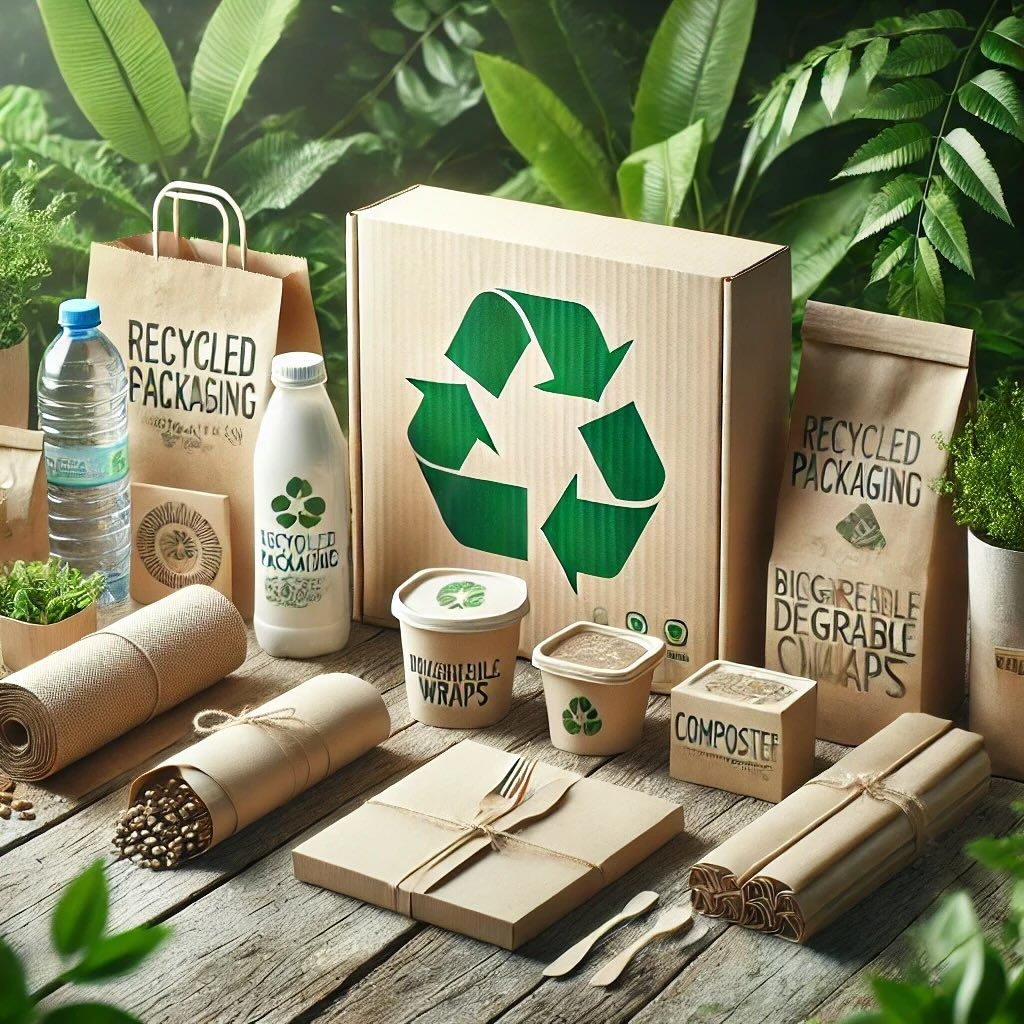
The Sustainable Packaging Market is experiencing a significant transformation as businesses, consumers, retailers, and regulators increasingly prioritize packaging solutions that reduce environmental impact without compromising product protection or commercial performance. Packaging is no longer evaluated solely on durability, appearance, convenience, or cost. Material sourcing, recyclability, reusability, carbon intensity, waste generation, and end-of-life management are becoming important considerations throughout the packaging value chain.
This transition is creating opportunities across paper-based packaging, recycled plastics, compostable materials, bio-based polymers, reusable formats, lightweight structures, and innovative barrier technologies. At the same time, companies are redesigning packaging systems to use fewer materials, improve recyclability, reduce transportation-related emissions, and increase the recovery of valuable materials.
Consumer Demand Is Accelerating Sustainable Packaging Adoption
Changing consumer expectations represent one of the strongest contributors to Sustainable Packaging Market Growth. Shoppers increasingly notice packaging waste and are more willing to consider environmental characteristics when comparing products. Excessive secondary packaging, difficult-to-recycle multilayer structures, and unnecessary plastic components can influence perceptions of a brand.
This shift is particularly visible in food, beverages, personal care, household products, e-commerce, and consumer goods. Brands are responding by replacing conventional formats with recyclable paperboard, recycled-content plastics, molded fiber, refillable containers, and simplified packaging designs.
However, sustainability cannot rely on consumer preference alone. Packaging must still provide moisture resistance, oxygen protection, mechanical strength, shelf-life extension, tamper evidence, and convenient handling. As a result, material innovation is becoming essential for balancing environmental objectives with functional requirements.
Regulatory Pressure Is Changing Packaging Design Decisions
Government policies and extended producer responsibility frameworks are becoming increasingly influential in packaging decisions. Regulations targeting packaging waste, recycled content, recyclability, single-use materials, labeling, and producer responsibility are encouraging companies to reconsider conventional packaging structures.
The impact extends beyond material substitution. Businesses are increasingly examining packaging throughout its lifecycle, from raw-material extraction and manufacturing to transportation, consumer use, collection, sorting, recycling, or disposal.
This is encouraging manufacturers to design packaging that can function effectively within existing waste-management systems. In regions where recycling infrastructure is advanced, packaging may be engineered around established collection and sorting capabilities. In developing markets, companies may prioritize simpler materials and formats that are more compatible with available recovery systems.
Lightweight Packaging Supports Both Sustainability and Cost Efficiency
Lightweighting has emerged as a practical strategy for improving packaging sustainability while potentially lowering manufacturing and logistics expenses. By reducing the amount of material required to protect a product, manufacturers can decrease packaging consumption and improve transportation efficiency.
Lightweight bottles, thinner films, optimized cartons, reduced closures, and redesigned containers can contribute to lower material usage. The effect becomes particularly important for high-volume products, where even small reductions per package can translate into substantial material savings across millions of units.
The relationship between lightweighting and sustainability must nevertheless be carefully managed. Excessive material reduction can increase the risk of product damage, leakage, deformation, or reduced shelf life. Advanced engineering and testing are therefore becoming critical components of sustainable packaging development.
Recycled Materials Are Becoming More Important
The integration of recycled content is another major contributor to Sustainable Packaging Market Growth. Recycled paper, recycled polyethylene terephthalate, recycled polyolefins, and other recovered materials are increasingly being incorporated into packaging applications.
Using recycled material can reduce dependence on virgin resources while supporting circular material flows. It can also create stronger connections between packaging production and recycling infrastructure by generating demand for recovered materials.
One of the major challenges is consistency. Recycled materials can vary in color, purity, mechanical properties, and availability depending on collection and processing systems. Packaging manufacturers therefore require improved sorting technologies, washing processes, quality-control systems, and material purification techniques.
Bio-Based and Compostable Materials Expand the Innovation Pipeline
Bio-based polymers and compostable packaging are receiving attention as alternatives to selected fossil-based packaging materials. These solutions can be produced using renewable biological feedstocks and may offer different environmental characteristics depending on their production process and end-of-life pathway.
Compostable packaging is particularly relevant in applications where packaging is likely to become contaminated with food residues, although its effectiveness depends heavily on appropriate collection and composting infrastructure.
The industry is increasingly moving away from the assumption that one alternative material can replace every conventional packaging format. Instead, material selection is becoming application-specific, with manufacturers evaluating performance, sourcing, processing requirements, environmental impact, and disposal conditions together.
E-Commerce Is Driving Packaging Optimization
The rapid expansion of online commerce is influencing sustainable packaging requirements. Products shipped directly to consumers often require protective packaging capable of surviving multiple handling stages. At the same time, excessive void fill and oversized shipping containers can increase material consumption and transportation inefficiency.
Companies are therefore developing right-sized packaging, recyclable mailers, paper-based protective materials, molded fiber cushioning, and reusable shipping formats. Automated packaging systems are also helping businesses select packaging dimensions more accurately according to product size.
This creates a strong opportunity for packaging suppliers that can combine sustainability with automation, customization, and operational efficiency.
Food Packaging Creates Major Opportunities for Sustainable Solutions
Food packaging remains a particularly important application area because packaging plays a crucial role in preserving freshness and reducing food waste. A sustainable package that significantly reduces material consumption but causes premature spoilage may not deliver the intended environmental benefit.
Consequently, innovation is increasingly focused on high-performance sustainable barriers, coatings, films, trays, and flexible structures. Manufacturers are exploring solutions that maintain oxygen, moisture, aroma, and grease resistance while improving recyclability or reducing dependence on difficult-to-recover materials.
The connection between packaging and food waste will remain central to future industry development. Sustainable packaging strategies are likely to emphasize total environmental impact rather than packaging material alone.
Digital Technologies Improve Packaging Traceability
Digitalization is adding another dimension to sustainable packaging. QR codes, digital product identities, intelligent labeling, and tracking technologies can provide information about packaging materials, recycling instructions, product origin, and disposal pathways.
Better traceability can help manufacturers monitor packaging flows and support more effective collection and recycling systems. Digital information can also reduce confusion among consumers about how particular packaging should be handled after use.
In the longer term, data-driven packaging systems could help companies measure material consumption, recovery rates, reuse cycles, and packaging performance more accurately.
Reusable Packaging Gains Momentum in Selected Applications
Reusable packaging is gaining attention where logistics systems can support collection, cleaning, refilling, and redistribution. Beverage containers, food delivery systems, transport packaging, and selected retail applications offer opportunities for repeated-use models.
The economic and environmental performance of reusable packaging depends heavily on return rates, transportation distances, cleaning requirements, durability, and the number of reuse cycles achieved. A reusable container that is returned and reused many times can potentially provide significant material efficiency advantages, while poorly optimized return systems may reduce those benefits.
Therefore, successful reuse models require coordinated networks rather than simply replacing disposable packaging with durable alternatives.
Packaging Manufacturers Are Investing in Circularity
The competitive landscape is increasingly shaped by companies investing in circular packaging capabilities. Manufacturers are developing recyclable structures, increasing recycled-content integration, improving material efficiency, and establishing partnerships across the packaging ecosystem.
Collaboration between resin producers, converters, packaging manufacturers, brand owners, retailers, recyclers, waste-management companies, and technology providers is becoming increasingly important. Circularity cannot be achieved effectively when each participant optimizes only its own stage of the value chain.
Packaging companies that can demonstrate measurable environmental improvements while maintaining cost and performance are likely to gain stronger commercial opportunities.
Challenges That Could Moderate Market Growth
Despite strong momentum, several barriers remain. Sustainable materials can carry higher costs, especially when production volumes are limited or specialized processing is required. Supply constraints for high-quality recycled feedstocks can also create challenges for large-scale adoption.
Infrastructure is another major issue. A package designed to be recyclable does not automatically become recycled if collection, sorting, processing, and end-market systems are inadequate.
Technical limitations also remain relevant. Some sustainable alternatives may struggle to match the barrier properties, heat resistance, durability, or machinability of established packaging materials in demanding applications.
Addressing these challenges will require investment in recycling infrastructure, material science, manufacturing technology, standardized labeling, and coordinated policy frameworks.
Future Outlook for Sustainable Packaging Growth
The future of Sustainable Packaging Market Growth will increasingly depend on measurable circularity, material efficiency, and application-specific innovation. Companies are moving beyond simple material substitution toward comprehensive packaging redesign.
Future development is likely to involve greater recycled-content usage, improved mono-material structures, advanced fiber-based solutions, smart packaging technologies, refill and reuse systems, lightweight formats, and improved recovery processes. Artificial intelligence and digital manufacturing may further support packaging optimization by helping companies reduce material usage while maintaining required performance.
Ultimately, sustainable packaging is becoming a strategic component of product development rather than an isolated environmental initiative. Businesses that integrate sustainability into packaging design, procurement, manufacturing, logistics, and end-of-life management will be better positioned to respond to changing regulations and customer expectations. As technology improves and circular infrastructure expands, the market is expected to move toward packaging systems that deliver both commercial value and measurable environmental benefits.
- Managerial Effectiveness!
- Future and Predictions
- Motivatinal / Inspiring
- Fitness and Wellness
- Medical & Health
- Manufacturing
- Education
- Real-Estate
- Food Industry
- Hospitality
- Online Games
- Sports
- Home Services
- Civil Engineering
- Safety and Protection
- Software Products & Services
- Fashion and Jewellery
- Artificial Intelligence
- Entrepreneurship
- Mentoring & Guidance
- Marketing
- Networking
- HR & Recruiting
- Literature
- Shopping
- Career Management & Advancement