

 SkillClick
24 Hour Care at Home: A Complete Guide for Families
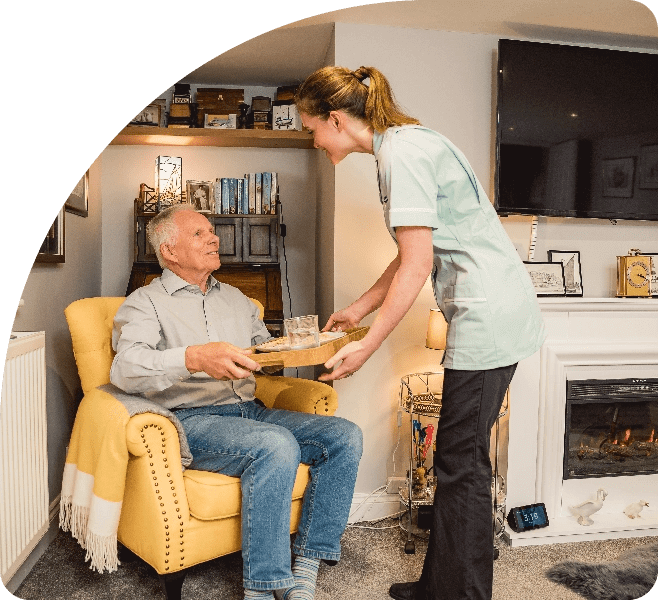
There comes a point for many families when a few short visits a week simply aren't enough anymore. Maybe a parent has had another fall. Maybe meals are being skipped, or medication is being forgotten. When support needs to be constant rather than occasional, most families start looking into round-the-clock support at home as a genuine alternative to moving into residential care.
This guide walks through what it actually involves, who tends to need it, and how to know if it's the right fit.
What This Type of Support Actually Means
At its simplest, this type of care means a trained carer is present in the home around the clock, either living there full-time or working in rotating shifts alongside another carer. Nothing about the home itself changes. Same bedroom, same kitchen, same familiar street outside the window. What changes is that qualified help is always close by, whether that's at midday or three in the morning.
This is different from a short daily visit. A carer popping in for half an hour to help with breakfast is genuinely useful, but it only covers a fraction of the day. Full-time care at home fills every gap in between, so nothing is left to chance.
Who Tends to Need This Level of Support
There's no single type of person who needs round-the-clock care. Some reach this point gradually, as a condition like dementia progresses over months or years. Others need it suddenly, after a stroke or a stay in hospital, when returning home alone isn't safe.
Family members often try to cover this themselves at first, and many manage for a while out of love and loyalty. But caring around the clock is exhausting, and it isn't sustainable indefinitely. Bringing in professional 24 hour care at home isn't a failure on the family's part. It's a way of making sure both the person receiving care and the people around them aren't stretched past what they can reasonably carry.
What a Typical Day Looks Like
Mornings usually begin with help getting washed, dressed, and having breakfast. Through the day, support might include preparing meals, reminders for medication, light housework, or simply company during a quiet afternoon. Evenings bring help settling in for the night, and overnight, a carer remains close by in case anything is needed.
No two care plans look identical. Someone recovering from surgery might need more hands-on help early on, tapering off gradually as strength returns. Someone living with advanced dementia might need a steadier, more constant presence throughout the entire day and night.
How It Compares to a Care Home
The biggest difference is familiarity. Moving into residential care means adjusting to a new building, a new routine, and often, entirely new people, which can be especially unsettling for someone already dealing with confusion or memory loss. Staying at home avoids that disruption completely.
There's also the matter of attention. Care homes, even well-run ones, are shared spaces where staff are responsible for several residents at once. With care delivered in the home, it's usually one carer focused entirely on one person, with routines built around what that individual actually wants rather than a fixed schedule that suits an entire building.
Pets can stay. Family can visit at any hour, not just during set visiting times. Small daily habits, a particular armchair, a set time for tea, don't need to be given up.
What About the Cost?
People often assume that around-the-clock care must cost more than a care home, but that isn't always the case. It depends heavily on the level of support required. For someone who needs consistent supervision rather than nursing-level medical care, staying at home with dedicated support can work out similarly priced, and sometimes less, once everything is properly compared.
The only reliable way to know is through a proper needs assessment carried out in the home itself, rather than relying on rough estimates found online.
Is It the Right Choice for Every Family?
Not always, and that's perfectly normal. Some households find a blended approach works better, daytime visits paired with an on-call arrangement overnight, for example. The right setup depends on budget, the layout of the home, and how much support is genuinely needed day to day.
What matters most is having an honest conversation early, rather than waiting until a crisis forces a rushed decision. A proper assessment, done in person, usually makes the right path far clearer than guesswork ever could.
Getting Started
Greenwood Homecare arranges care assessments directly in the home, so families can see exactly what full-time support would look like before committing to anything. There's no pressure involved, just a clearer picture of what's genuinely possible for your situation.
Choosing 24 hour care at home isn't about giving something up. For most families, it means the opposite: staying independent, remaining in familiar surroundings, and having the right help close by exactly when it's needed most.
- Managerial Effectiveness!
- Future and Predictions
- Motivatinal / Inspiring
- Fitness and Wellness
- Medical & Health
- Manufacturing
- Образование
- Real-Estate
- Food Industry
- Hospitality
- Online Games
- Sports
- Home Services
- Civil Engineering
- Safety and Protection
- Software Products & Services
- Fashion and Jewellery
- Artificial Intelligence
- Entrepreneurship
- Mentoring & Guidance
- Marketing
- Networking
- HR & Recruiting
- Literature
- Shopping
- Career Management & Advancement