

 SkillClick
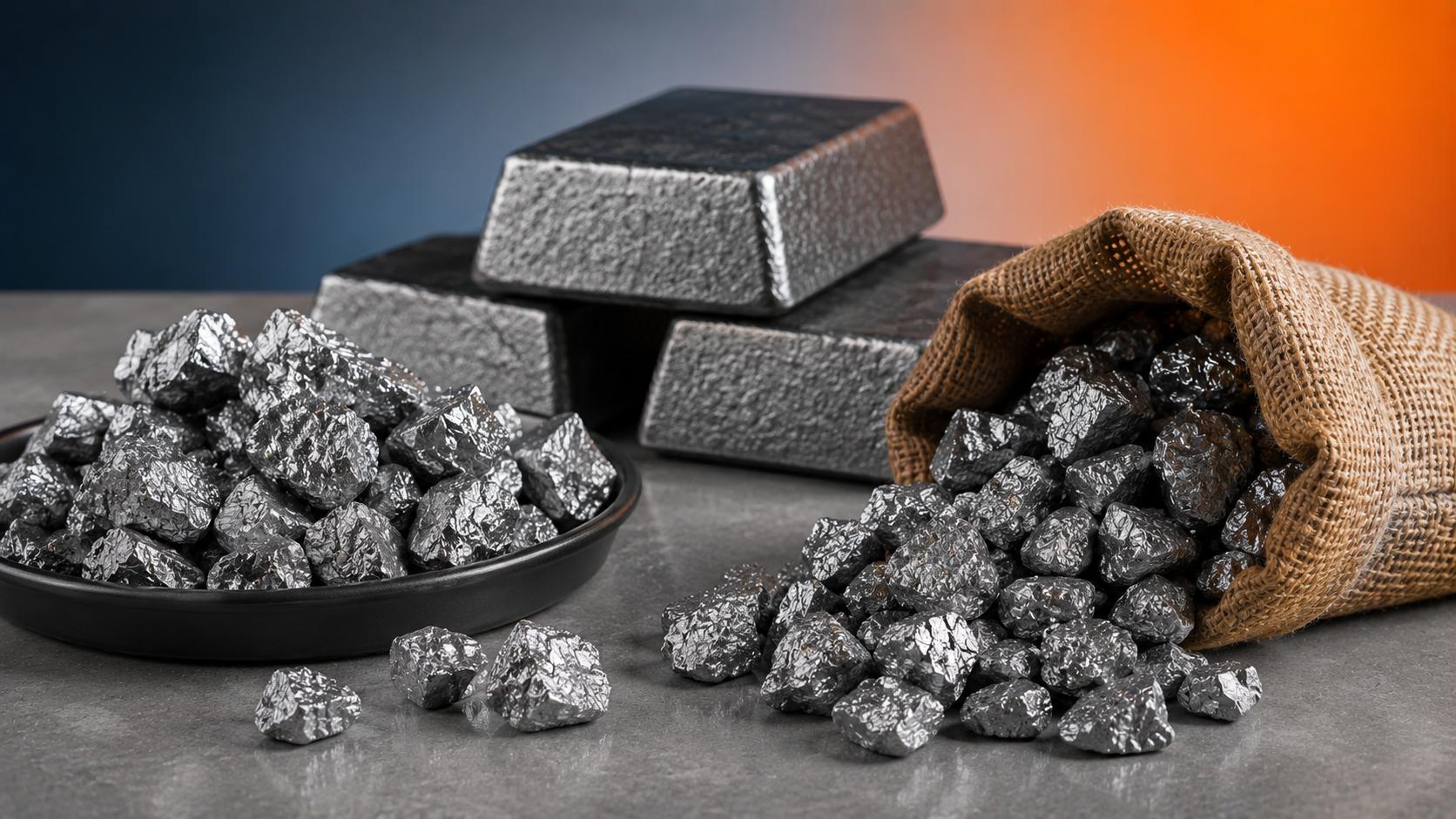
Ferrosilicon Price Trend June 2026: Why China and India Aren't Priced the Same
China's ferrosilicon is going for USD 874.15/MT FOB in June 2026. India's? USD 1,023.40/MT FOB. Same product, same incoterm basis, and still a gap of nearly USD 150 per metric ton. That's the kind of number that makes buyers stop and ask what's actually going on.
Ferrosilicon doesn't get talked about much outside steel circles, but it's a core input for deoxidizing steel and adding silicon during smelting. Every ton of specialty steel, most stainless grades, a lot of cast iron too. It runs through ferrosilicon at some stage. So when the price moves this much between two major producers, steelmakers feel it.
Ferrosilicon Prices: China vs India in June 2026
| Product | Region | Incoterm Basis | Price | Time Period |
|---|---|---|---|---|
| Ferrosilicon | China | FOB | USD 874.15/MT | June 2026 |
| Ferrosilicon | India | FOB | USD 1,023.40/MT | June 2026 |
USD 149.25 apart. Both quoted FOB, so this isn't a freight or insurance story like some regional comparisons turn out to be. FOB means the price is set at the point of loading, before the buyer's shipping costs even enter the picture. That makes this gap a production and market story, not a logistics one.
Quick breakdown:
- Both figures reflect June 2026 pricing, not a rolling average.
- FOB basis strips out destination freight, so the comparison here is closer to apples-to-apples than most cross-border price checks.
- A near 17% premium on India's side is large enough to matter for anyone buying in volume.
What's Behind the Gap
Q: Why is India's ferrosilicon priced so much higher than China's?
A: Mostly power costs. Ferrosilicon production is electricity-hungry, some of the most energy-intensive metallurgy there is. China's smelters, especially in regions like Inner Mongolia and Yunnan, tend to run on cheaper industrial power. India's grid costs for heavy industry run higher in most states, and that gets baked straight into the smelting cost.
Q: Does raw material access play a role too?
A: Yes. Quartz and coal quality vary by region, and China's supply chains for these inputs are more mature, more consolidated, closer to the smelters themselves. Shorter domestic transport, fewer middlemen. India imports more of its metallurgical coal, which adds cost before smelting even starts.
Q: Is demand a factor here as well?
A: China produces at a scale that lets it export competitively even with domestic demand strong. India's steel sector has been expanding fast. Demand at home is soaking up more of the domestic ferrosilicon supply, which tightens things and pushes export pricing up.
Reading the China Side
China dominates global ferrosilicon output. Not a small margin either, a large one. That scale advantage shows up directly in cost. Bigger furnaces, longer production runs, more bargaining power on power contracts and raw materials.
Export policy matters too. China adjusts ferroalloy export taxes and quotas periodically, and buyers who've been in this market a while know to watch for those shifts. A policy change can move pricing faster than any supply-demand fundamental.
Reading the India Side
India's ferrosilicon industry is smaller, more fragmented across regional producers. Power tariffs differ state to state, and that inconsistency shows up in cost structures across different suppliers. Some Indian smelters are competitive globally. Many aren't, not at current energy prices.
Domestic steel output growing fast is part of the story too. India's infrastructure push, its automotive sector, both are consuming more ferroalloys year over year. That domestic pull is a real factor in why less ferrosilicon is available for export at competitive rates.
What Buyers and Investors Should Take From This
Steel producers sourcing ferrosilicon have a real decision here. China's price advantage is significant, but supply chain reliability, contract terms, and shipping timelines still matter as much as the sticker price.
For investors watching ferroalloy markets, India's higher cost base could mean two things. Either margin pressure for Indian producers competing globally, or a signal that capacity expansion and power infrastructure investment could pay off if costs come down over time.
Buyers negotiating contracts right now shouldn't assume this gap holds steady. Ferroalloy pricing swings with power costs and raw material availability, sometimes within a single quarter.
Ferrosilicon Price Trend Outlook
The China-India spread looks likely to persist through the rest of 2026, at least directionally. Power cost differences don't close overnight, and India's domestic steel demand isn't slowing down anytime soon.
What could shift things: Chinese export policy changes, a spike in coal or quartz costs in either country, or a meaningful jump in Indian power tariff reform. Any of those could narrow or widen the gap within a few months.
Buyers locking in supply contracts should check current pricing before signing anything. June 2026 numbers are a snapshot, useful, but not something to build a full year's procurement plan around.
Conclusion
The ferrosilicon price trend for June 2026 puts China at USD 874.15/MT FOB against India's USD 1,023.40/MT FOB, a gap driven mainly by power costs, raw material access, and domestic demand pressure rather than freight or insurance differences. For steelmakers, procurement teams, and investors tracking ferroalloy markets, that spread is worth watching closely heading into the second half of the year.
FAQ Section
What is the ferrosilicon price trend for June 2026?
China's ferrosilicon is priced at USD 874.15/MT FOB, while India's sits at USD 1,023.40/MT FOB. Both quotes use the same incoterm basis, so the roughly USD 149 gap reflects production cost differences rather than freight or shipping variation between the two countries.
Why is ferrosilicon cheaper in China than in India?
Lower industrial power costs are the biggest driver. Ferrosilicon smelting uses huge amounts of electricity, and China's smelters generally access cheaper power than Indian counterparts. More mature raw material supply chains and larger production scale add to the cost advantage.
What is ferrosilicon used for in steelmaking?
Ferrosilicon deoxidizes molten steel and adds silicon during the smelting process. It's used across carbon steel, stainless steel, and cast iron production. Without it, steel would retain excess oxygen, which weakens the final metal and affects how well it can be worked or welded.
How volatile are ferrosilicon prices typically?
Fairly volatile, mostly tied to electricity costs and raw material availability. A spike in coal or quartz prices, or a shift in regional power tariffs, can move ferrosilicon pricing within weeks. Buyers should treat any single monthly price point as a snapshot, not a fixed benchmark.
Should buyers expect the China-India ferrosilicon price gap to close soon?
Not likely in the short term. Power cost differences and India's growing domestic steel demand are structural factors that don't shift quickly. Watch for Chinese export policy changes or Indian power tariff reforms, either could move the spread, but a fast correction isn't the likely scenario.