

 SkillClick
How to Integrate a Crypto Wallet Into a Fintech App
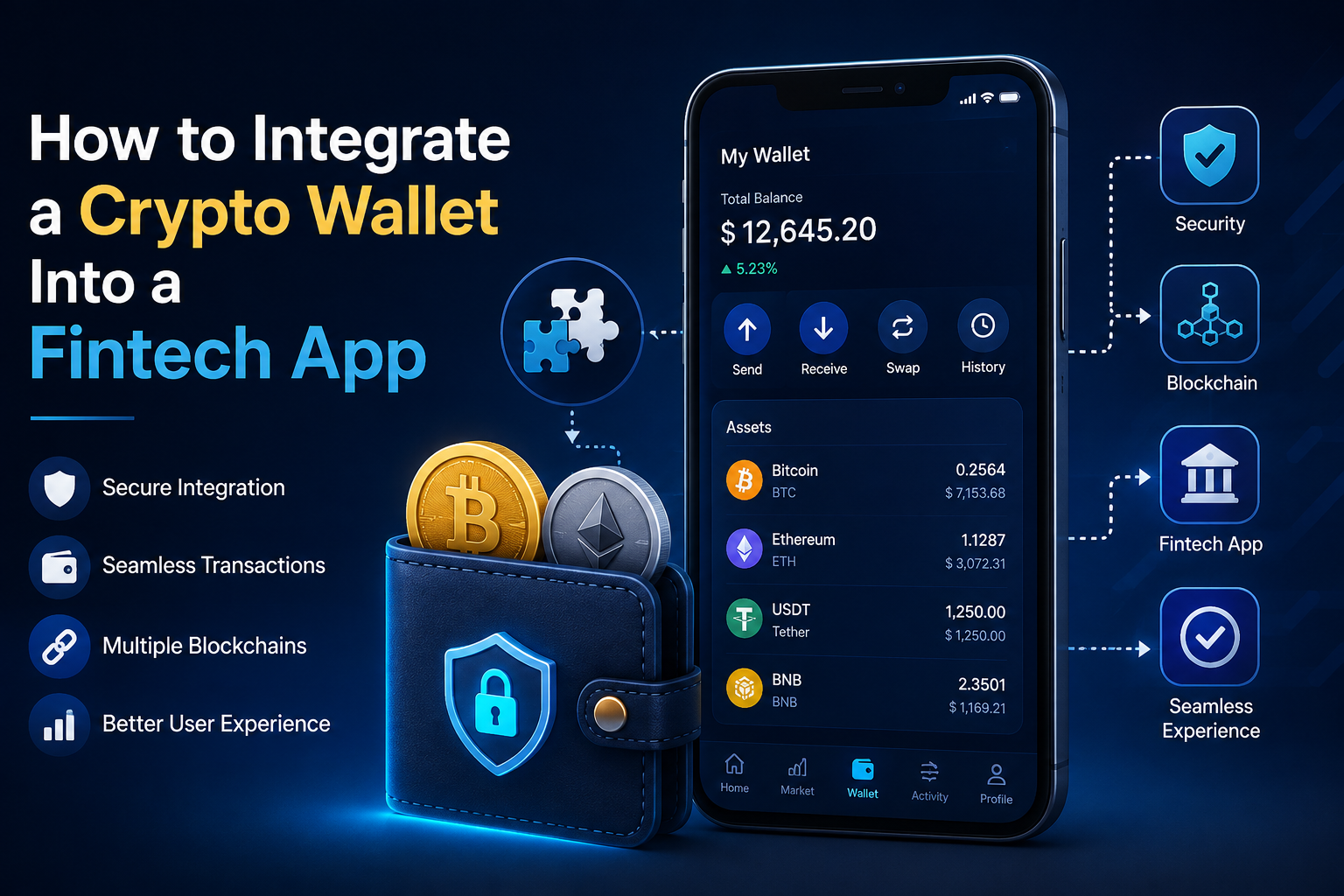
Fintech apps are changing the way people manage money. Users can now send payments, track expenses, invest, and access financial services from one app. As cryptocurrency becomes more common, many fintech businesses are also looking at ways to add crypto features to their platforms.
One practical option is to integrate a crypto wallet into an existing fintech app. This allows users to store, send, receive, and manage digital assets without switching between different applications.
But wallet integration is not as simple as adding another payment feature. It involves security, blockchain networks, APIs, compliance, and a smooth user experience. In this guide, we will explain the main steps involved in integrating a crypto wallet into a fintech app.
Why Add a Crypto Wallet to a Fintech App?
A crypto wallet can give a fintech app more functionality and help it serve users who want to manage both traditional and digital assets.
Some common benefits include:
-
More financial options: Users can manage fiat money and cryptocurrencies in one place.
-
Faster transfers: Blockchain transactions can provide another way to move funds.
-
Better user experience: Users do not need separate apps for every financial activity.
-
New revenue opportunities: Businesses can earn through transaction fees, exchange services, or premium features.
-
Access to global markets: Crypto can make cross-border transactions easier in some use cases.
For businesses planning this type of project, working with a reliable crypto wallet app development company can help handle the technical side of blockchain and wallet integration.
Step 1: Decide What Type of Wallet You Need
The first step is deciding what kind of wallet your fintech app will use.
There are several options:
Custodial Wallet
With a custodial wallet, the platform manages users' private keys. This can make the experience easier for users because they do not have to manage complicated wallet details themselves.
However, the business takes on greater responsibility for security and asset protection.
Non-Custodial Wallet
In a non-custodial wallet, users control their private keys. The fintech company does not directly hold the keys.
This gives users more control but also means they are responsible for keeping their wallet credentials safe.
Hybrid Wallet
A hybrid model combines elements of both approaches. It can be useful when a fintech platform wants to offer convenience while still giving users more control over certain assets.
The right choice depends on your business model, target users, supported assets, and regulatory requirements.
Step 2: Choose the Blockchain Networks
Next, decide which blockchain networks your app will support.
You do not necessarily need to support every available network. Start with the networks that match your users and business goals.
For example, a wallet may support networks such as:
-
Ethereum
-
BNB Chain
-
Polygon
-
Solana
-
Bitcoin
Each blockchain has different transaction methods, fees, confirmation times, and technical requirements. Supporting more networks can also increase development and maintenance work.
Step 3: Select the Wallet Technology
Once the blockchain networks are selected, choose how the wallet will connect with them.
Developers can use blockchain APIs, SDKs, node providers, or other infrastructure services to communicate with different networks.
The technology should support important wallet operations such as:
-
Creating wallet addresses
-
Checking balances
-
Sending transactions
-
Receiving assets
-
Tracking transaction status
-
Reading blockchain data
A good technical setup should also make it easy to add new networks later if the business expands.
Step 4: Build the Wallet Features
The next stage is adding the actual wallet functions to the fintech app.
Some important features include:
Wallet Creation
Users should be able to create or connect a wallet through a simple process.
Crypto Deposit and Withdrawal
Users should be able to deposit supported assets into the wallet and withdraw them when needed.
Send and Receive
The app should allow users to send crypto to another wallet address and receive assets from external addresses.
Transaction History
Users need a clear record of their crypto transactions. Show details such as the asset, amount, wallet address, transaction status, and date.
Balance Tracking
The wallet should show updated balances for supported assets. If the app supports multiple cryptocurrencies, users should be able to view them separately.
Step 5: Focus on Security
Security should be one of the biggest priorities during wallet integration.
A crypto wallet can hold valuable assets, so even a small security weakness can create serious problems.
Important security measures may include:
-
Encryption for sensitive information
-
Secure key management
-
Multi-factor authentication
-
Device and login monitoring
-
Transaction confirmation controls
-
Address verification
-
Rate limiting
-
Regular security testing
Private keys should receive special attention. They should never be exposed through normal application logs, unsecured databases, or other unsafe storage methods.
For larger projects, a crypto wallet app development company can also help design secure wallet architecture and integrate suitable security tools.
Step 6: Add Compliance and Risk Controls
Crypto features can bring additional legal and compliance responsibilities. These requirements vary depending on the country, business model, supported assets, and services offered.
A fintech app may need features related to:
-
KYC verification
-
AML checks
-
Transaction monitoring
-
Customer risk assessment
-
Suspicious transaction detection
-
Record keeping
Before launching, the business should review the applicable regulations with qualified legal and compliance professionals.
Compliance should not be treated as something to add at the end of development. It is better to consider it while designing the wallet architecture.
Step 7: Connect the Wallet With Existing Fintech Features
The real value of wallet integration comes when the crypto wallet works smoothly with the rest of the fintech app.
For example, users might be able to move money between their fiat balance and crypto balance, view all transactions from one dashboard, or use supported payment features.
APIs can help connect the wallet with existing banking, payment, identity verification, exchange, and accounting systems.
The goal should be to make the crypto feature feel like a natural part of the application rather than a separate product added later.
Step 8: Test Everything Before Launch
Testing is essential because blockchain transactions cannot always be reversed.
Before launching, test:
-
Wallet creation
-
Deposits
-
Withdrawals
-
Send and receive transactions
-
Incorrect wallet addresses
-
Failed transactions
-
Network delays
-
Transaction fee calculations
-
Authentication
-
Key management
-
API failures
-
Security vulnerabilities
It is also important to test the app under different network conditions and transaction volumes.
How Can Nimble AppGenie Help Integrate a Crypto Wallet Into a Fintech App?
Nimble AppGenie works on fintech and blockchain-based application development. Its team can help businesses plan wallet functionality, connect blockchain infrastructure, develop wallet features, and build supporting fintech features around the wallet.
The development approach should be based on the business model rather than simply adding as many crypto features as possible. A focused wallet with the right assets, security controls, and user experience can be more useful than an overloaded application.
Final Thoughts
Integrating a crypto wallet into a fintech app can open the door to new financial services and user experiences. However, the project requires careful planning across blockchain technology, security, compliance, APIs, and product design.
Start by defining the wallet model, selecting the right blockchain networks, planning security, and deciding which features users actually need. Then connect the wallet with your existing fintech infrastructure and test every important transaction flow before launch.
With the right technology and development partner, a crypto wallet can become a useful part of a modern fintech platform instead of simply being another feature inside the app.
- Managerial Effectiveness!
- Future and Predictions
- Motivatinal / Inspiring
- Fitness and Wellness
- Medical & Health
- Manufacturing
- Education
- Real-Estate
- Food Industry
- Hospitality
- Online Games
- Sports
- Home Services
- Civil Engineering
- Safety and Protection
- Software Products & Services
- Fashion and Jewellery
- Artificial Intelligence
- Entrepreneurship
- Mentoring & Guidance
- Marketing
- Networking
- HR & Recruiting
- Literature
- Shopping
- Career Management & Advancement