

 SkillClick
Petroleum Coke Prices Forecast Q2 2026 – Price Index, Trends, Chart & Market Analysis
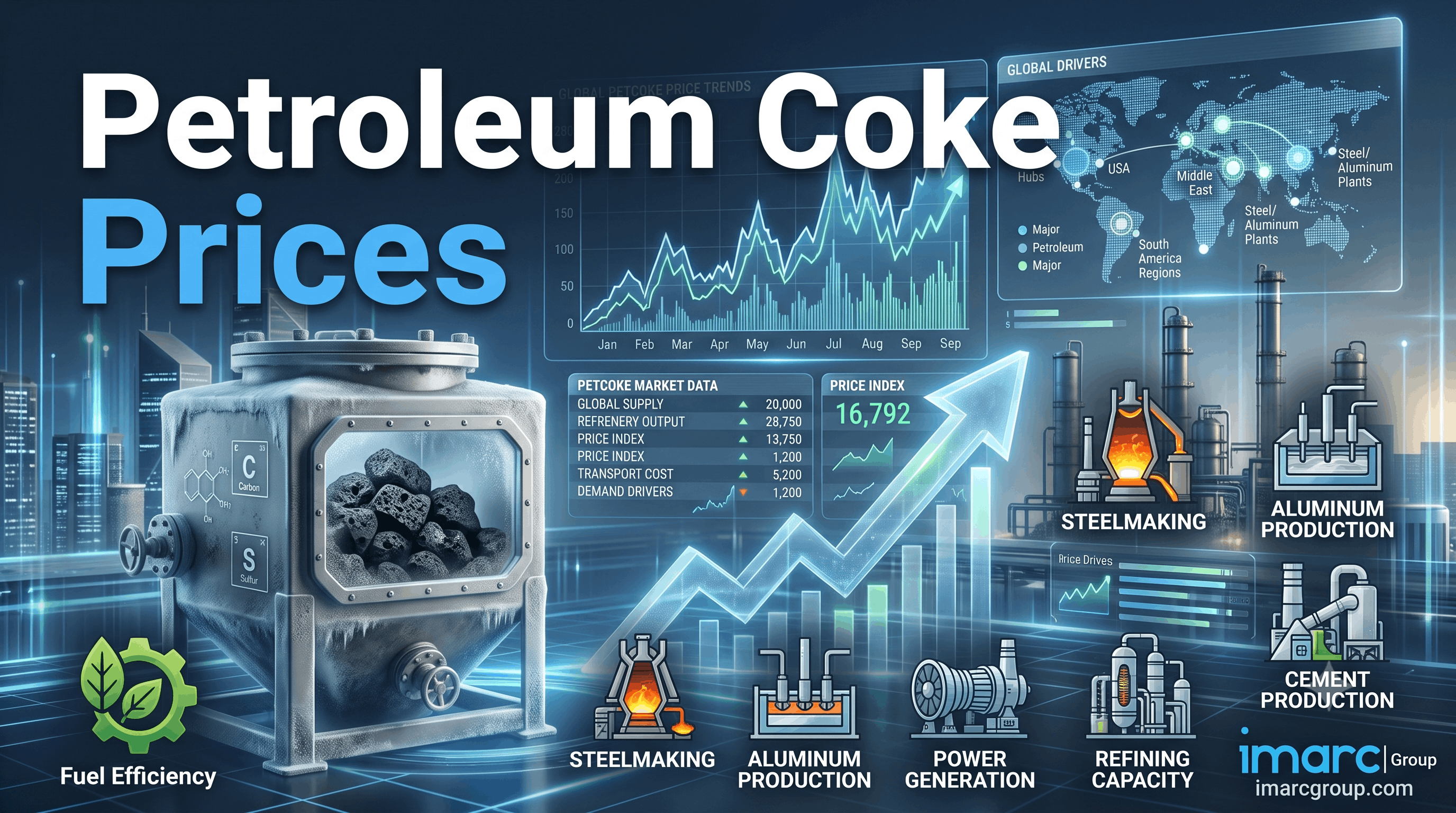
Petroleum Coke Price Index recorded a firm pricing environment across major global markets during Q2 2026, with reported prices ranging from USD 187/MT in India to USD 638/MT in South Korea. South Korea recorded the highest price, followed by Brazil at USD 475/MT, the USA at USD 405/MT, China at USD 367/MT, and India at USD 187/MT. The regional spread reflected differences in refinery output, grade availability, import dependence, logistics costs, and downstream demand.
The market remained supported by consumption from cement, aluminum, steel, power generation, and industrial fuel applications. Refinery operating conditions influenced the availability of petroleum coke, while demand for suitable grades remained firm across several consuming industries. Import-dependent markets faced additional exposure to international freight and handling costs, contributing to substantial regional price disparities.
Regional Petroleum Coke Prices Outlook – Q2 2026: Where Are Prices Highest?
South Korea: USD 638/MT
Brazil: USD 475/MT
USA: USD 405/MT
China: USD 367/MT
India: USD 187/MT
The highest petroleum coke price was recorded in South Korea at USD 638/MT, while India recorded the lowest reported price at USD 187/MT. Brazil and the USA occupied intermediate positions at USD 475/MT and USD 405/MT, respectively.
The wide regional spread reflected differences in refinery supply, sulfur and quality specifications, import requirements, freight expenses, and downstream procurement conditions. South Korea's higher pricing reflected significant reliance on imported material and demand for preferred grades, while India's comparatively lower level reflected favorable domestic refinery availability and competitive supply conditions.
Regional Price Analysis of Petroleum Coke Prices – Q2 2026
USA
The USA recorded petroleum coke prices at USD 405/MT during Q2 2026. The market remained supported by stronger demand from industrial users and tighter availability of suitable grades. Refinery operating conditions influenced supply levels, while cement, aluminum, and power-generation industries provided a stable consumption base.
Higher logistics and handling expenses also contributed to supplier pricing. Buyers maintained regular procurement programs to secure appropriate grades for their operations, while refinery production patterns continued to determine short-term availability.
China
China recorded petroleum coke prices at USD 367/MT during Q2 2026. The market remained supported by improved demand from downstream industries, particularly cement, steel-related operations, aluminum producers, and industrial fuel users.
Domestic refinery production adjustments influenced supply conditions, while buyers continued to replenish material according to operational requirements. Controlled availability of certain grades provided additional support to pricing, although established domestic supply networks helped maintain comparatively competitive market conditions.
Brazil
Brazil recorded petroleum coke prices at USD 475/MT during Q2 2026. The market experienced firm pricing as increased import costs and stronger industrial demand supported supplier offers. Domestic availability remained influenced by refinery production patterns, while transportation expenses added pressure to delivered prices.
Demand from cement producers and other energy-intensive industries remained supportive. Buyers continued securing volumes to maintain operational continuity, particularly where imported petroleum coke was required. The combination of import exposure and logistics costs contributed to Brazil's relatively elevated pricing position.
India
India recorded petroleum coke prices at USD 187/MT during Q2 2026, representing the lowest reported regional level. The market remained supported by stable demand from cement and power-generation industries, while domestic refinery output and import availability influenced supply conditions.
Transportation expenses remained an important component of delivered pricing, but regular domestic availability helped limit significant cost escalation. Buyers maintained consistent procurement schedules to support industrial operations, resulting in a comparatively competitive market environment.
South Korea
South Korea recorded the highest reported petroleum coke price at USD 638/MT during Q2 2026. Pricing remained elevated due to stronger industrial demand and tighter availability of preferred quality grades. Import dependence further increased sensitivity to international supply conditions and freight costs.
Demand from steel, cement, aluminum, and energy-intensive sectors supported procurement activity. Buyers prioritized supply continuity and quality specifications, while higher freight and handling expenses added to delivered costs. These factors kept South Korean petroleum coke prices significantly above the other reported markets.
Supply and Demand Overview – Q2 2026
Global petroleum coke supply remained closely linked to refinery operating rates, crude processing patterns, and the production of heavier refinery residues during Q2 2026. Changes in refinery maintenance, utilization, and crude slate influenced both the quantity and quality of petroleum coke available to downstream consumers.
Demand remained steady across major downstream industries:
Cement Manufacturing: Strong consumption as a cost-effective high-calorific-value fuel
Aluminum Production: Continued demand for petroleum coke in calcined coke and anode applications
Steel & Metallurgy: Stable requirements for carbon-bearing industrial processes
Power Generation: Ongoing use as an industrial fuel in selected markets
Industrial Fuel: Consistent consumption across energy-intensive manufacturing operations
The overall supply-demand balance remained supportive of firm pricing, although conditions varied considerably between regions. Markets with stronger import exposure experienced higher delivered costs, while domestic refinery availability helped maintain more competitive pricing in India and China.
Key Factors Affecting Prices – Quarterly Perspective
Several critical factors influenced petroleum coke pricing during Q2 2026:
Raw Material Availability: Refinery throughput, crude processing levels, and refinery operating rates determined petroleum coke supply.
Downstream Demand: Cement, aluminum, steel, power generation, and industrial fuel consumption supported market activity.
Logistics: Freight, port handling, inland transportation, and vessel availability influenced delivered costs.
Energy Costs: Fuel and electricity expenses affected refinery economics and downstream purchasing decisions.
Trade Dynamics: Import dependence, international cargo availability, grade specifications, and supplier competition created regional price differences.
Recent Developments (Q2 Highlights)
Petroleum coke prices remained firm across major global markets during Q2 2026.
South Korea recorded the highest reported price amid import dependence and stronger demand for preferred grades.
Demand from cement, aluminum, and industrial fuel users supported procurement activity.
Refinery operating conditions continued influencing the availability of different petroleum coke grades.
These developments maintained a regionally differentiated petroleum coke market during Q2 2026, with refinery supply, downstream consumption, and logistics costs remaining key determinants of procurement prices.
For detailed insights, charts, and forecasts, explore: https://www.imarcgroup.com/petroleum-coke-pricing-report/requestsample
Petroleum Coke Price Chart Analysis – Quarterly Movement
The Petroleum Coke Price Chart for Q2 2026 illustrates a wide regional pricing spread, with South Korea recording USD 638/MT compared with USD 187/MT in India. The difference reflects variations in refinery availability, grade requirements, import exposure, and transportation economics.
Key quarterly movements include:
Early Q2: Buyers assessed refinery availability and downstream fuel requirements while maintaining regular procurement schedules.
Mid-Q2: Strong demand from cement, aluminum, and industrial consumers supported purchasing activity, while regional supply conditions influenced supplier offers.
Late Q2: Prices remained differentiated as import-dependent markets faced higher delivered costs and domestic producers continued managing available material.
The chart demonstrates the importance of regional petroleum coke price monitoring for procurement managers. Comparing market levels enables industrial users to evaluate sourcing alternatives, manage fuel and raw material budgets, and negotiate supply contracts more effectively.
Petroleum Coke Price Index & Historical Analysis
The Petroleum Coke Price Index remained firm and regionally differentiated during Q2 2026, with prices ranging from USD 187/MT in India to USD 638/MT in South Korea. The substantial price gap reflected refinery supply conditions, grade specifications, import requirements, freight costs, and downstream demand.
Historically, petroleum coke prices have been closely connected to refinery utilization, crude oil processing, cement production, aluminum demand, power generation, and international trade flows. Changes in refinery operating rates can quickly affect petroleum coke availability, while demand for low-sulfur and other preferred grades can create additional premiums.
The petroleum coke price history is shaped by:
Refinery Operations: Changes in crude processing and refinery utilization influence petroleum coke output.
Cement Demand: Cement producers remain major consumers of fuel-grade petroleum coke.
Aluminum Production: Calcined petroleum coke and anode manufacturing provide important demand support.
Grade Availability: Sulfur content and other specifications can create significant regional price differences.
International Trade: Imports, exports, freight rates, and port conditions affect delivered pricing.
The Q2 2026 pricing structure indicates that petroleum coke remains highly sensitive to regional supply and logistics conditions. South Korea's premium demonstrates the effect of import dependence and preferred-grade requirements, while India's lower price reflects comparatively competitive supply conditions.
What Is Petroleum Coke?
Petroleum coke, commonly known as petcoke, is a carbon-rich solid material produced as a by-product of petroleum refining, particularly during delayed coking and other conversion processes. Its high carbon content and calorific value make it useful as an industrial fuel and as a raw material for selected metallurgical and aluminum applications.
Key applications include:
Cement Manufacturing: Used as a high-energy industrial fuel in cement kilns
Aluminum Production: Processed into calcined petroleum coke for carbon anodes
Power Generation: Used as a fuel in selected power and industrial facilities
Steel & Metallurgy: Provides carbon for metallurgical processes
Industrial Fuel: Supports energy-intensive manufacturing operations
Petroleum coke's economic value depends on its sulfur content, volatile matter, metals, calorific value, and other quality characteristics. These specifications influence its suitability for individual downstream applications and contribute to differences in regional market pricing.
Petroleum Coke Price Forecast – Next 12 Months
The petroleum coke price forecast for the next 12 months indicates a stable-to-firm outlook with regional volatility. Continued demand from cement, aluminum, steel, and industrial fuel users should provide structural support, while refinery operating rates, crude processing patterns, grade availability, and international logistics will influence short-term price movements.
Key growth drivers include:
Cement Production: Continued infrastructure and construction activity should support fuel-grade petroleum coke consumption.
Aluminum Manufacturing: Growth in aluminum production should sustain demand for calcined petroleum coke and anode materials.
Industrial Energy Demand: Energy-intensive industries should maintain requirements for high-calorific-value fuels.
Steel & Metallurgy: Expansion in metallurgical production can provide additional carbon-material demand.
Potential risks include:
Refinery Output Expansion: Higher refinery utilization could increase petroleum coke availability and moderate prices.
Downstream Demand Weakness: Lower cement, aluminum, or industrial production could reduce procurement requirements.
Environmental Regulations: Tighter emissions standards could restrict petroleum coke use in selected applications.
Freight Volatility: Higher shipping and handling costs could increase delivered prices, particularly in import-dependent markets.
Overall, petroleum coke prices are expected to remain stable to moderately firm over the next 12 months. Cement and aluminum demand should provide fundamental support, while refinery operating conditions, grade availability, environmental requirements, and international logistics will remain important variables influencing regional price movements.
FAQs About Petroleum Coke Prices Insights & Market Analysis
What does the Petroleum Coke Price Index indicate for Q2 2026?
The Petroleum Coke Price Index indicates a firm and regionally differentiated market, with South Korea recording the highest price at USD 638/MT and India the lowest at USD 187/MT.
How does the Petroleum Coke Price Chart help procurement managers?
The Petroleum Coke Price Chart helps procurement managers compare regional prices, monitor refinery supply and downstream demand, assess grade-specific costs, and optimize sourcing, inventory, and contract strategies.
What is the petroleum coke price forecast for the next 12 months?
Petroleum coke prices are expected to remain stable to moderately firm, supported by cement, aluminum, steel, and industrial fuel demand, while refinery output, grade availability, environmental regulations, and freight costs may influence future pricing.
How IMARC Pricing Database Can Help
The latest IMARC Group study, "Petroleum Coke Prices, Trend, Chart, Demand, Market Analysis, News, Historical and Forecast Data 2026 Edition," provides a detailed analysis of petroleum coke price trends and global market dynamics. The study examines regional pricing movements, historical developments, supply conditions, demand patterns, and the key factors influencing current and future market performance.
The analysis evaluates the relationship between supply and demand while examining refinery operating conditions, petroleum coke grade availability, cement consumption, aluminum production, industrial fuel demand, logistics, trade dynamics, and regional market developments. These insights help businesses strengthen procurement planning, supplier negotiations, inventory management, budgeting, and strategic decision-making.
About Us:
IMARC Group is a global management consulting firm that provides a comprehensive suite of services to support market entry and expansion efforts. The company offers detailed market assessments, feasibility studies, regulatory approvals and licensing support, and pricing analysis, including spot pricing and regional price trends. Its expertise spans demand-supply analysis alongside regional insights covering Asia-Pacific, Europe, North America, Latin America, and the Middle East and Africa. IMARC also specializes in competitive landscape evaluations, profiling key market players, and conducting research into market drivers, restraints, and opportunities. IMARC’s data-driven approach helps businesses navigate complex markets with precision and confidence.
Contact us:
IMARC Group
134 N 4th St. Brooklyn, NY 11249, USA
Email: sales@imarcgroup.com
Tel No: (D) +91 120 433 0800
United States: +1-201971-6302
- Managerial Effectiveness!
- Future and Predictions
- Motivatinal / Inspiring
- Fitness and Wellness
- Medical & Health
- Manufacturing
- Education
- Real-Estate
- Food Industry
- Hospitality
- Online Games
- Sports
- Home Services
- Civil Engineering
- Safety and Protection
- Software Products & Services
- Fashion and Jewellery
- Artificial Intelligence
- Entrepreneurship
- Mentoring & Guidance
- Marketing
- Networking
- HR & Recruiting
- Literature
- Shopping
- Career Management & Advancement