

 SkillClick
Cabin Comfort at 30,000 Feet: Sourcing Airline Textiles That Perform
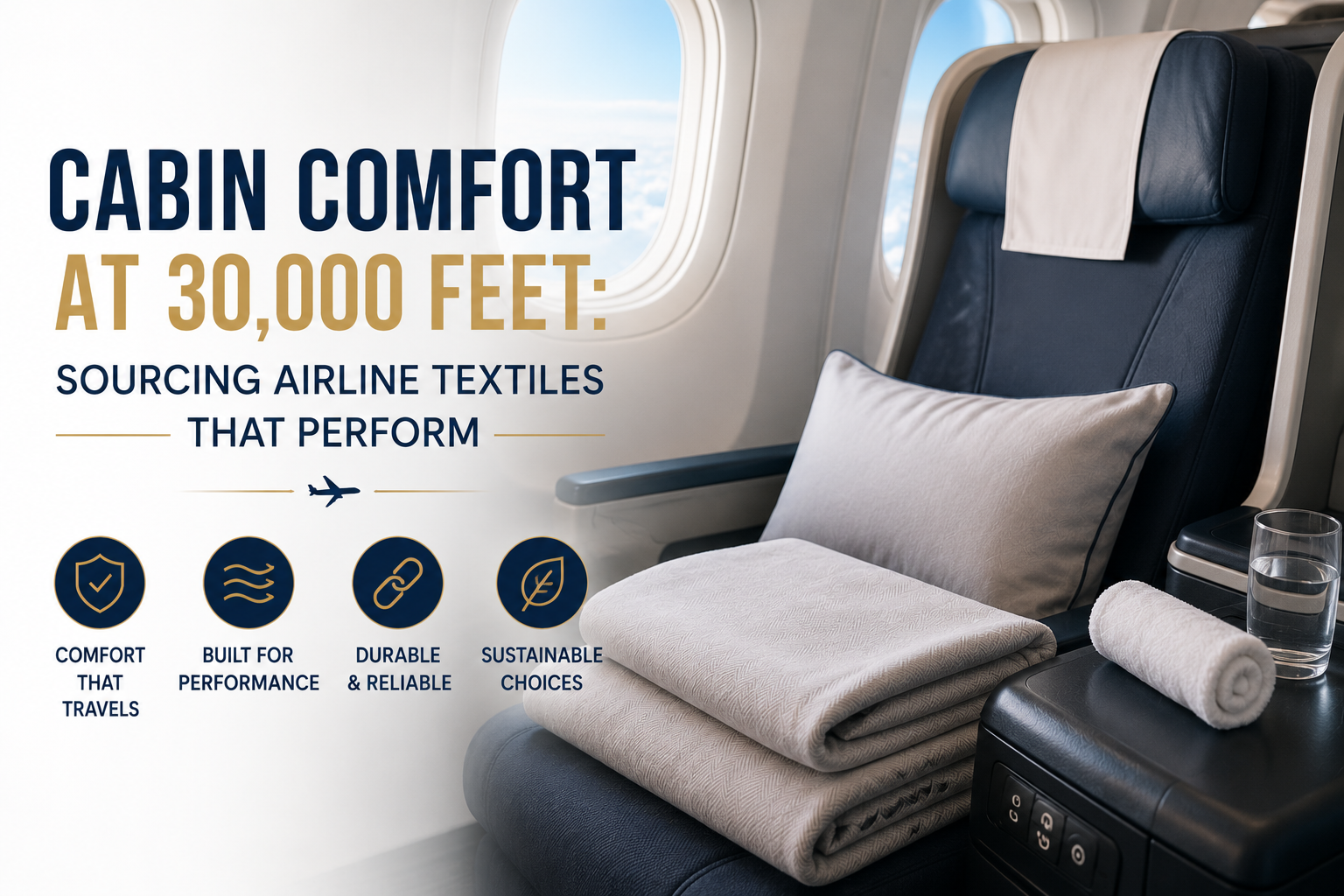
Passengers form an impression of an airline's quality within the first few minutes of boarding, and cabin textiles play a bigger role in that impression than most travelers consciously register. A worn pillowcase or a thin, scratchy blanket quietly signals lower standards, even if the passenger couldn't articulate exactly why the cabin felt less premium. For airlines, cabin textile sourcing sits at an unusual intersection — it has to deliver genuine comfort while surviving operational demands no hotel or hospital linen category ever faces.
Here's what actually goes into sourcing airline textiles that hold up operationally while still supporting the passenger experience airlines are trying to deliver.
The Operational Constraints No Other Linen Category Faces
Unlike hotel or hospital linen, airline textiles are directly tied to aircraft weight limits and cabin storage capacity. Every blanket and pillowcase in a full cabin inventory adds cumulative weight that affects fuel efficiency across an entire fleet, which means fabric selection has to satisfy comfort and durability requirements without adding unnecessary bulk or weight per unit.
This constraint doesn't exist in ground-based hospitality sourcing, and it fundamentally changes which fabrics and constructions are actually viable for cabin use, regardless of how they might perform in a hotel setting.
Balancing Passenger Comfort With Rapid Turnaround Laundering
Airline textiles cycle through industrial laundering far more frequently and rapidly than most hospitality linen, given how quickly aircraft need to turn around between flights. Fabric that feels soft and premium on day one but breaks down after a few dozen rapid wash cycles ends up costing more in replacement frequency than it saves in initial comfort appeal.
The fabrics that actually perform well here tend to prioritize a specific combination: soft enough to read as premium to passengers, but constructed to withstand aggressive, high-frequency laundering without pilling or thinning prematurely.
Consistency Across a Fleet Is a Genuinely Harder Problem
A single hotel property might need a few hundred consistent pieces. An airline needs the same color, sizing, and fabric feel across potentially thousands of pieces distributed across multiple aircraft and laundering facilities simultaneously. Any inconsistency — slightly different pillowcase shades, mismatched blanket textures between aircraft — becomes noticeable at a scale that a single hotel property would rarely encounter.
This is precisely where sourcing from a supplier experienced specifically in airline textiles matters, since fleet-wide consistency requires production and quality control processes built for that scale, not just per-order quality checks.
Branding Extends Further Into Textiles Than Airlines Often Realize
Passengers associate cabin presentation directly with airline brand perception, and textiles are one of the more tactile, memorable touchpoints in that experience. Custom pillowcase branding, specific color schemes matched to airline livery, and consistent blanket presentation all contribute to a cohesive brand impression that generic, unbranded cabin textiles simply can't deliver.
Airlines investing in this level of textile branding typically see it reflected in passenger perception surveys focused on cabin comfort and overall service quality, even when the branding itself is a relatively small design detail on the textile.
Napkins and Meal Service Textiles Deserve Real Attention Too
Cabin textile sourcing conversations tend to center on blankets and pillowcases, but napkins used during meal service represent a meaningful recurring cost at fleet scale and a direct touchpoint during every flight with food service. Fabric quality, consistent folding presentation, and absorbency all matter more at this volume than airlines sourcing reactively often account for.
Coordinating napkin sourcing alongside broader hospitality textile purchasing — similar to how ground-based food service operations source through a proper table linen supplier who understands consistent bulk fabric presentation — can bring the same quality discipline to inflight meal service textiles.
What to Evaluate in an Airline Textile Supplier
- Aviation-specific experience — not just general hospitality textile supply, since the operational demands genuinely differ
- Fleet-scale consistency track record — proven ability to maintain color and sizing accuracy across large, ongoing orders
- Fabric weight optimization — genuine understanding of the weight-versus-comfort tradeoff specific to cabin use
- Rapid laundering durability — fabric tested and proven under aviation-frequency industrial washing, not just standard hospitality cycles
What Drives Airline Textile Costs
- Fabric weight engineering — lightweight, durable fabric typically costs more per unit than standard hospitality textiles
- Fleet-wide order scale — larger orders reduce per-unit costs but require supplier production capacity to match
- Branding and customization — airline-specific color matching or logo embroidery adds to base pricing
- Laundering durability testing — fabric specifically validated for aviation-grade rapid turnaround washing commands a premium over untested alternatives
Frequently Asked Questions (FAQs)
1. Why does cabin textile weight matter so much for airlines? Cumulative textile weight across a full fleet inventory measurably affects fuel efficiency, making weight a genuine cost factor, not just a comfort consideration.
2. How often are airline blankets and pillowcases typically replaced? With frequent rapid industrial laundering, cabin textiles usually need replacing every 12–18 months depending on flight volume.
3. Does branding on cabin textiles actually influence passenger perception? Yes, consistent branded textiles contribute meaningfully to overall cabin presentation and passenger perception of service quality.
4. Can standard hospitality textile suppliers meet airline requirements? Not always — aviation-specific weight, laundering frequency, and fleet consistency demands often exceed what general hospitality suppliers are equipped to handle.
5. Are inflight napkins worth sourcing carefully, or are they a minor detail? They're worth real attention — at fleet scale, napkins represent a meaningful recurring cost and a frequent passenger touchpoint during meal service.
Final Verdict
Airline textile sourcing sits in a category of its own, shaped by weight restrictions, rapid laundering frequency, and fleet-wide consistency demands that no other linen category faces at the same intensity. Airlines that work with suppliers genuinely experienced in aviation-specific textile production, rather than general hospitality vendors offering a repackaged product line, end up with cabin textiles that hold up operationally while still delivering the passenger comfort and brand consistency airlines are actually trying to achieve.
- Managerial Effectiveness!
- Future and Predictions
- Motivatinal / Inspiring
- Fitness and Wellness
- Medical & Health
- Manufacturing
- Education
- Real-Estate
- Food Industry
- Hospitality
- Online Games
- Sports
- Home Services
- Civil Engineering
- Safety and Protection
- Software Products & Services
- Fashion and Jewellery
- Artificial Intelligence
- Entrepreneurship
- Mentoring & Guidance
- Marketing
- Networking
- HR & Recruiting
- Literature
- Shopping
- Career Management & Advancement