

 SkillClick
Organic Supplement Ingredients: A Guide to Quality and Sourcing
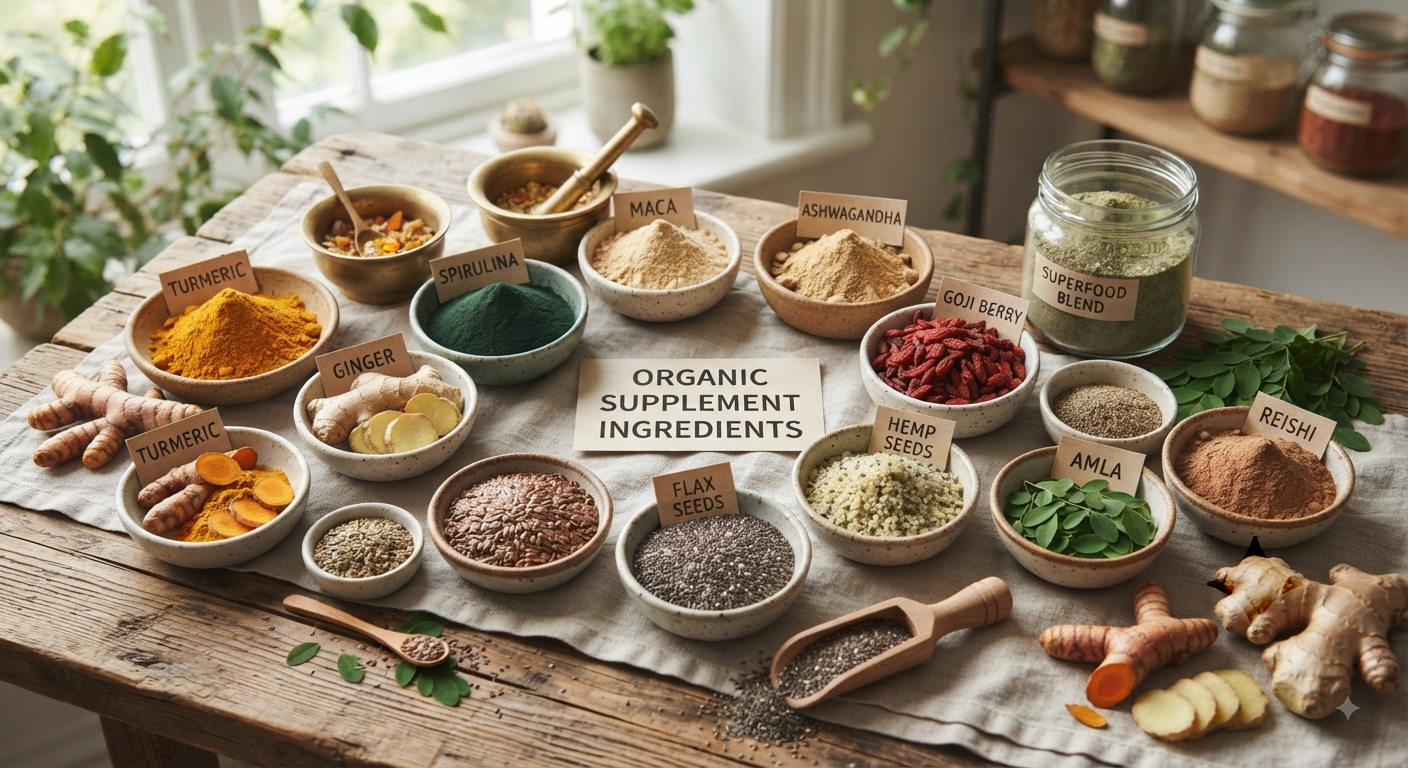
The growing interest in clean-label and plant-based wellness products has increased demand for organic supplement ingredients. Manufacturers of dietary supplements, functional nutrition products, capsules, powders, and wellness formulations increasingly consider organically sourced ingredients to meet consumer preferences and formulation requirements. Choosing appropriate ingredients involves evaluating quality, sourcing practices, documentation, processing methods, and regulatory considerations.
What Are Organic Supplement Ingredients?
Organic supplement ingredients are raw materials used in dietary and nutritional supplement formulations that are produced or processed according to applicable organic production standards. Depending on the product, these ingredients can include botanical extracts, plant powders, natural oils, vitamins, minerals, and other permitted nutritional components.
The exact requirements for an ingredient to be marketed as organic vary according to the applicable certification program and destination market. Manufacturers should therefore verify certification and documentation before making organic claims on finished products.
Common Types of Organic Supplement Ingredients
A wide range of ingredients may be used in organic supplement formulations. Botanical ingredients are particularly common and can include herbs, roots, leaves, fruits, seeds, and plant extracts. These materials may be supplied as powders, extracts, concentrates, or other standardized forms.
Other organic supplement ingredients may include plant-based oils, natural flavoring components, and nutritional ingredients suitable for specific supplement applications. The choice depends on the formulation, dosage form, target market, and desired nutritional profile.
Why Ingredient Quality Matters
Quality is a critical consideration when sourcing supplement ingredients. Raw materials can vary depending on their botanical source, cultivation practices, harvesting conditions, processing methods, storage, and transportation.
Manufacturers should review specifications and quality documentation before approving an ingredient. Testing may cover identity, purity, microbiological parameters, heavy metals, pesticides, moisture, and other characteristics relevant to the material.
For botanical ingredients, additional information about the plant species, plant part used, extraction ratio, and active constituent profile can help manufacturers evaluate suitability for their formulations.
How to Source Organic Supplement Ingredients
When sourcing organic supplement ingredients, manufacturers should evaluate suppliers systematically. Organic certification is an important consideration when an organic claim is intended for the finished product. Buyers should verify the certification status and ensure that relevant documentation corresponds to the material being purchased.
Traceability is also important. Information about the origin of the raw material, processing facility, batch number, and production methods can help manufacturers maintain better control over their supply chains.
Storage and transportation conditions should also be reviewed, particularly for ingredients that may be sensitive to moisture, temperature, light, or contamination.
Documentation and Compliance
Proper documentation helps supplement manufacturers evaluate raw materials and maintain quality records. Depending on the ingredient and market, documentation may include a certificate of analysis, specification sheet, technical data sheet, safety data sheet, certificate of origin, organic certificate, allergen statement, and other compliance documents.
Manufacturers should also consider the regulatory requirements of the country where the supplement will be marketed. Organic certification alone does not necessarily establish that an ingredient meets every requirement for use in a dietary supplement.
Benefits of a Reliable Supply Chain
A consistent supply of quality ingredients can support stable supplement manufacturing. Suppliers with appropriate quality systems and transparent sourcing information can make procurement and supplier qualification more efficient.
Manufacturers should consider factors such as batch consistency, minimum order quantities, lead times, packaging, shelf life, storage requirements, and documentation availability when comparing potential sources.
FAQs About Organic Supplement Ingredients
1. What are organic supplement ingredients?
They are ingredients used in dietary and nutritional supplements that are produced or processed according to applicable organic standards and certification requirements.
2. What types of ingredients can be organic?
Depending on applicable standards, ingredients can include botanical powders, plant extracts, herbs, seeds, oils, and other permitted nutritional or plant-derived materials.
3. How can manufacturers verify organic ingredients?
Manufacturers should review valid organic certification and supporting documentation from the supplier or certified production chain.
4. Why is testing important for organic ingredients?
Testing helps verify identity, purity, quality, and relevant safety parameters. Organic certification does not eliminate the need for appropriate quality testing.
5. What documents should buyers request?
Common documents include certificates of analysis, specifications, organic certificates, technical documentation, safety data sheets, allergen statements, and certificates of origin, depending on the material.
Conclusion
Sourcing high-quality organic supplement ingredients requires attention to certification, raw material origin, testing, documentation, traceability, and regulatory requirements. Manufacturers can benefit from establishing clear supplier qualification procedures and reviewing ingredient specifications before procurement. A structured approach helps support consistent formulation quality while meeting the growing demand for organic and plant-based supplement products.
- Managerial Effectiveness!
- Future and Predictions
- Motivatinal / Inspiring
- Fitness and Wellness
- Medical & Health
- Manufacturing
- Education
- Real-Estate
- Food Industry
- Hospitality
- Online Games
- Sports
- Home Services
- Civil Engineering
- Safety and Protection
- Software Products & Services
- Fashion and Jewellery
- Artificial Intelligence
- Entrepreneurship
- Mentoring & Guidance
- Marketing
- Networking
- HR & Recruiting
- Literature
- Shopping
- Career Management & Advancement