

 SkillClick
Comprehensive Insurance Solutions for Properties and Marine Assets
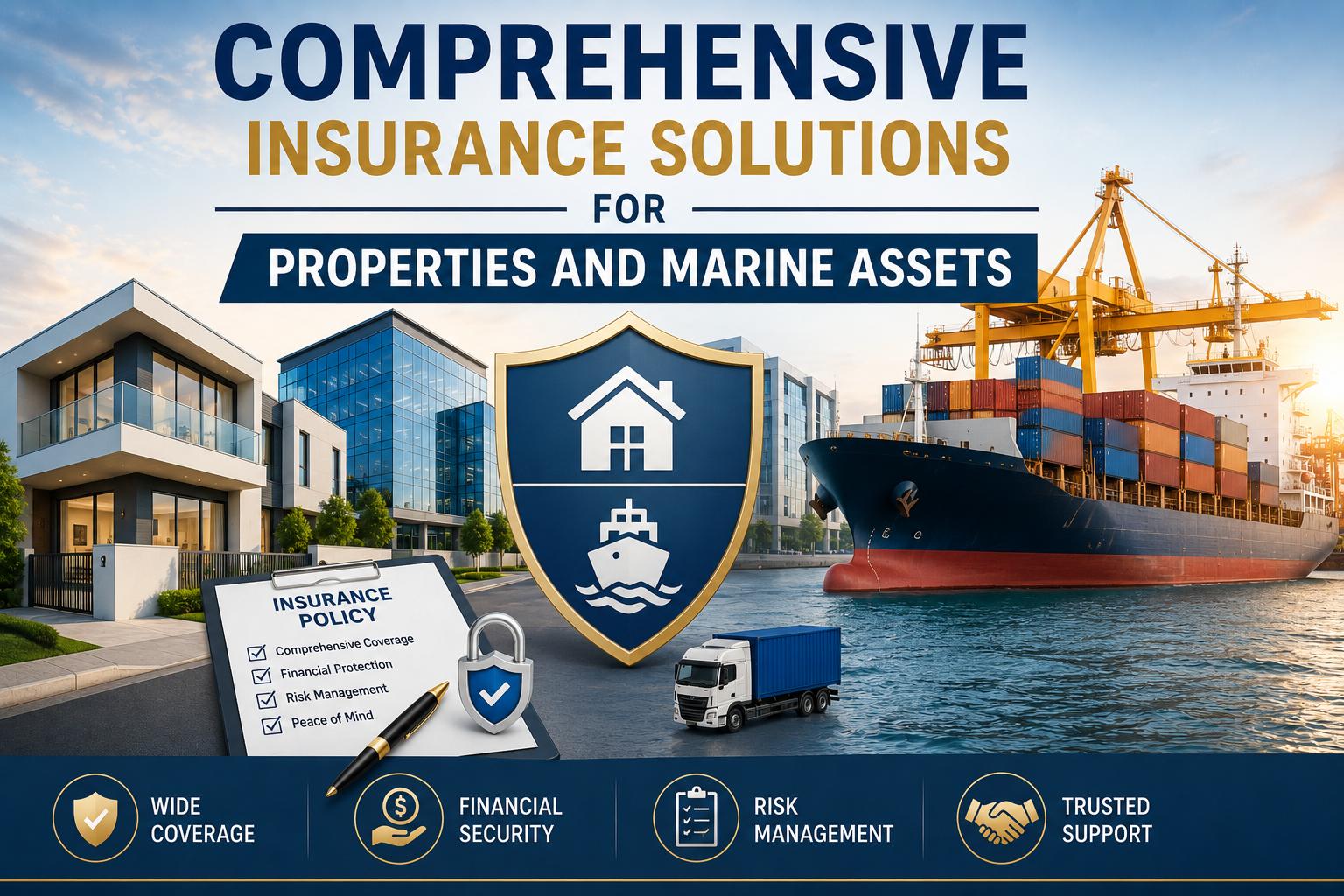
Protecting Valuable Investments Against Unexpected Risks
Property and goods represent significant investments for individuals and businesses. Whether it is a residential building, commercial facility, warehouse, equipment, or cargo transported across international routes, these assets can be exposed to various unexpected risks. Fire, theft, accidental damage, natural events, transportation incidents, and other unforeseen circumstances can create substantial financial challenges.
Suitable insurance coverage can help property owners and businesses manage these risks more effectively. By evaluating their assets, identifying potential vulnerabilities, and selecting appropriate coverage, they can create a stronger financial protection strategy while maintaining greater confidence in their investments.
Understanding the Importance of Property Protection
Properties require protection because damage to buildings and their contents can result in considerable repair or replacement expenses. Commercial properties may contain expensive machinery, furniture, electrical equipment, inventory, and other business assets, making the potential financial impact of an incident even greater.
Property owners should assess the overall value of their assets and understand the risks associated with their property's location, construction, usage, and contents. A carefully selected insurance policy can help provide financial support when covered incidents occur.
It is equally important to review policy conditions before purchasing coverage. Insured values, deductibles, exclusions, limits, and claim procedures can significantly influence the level of protection available.
Common Risks Affecting Properties
Buildings and their contents can face several types of risks. Fire and explosion can cause extensive structural damage, while water leakage can affect walls, flooring, furniture, electrical systems, and other contents. Theft and accidental physical damage can also create unexpected expenses.
Natural and environmental events may present additional challenges depending on the property's location. Regular maintenance and preventive measures can help reduce some risks, but insurance provides an additional financial layer when covered losses occur.
Property owners should also maintain accurate records of valuable assets. Photographs, invoices, inventory records, valuation documents, and maintenance information can help support proper asset management and facilitate the claims process when necessary.
Choosing Comprehensive Property Coverage
A broad insurance approach can be useful for property owners who want to protect multiple assets under suitable coverage. Instead of considering only the building itself, they can evaluate furniture, equipment, fixtures, machinery, and other contents that may contribute to the property's overall value.
Property all Risk insurance can provide broader protection for specified physical assets against various covered risks, subject to the policy's terms, conditions, exclusions, and coverage limits. This type of coverage can be particularly relevant for businesses and property owners seeking a comprehensive approach to managing unexpected physical damage.
However, the exact protection available depends on the selected policy and insurer. Property owners should carefully examine what is included and excluded before making a decision. They should also ensure that declared property values are accurate and updated when assets or circumstances change.
Supporting Business Continuity
Property damage can affect more than physical assets. For businesses, an incident may interrupt normal operations, delay production, affect customer deliveries, or create additional recovery expenses.
Effective risk management combines insurance with preventive measures. Fire detection systems, security cameras, access controls, equipment maintenance, emergency plans, and regular property inspections can reduce the likelihood or severity of certain incidents.
Businesses should periodically review their insurance requirements as they expand, purchase new equipment, increase inventory, renovate facilities, or change their operations. Regular reviews can help minimize potential gaps between actual asset values and insured amounts.
Understanding Risks During Transportation
Businesses that import and export goods face another category of risk when valuable cargo is transported by sea. Goods may be exposed to accidental damage, handling issues, weather-related events, theft, or other incidents during transportation.
The financial consequences can be significant, particularly when shipments contain expensive machinery, electronics, raw materials, finished products, or specialized equipment. Protecting cargo during transit can therefore form an important part of a broader business risk-management strategy.
Selecting Suitable Marine Coverage
Businesses involved in international trade should assess the nature and value of their shipments before selecting appropriate protection. Factors such as the type of cargo, transportation route, packaging, shipping method, destination, and frequency of shipments can influence insurance requirements.
Marine Insurance can help businesses protect eligible cargo and goods against covered risks associated with transportation by sea and other specified transit arrangements, depending on the policy. Such coverage can provide financial support for covered losses and help businesses manage the impact of unexpected incidents affecting shipments.
Before purchasing a marine policy, businesses should review the coverage scope, exclusions, geographical limits, deductibles, insured values, and claims procedures. Proper documentation of shipments and cargo values can also help support effective risk management.
Managing Cargo Risks Effectively
Insurance should be supported by appropriate transportation and cargo-handling practices. Businesses can reduce potential losses by using suitable packaging, selecting reliable logistics partners, maintaining accurate shipping records, and following established handling procedures.
Cargo should also be properly documented before transportation. Information about the goods, quantity, value, packaging, destination, and shipping arrangements can help businesses maintain better control over their shipments.
Regularly reviewing transportation risks is especially important for companies that operate across multiple international markets. Different routes and cargo types may present different levels of exposure, requiring businesses to reassess their protection periodically.
Reviewing Insurance Needs Regularly
Insurance requirements are not always static. Property values can increase, businesses can expand, new equipment can be purchased, and shipping volumes can change. These developments may require adjustments to existing insurance arrangements.
Regular policy reviews allow businesses and property owners to determine whether their coverage continues to match their current circumstances. They should also check whether policy conditions remain appropriate for their operations.
Professional insurance guidance can help them understand complex policy terms and identify potential areas where additional protection may be appropriate.
Conclusion
Protecting valuable physical assets requires a combination of appropriate insurance, preventive measures, accurate valuation, and regular risk assessment. Property owners can strengthen their financial resilience by selecting coverage that reflects the nature and value of their buildings and contents.
Businesses involved in transportation and international trade should also consider the risks associated with moving valuable goods. By combining suitable property protection with Marine Insurance, they can develop a broader risk-management strategy designed to protect important assets and support business continuity when covered unexpected events occur.
- Managerial Effectiveness!
- Future and Predictions
- Motivatinal / Inspiring
- Fitness and Wellness
- Medical & Health
- Manufacturing
- Education
- Real-Estate
- Food Industry
- Hospitality
- Online Games
- Sports
- Home Services
- Civil Engineering
- Safety and Protection
- Software Products & Services
- Fashion and Jewellery
- Artificial Intelligence
- Entrepreneurship
- Mentoring & Guidance
- Marketing
- Networking
- HR & Recruiting
- Literature
- Shopping
- Career Management & Advancement