

 SkillClick
Setting Up an Employee Stock Option Plan in Thailand
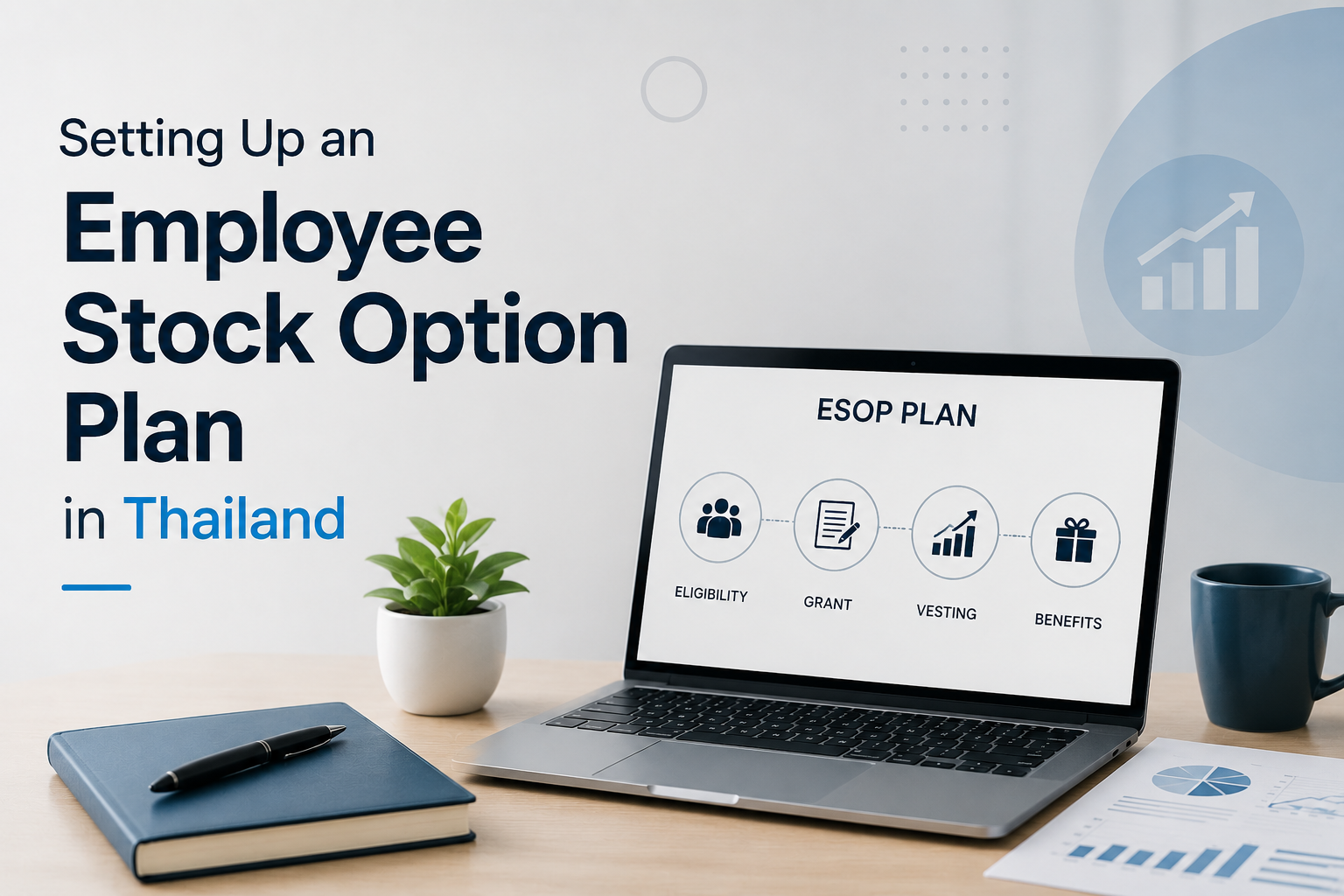
Thailand's startup and SME scene has grown fast, but the legal framework for employee equity has not always kept pace with that growth. Founders who assume stock options work the same way here as in Singapore or the US often run into structural surprises once they try to formalize a plan. Before granting any equity, it helps to understand how ESOP Thailand structures actually work under local law, and where the practical limitations lie.
The Regulatory Reality in Thailand
Unlike jurisdictions with a dedicated SME equity framework, Thailand's Civil and Commercial Code does not contain specific provisions for private limited company stock option plans. Formal ESOP regulation has historically applied mainly to public companies limited under the Securities and Exchange Commission, which oversees option programs for listed and public entities.
For private companies, this creates a practical gap. Many early-stage startups have relied on informal promises of future equity rather than binding option agreements, which leaves both the company and employees exposed if expectations are not clearly documented. The Securities and Exchange Commission's PP-SME program, launched to open a pathway for private SME and startup limited companies to offer stock options, was a step toward closing this gap, though adoption has remained limited compared to more established programs elsewhere in the region.
How Thai Companies Typically Structure Equity Compensation
Given the regulatory gap for private limited companies, Thai startups generally rely on one of a few structures:
- Formal option agreements, drafted as private contracts between the company and employee, even without a dedicated statutory ESOP framework
- Warrants or convertible instruments, used by some companies as an alternative mechanism for granting future equity
- Public company conversion, in some cases, ahead of a larger option program, to access the clearer regulatory path available to public limited companies
- SEC-supervised programs, for companies eligible to participate in structured option schemes under existing securities regulation
Each approach carries different documentation, shareholder approval, and compliance requirements, which makes early legal guidance especially important in Thailand compared to markets with more standardized ESOP rules.
Tax Treatment of Stock Options in Thailand
Thailand's Revenue Code treats the benefit an employee receives from exercising stock options as assessable income, similar in treatment to a cash bonus. This means the gain is generally taxed as employment income at the point of exercise, rather than being deferred until shares are eventually sold. Employees and employers should factor this into planning, since it affects both take-home value for employees and how a company communicates the real benefit of its equity program.
Practical Steps for Founders
Given the regulatory gaps, a few practices consistently reduce risk for companies granting equity in Thailand:
- Formalize agreements in writing. Verbal promises of future equity offer no protection to either party and often lead to disputes later.
- Get local legal review. Corporate structure, shareholder agreements, and applicable regulations should be checked before any grants are issued.
- Model the tax impact early. Since gains are typically taxed at exercise, employees should understand the real financial implications before accepting options.
- Keep documentation audit-ready. Clean records matter even more here, since there is less regulatory standardization to fall back on during a dispute or due diligence process.
- Coordinate cap table updates. Every option grant, exercise, or cancellation needs to be reflected accurately across ownership records.
Because of these complexities, many companies choose to work with providers experienced in cross-border equity management, rather than trying to navigate Thailand's specific gaps alongside more standardized markets on their own.
Final Thoughts
Employee stock options remain a valuable tool for Thai startups looking to attract and retain talent, but the lack of a dedicated SME framework means founders need to be more deliberate about structure, documentation, and tax planning than they might expect. Getting proper legal and administrative support early avoids costly rework later, particularly as the company scales, raises funding, or approaches an eventual exit.
FAQs
Does Thailand have a specific legal framework for startup stock options?
Not for private limited companies in the same way public companies do under SEC oversight. Thailand's Civil and Commercial Code lacks dedicated SME ESOP provisions, though programs like the SEC's PP-SME initiative have aimed to bridge this gap.
How are stock option gains taxed in Thailand?
Gains from exercising stock options are generally treated as assessable employment income under the Revenue Code and taxed at the point of exercise, similar to how a bonus is taxed.
Can private companies in Thailand legally offer stock options?
Yes, typically through privately drafted option agreements or alternative instruments like warrants, since no standardized statutory ESOP framework exists specifically for private SMEs.
What happens if a Thai startup only makes verbal equity promises?
Without written, binding agreements, employees have limited legal protection, and disputes commonly arise once the company grows or approaches a funding round or exit.
Should startups in Thailand get legal advice before setting up an ESOP?
Yes. Given the regulatory gaps for private companies, local legal review is important to determine the right structure and ensure documentation holds up during fundraising, audits, or an eventual exit.
- Managerial Effectiveness!
- Future and Predictions
- Motivatinal / Inspiring
- Fitness and Wellness
- Medical & Health
- Manufacturing
- Education
- Real-Estate
- Food Industry
- Hospitality
- Online Games
- Sports
- Home Services
- Civil Engineering
- Safety and Protection
- Software Products & Services
- Fashion and Jewellery
- Artificial Intelligence
- Entrepreneurship
- Mentoring & Guidance
- Marketing
- Networking
- HR & Recruiting
- Literature
- Shopping
- Career Management & Advancement