

 SkillClick
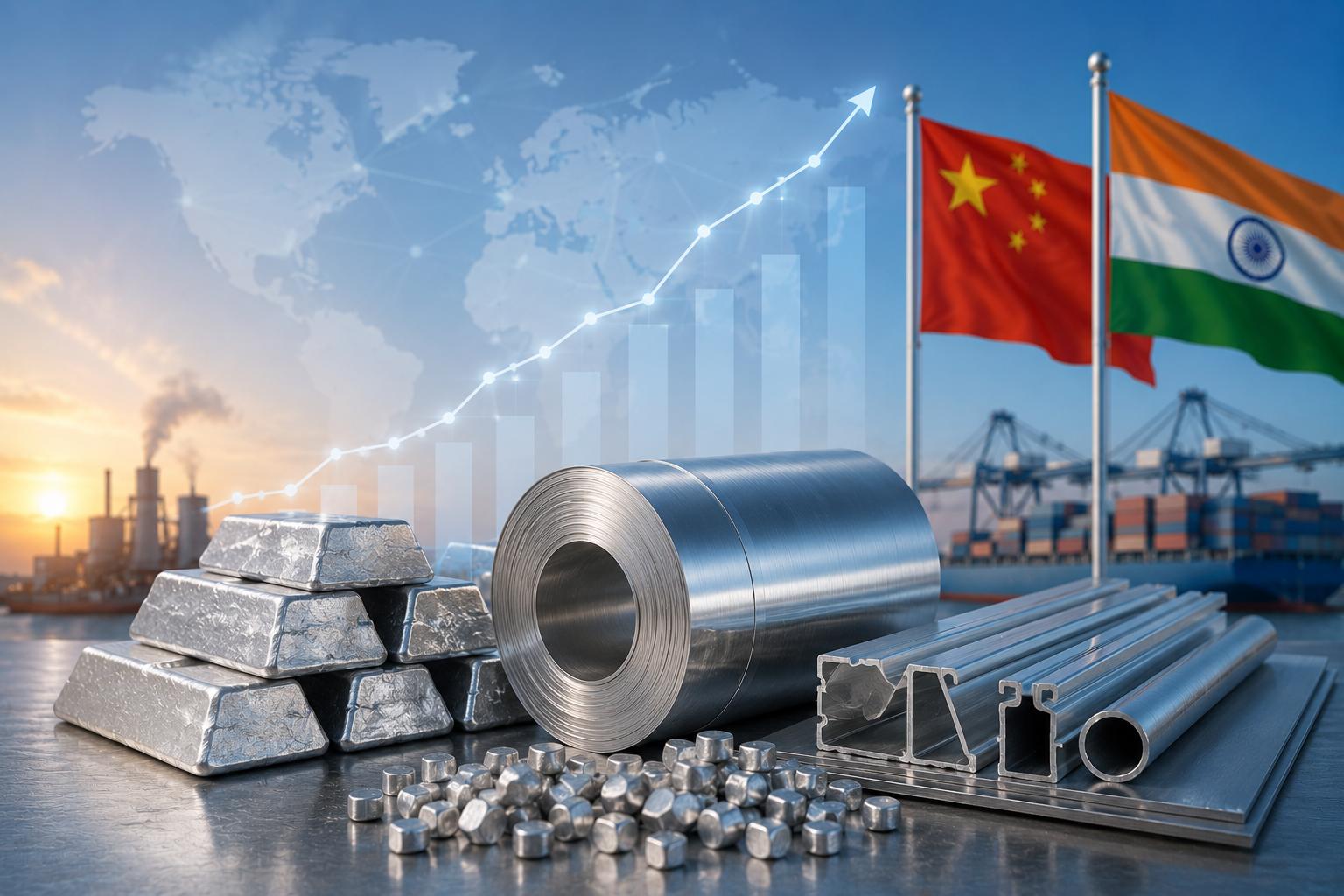
Aluminium (Cash) Price Trend Q2 2026: China vs India Breakdown
Aluminium just posted fresh numbers for June 2026, and the aluminium price trend is showing something buyers should pay attention to. China's cash aluminium is priced at USD 1,336.79/MT on an FOB basis. India's landed cost comes in at USD 1,424.33/MT, CIF. That's a real gap. Not massive, but enough to matter once volumes get involved.
Aluminium touches a lot of industries at once. Automotive parts, construction, packaging, electronics housing. Even a small shift in the base metal price shows up down the chain eventually, sometimes fast, sometimes slower than people expect.
Current Aluminium Prices: China vs India
Numbers first. Everything else builds off these.
| Product | Region | Incoterm Basis | Price | Last Updated |
|---|---|---|---|---|
| Aluminium (Cash) | China | FOB | USD 1,336.79/MT | June 2026 |
| Aluminium (Cash) | India | CIF | USD 1,424.33/MT | June 2026 |
Subtract one from the other and you get USD 87.54 per metric ton. That's the spread. Scale that across a large procurement contract and it stops being a rounding error.
Quick breakdown of what's behind these two figures:
- China's price is FOB, meaning it covers cost up to loading at the port, nothing beyond that.
- India's CIF price adds freight and insurance on top, which naturally inflates the landed number.
- Both figures reflect June 2026. Aluminium moves fast enough that even a few weeks can shift things.
Comparing FOB to CIF directly isn't a clean comparison. Different cost structures, different responsibilities baked into each incoterm. Still worth tracking side by side, just with that context in mind.
What's Behind the Price Gap?
Someone asked me recently why India always seems to pay more for base metals. Fair question. A few reasons stack up here.
Smelting capacity is one. China runs enormous domestic aluminium production, so a lot of its supply never leaves the country, let alone crosses an ocean twice. India imports a bigger share, and that dependency shows up in the final number every time.
Energy costs matter too. Aluminium smelting eats electricity. Regions with cheaper power tend to produce cheaper metal, full stop. That's part of why China's FOB price sits where it does.
Freight plays a role as well. Shipping lanes into India, port handling, insurance premiums. None of that is fixed. A spike in any one of those pushes the CIF number up even if the raw metal cost hasn't moved an inch.
Does currency affect aluminium pricing?
Yes, and more than people assume. Aluminium trades globally in dollars. Weaken the rupee against the dollar and Indian buyers pay more in local currency terms, regardless of what the dollar price is doing.
Is the China-India gap permanent?
Not permanent. Structural, for now. It could narrow if India builds out more domestic smelting capacity, which a few producers have been discussing for years.
What This Means for Buyers and Investors
Buyers sourcing aluminium right now have a decision to make. China's FOB price looks cheaper on paper. Always does. But FOB means the buyer takes on freight and insurance from that point forward, so the real comparison depends on where the metal is going and how it gets there.
Investors watching the metals space might read India's higher CIF price differently. Higher import cost often signals underinvestment in domestic capacity, and that gap tends to attract capital eventually. A few Indian aluminium producers have already flagged expansion plans for exactly this reason.
Manufacturers in auto parts, packaging, or construction materials should treat this trend as a cost input worth tracking monthly, not quarterly. Aluminium feeds directly into production budgets, and prices this volatile don't leave much room for guessing.
Looking Ahead: Q2 2026 Outlook
Hard to say exactly where this goes next. Nobody has a crystal ball on commodity pricing, and anyone claiming certainty here is overselling it.
What does look likely: the China-India spread holds through the rest of Q2 2026. Smelting capacity doesn't change overnight, and neither does India's import reliance. The bigger question is whether energy costs and freight rates stay stable or start moving in either direction.
One thing worth flagging. Locking in a long-term contract off June 2026 numbers without checking for updates carries risk. Aluminium markets shift, sometimes within days. Treat this data as a snapshot, not a promise.
Conclusion
June 2026 shows a clear aluminium price trend split between China at USD 1,336.79/MT FOB and India at USD 1,424.33/MT CIF. The USD 87.54 gap traces back to smelting capacity, energy costs, freight, and import dependency, not random market noise. Anyone buying, investing, or advising on aluminium should keep this kind of regional comparison in view. It's a small piece of data that ends up mattering a lot once real volume gets involved.
FAQ Section
What is the current aluminium price trend in China and India?
China's cash aluminium sits at USD 1,336.79/MT FOB as of June 2026. India's landed price is USD 1,424.33/MT CIF. The gap reflects differences in smelting capacity, freight costs, and how much each country relies on imported metal versus domestic production.
Why is aluminium more expensive in India?
India imports a larger share of its aluminium needs, and its price includes freight plus insurance under the CIF basis. China produces most of its supply domestically, keeping the FOB number lower. Energy costs also factor in, since smelting is power intensive.
What drives aluminium prices the most?
Energy costs top the list, since smelting requires huge amounts of electricity. Beyond that, smelting capacity, freight rates, and currency movements all play a part. Aluminium tends to react quickly to shifts in any of these, more than some other base metals.
How frequently does the aluminium price change?
Aluminium prices can move weekly, sometimes daily during volatile periods. June 2026 figures offer a useful reference point, but buyers finalizing contracts should pull current pricing rather than relying on data that's already a few weeks old.
What's the outlook for aluminium prices in Q2 2026?
The China-India spread is likely to hold through Q2 2026 given current smelting capacity and import patterns. Energy costs and freight rates will determine whether that gap widens or narrows, and neither factor tends to shift quickly on its own.