

 SkillClick
XR Beyond Gaming: AR/VR Career Paths in Healthcare, Education, and Architecture in Singapore
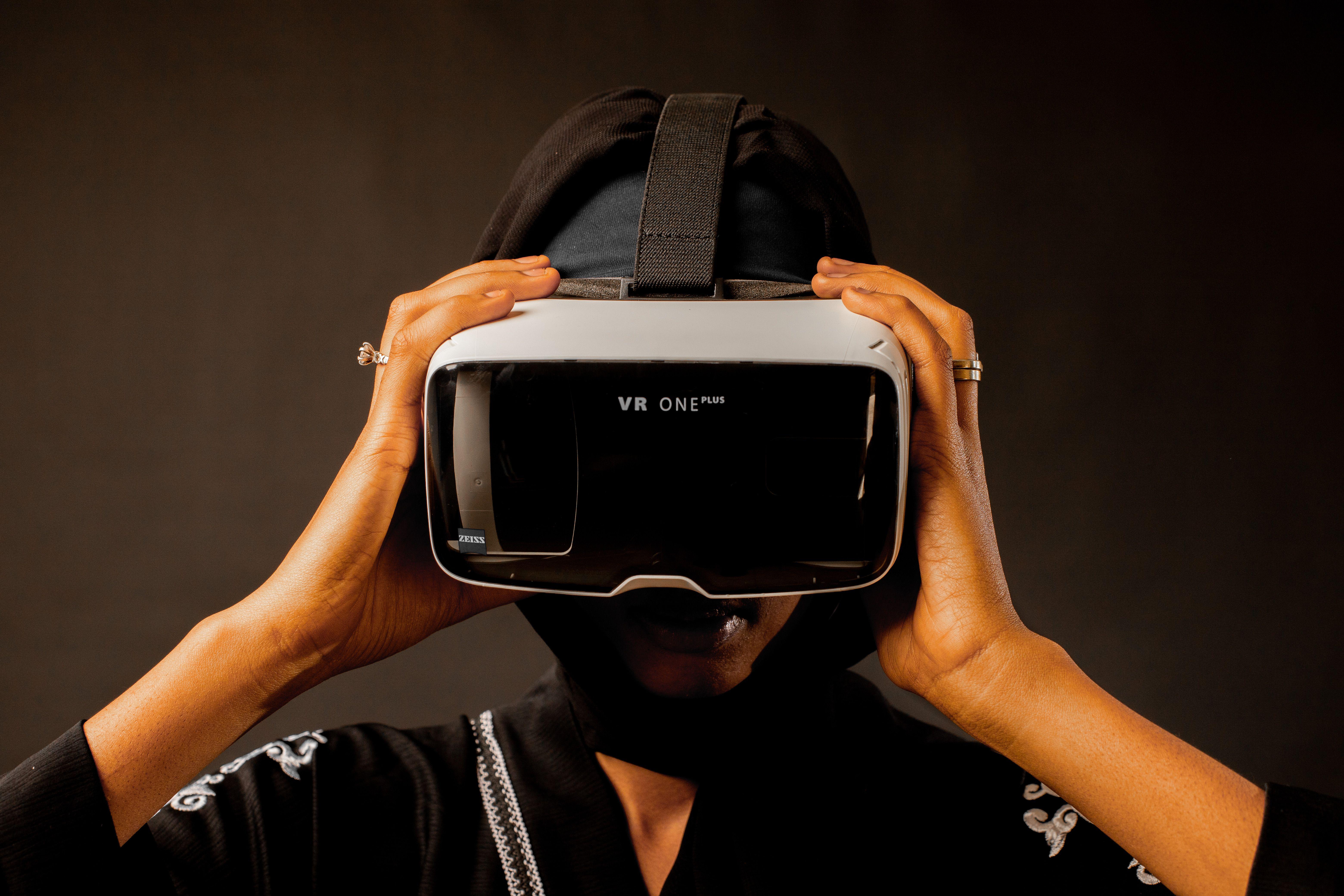
When people think about AR and VR careers, gaming is usually the first industry that comes to mind. But in Singapore, some of the fastest-growing opportunities for XR professionals are emerging elsewhere.
According to PwC, XR technologies could contribute up to US$1.5 trillion to the global economy by 2030, with adoption accelerating across industries far beyond entertainment.
From hospitals using virtual simulations to train healthcare workers to schools creating immersive learning experiences and architects visualising buildings before construction begins, organisations are finding practical ways to use immersive technology every day.
For fresh graduates exploring their options and professionals considering a career switch, this creates career opportunities that many job seekers still overlook. Here's what the non-gaming XR landscape in Singapore looks like and where the demand is growing.
Singapore’s XR Moment: Why the Timing Matters
The growth of immersive technology is no longer a prediction for the future. It is already influencing how organizations train employees, engage learners, and visualize complex projects.
The momentum is visible globally. According to MarketsandMarkets, the extended reality (XR) market is projected to grow from US$24.4 billion in 2024 to US$84.9 billion by 2029, reflecting increasing adoption across industries such as healthcare, education, manufacturing, and enterprise training.
Singapore has positioned itself to participate in this growth through initiatives that support digital innovation and emerging technologies. The country’s Smart Nation vision, SkillsFuture programs, and support from the Infocomm Media Development Authority (IMDA) have helped create an environment where businesses can explore and adopt XR solutions.
Singapore’s XR ecosystem is also becoming more diverse. Companies such as Hiverlab and GameIN are developing immersive solutions for sectors ranging from education and healthcare to construction and workforce training.
For fresh graduates, this creates an opportunity to enter a growing field as professional roles continue to evolve. For career switchers, it offers a chance to move into a high-growth sector before talent pipelines become more established and competition intensifies.
Healthcare: Building Simulations That Save Lives
Healthcare has become one of the most impactful applications of XR technology. As hospitals and training institutions look for safer and more effective ways to prepare healthcare professionals, immersive technologies are becoming an increasingly valuable tool.
The benefits are already measurable. According to PwC, learners trained using VR can complete training up to four times faster than classroom learners while showing greater confidence in applying what they have learned. This makes immersive simulations particularly valuable in healthcare, where practical experience and decision-making skills are critical.
Medical institutions increasingly use virtual environments to train surgeons, prepare nurses for complex procedures, support patient rehabilitation, and even help individuals manage anxiety and trauma. Immersive simulations allow healthcare professionals to practise high-risk scenarios repeatedly without putting patients at risk.
Behind these solutions are multidisciplinary teams that combine technology with clinical expertise. Common XR roles within healthcare include:
-
XR Experience Designer
-
Medical Simulation Developer
-
Clinical Content Creator
-
Interactive Learning Designer
-
Unity or Unreal Developer for Healthcare Applications
A typical project may involve working alongside doctors, nurses, and healthcare educators to recreate real-world procedures in virtual environments. Developers and designers translate clinical workflows into interactive experiences that feel realistic while remaining accessible to learners.
For fresh graduates, healthcare XR offers an opportunity to apply creative and technical skills toward projects with visible social impact. For career switchers, especially those from healthcare backgrounds, the opportunity can be even more compelling.
Education: Designing How the Next Generation Learns
Education is undergoing a major transformation, and immersive technology is becoming an important part of that evolution.
Traditional learning methods often struggle to explain complex concepts or simulate real-world environments. XR technologies address this challenge by allowing learners to interact with information rather than simply observe it.
Students can explore historical sites through virtual field trips. Healthcare learners can study anatomy in three dimensions. Technical trainees can practise equipment handling before entering actual workplaces.
Across Singapore and the wider region, educational institutions, training providers, and EdTech companies are investing in immersive learning solutions that make knowledge more engaging and memorable.
This has created demand for roles such as:
-
XR Instructional Designer
-
Immersive Learning Developer
-
AR Content Creator
-
Educational Experience Designer
-
Interactive Training Specialist
Unlike many other technology careers, success in educational XR depends on more than technical execution. Professionals must understand how people learn.
Building an impressive virtual environment is only part of the challenge. The real objective is creating experiences that improve comprehension, retention, and skill development.
For fresh graduates from education, design, media, or technology backgrounds, this field offers a natural bridge between creativity and innovation.
For career switchers, teachers, corporate trainers, and learning and development professionals bring something particularly valuable to the table: domain expertise. T
Architecture and Construction: The Most Mature Non-Gaming XR Sector
Among non-gaming industries, architecture, engineering, and construction have arguably embraced XR technology more extensively than any other sector.
Design teams increasingly use immersive environments to visualise projects before construction begins. Stakeholders can walk through buildings, identify issues, and make decisions while designs still exist digitally.
This dramatically improves communication between architects, engineers, contractors, and clients.
A notable example is VRcollab, which helps teams transform building information modelling (BIM) data into collaborative virtual environments where project stakeholders can review designs together.
Common XR applications include:
-
Pre-construction client walkthroughs
-
Collaborative design reviews
-
Site safety simulations
-
Building visualisation
-
Stakeholder presentations
-
Construction planning
These use cases have generated demand for specialised roles such as:
-
Architectural Visualisation Artist
-
BIM-to-VR Developer
-
Real-Time Environment Designer
-
XR Technical Artist
-
Immersive Design Specialist
For fresh graduates with interests in 3D modelling, architecture, animation, or real-time rendering, this sector provides a clear pathway into commercial XR work.
For architects, engineers, and construction professionals considering a career transition, XR creates opportunities to expand their influence. Professionals who understand both building design and immersive technology can serve as translators between technical teams and clients, a capability many organisations actively need.
The Skills That Travel Across All Three Sectors
Although healthcare, education, and architecture solve different problems, the core skill set behind successful XR projects remains remarkably similar.
Across industries, employers consistently look for professionals who can combine technical proficiency with creative problem-solving.
Key skills include:
-
Unity or Unreal Engine Development
Most immersive applications are built using industry-standard real-time development platforms. Understanding how to create interactive experiences within these environments remains fundamental.
-
Spatial UX Design
Designing for immersive environments requires a different mindset from traditional screen-based experiences. Users move, interact, and navigate information in three-dimensional space.
-
Immersive Storytelling
Every XR experience guides attention and behaviour. Whether teaching a medical procedure or presenting a building design, storytelling principles remain critical.
-
Collaboration with Domain Experts
Healthcare professionals, educators, and architects possess specialised knowledge that developers may not understand. Successful XR professionals know how to extract insights from experts and transform them into engaging experiences.
Ultimately, the most employable XR professional is not necessarily the strongest programmer or the most talented artist.
It is often the individual who can understand a domain expert’s objectives and convert them into a practical immersive solution.
That combination of creative thinking, technical execution, and communication skill is what makes XR professionals valuable across industries.
How MAGES Prepares People for XR Careers Beyond Gaming
Building a successful XR career requires more than learning software tools. Employers want professionals who can solve real-world problems.
This is the philosophy behind the XR Immersive programme at MAGES Institute.
Students learn industry-standard technologies such as Unity and Unreal Engine while working on practical projects that mirror the challenges faced by organisations in healthcare, education, architecture, and other sectors.
Instead of focusing exclusively on entertainment experiences, learners develop applications designed to address genuine business and industry needs.
The results extend far beyond gaming.
MAGES Studio, founded by alumni, has delivered more than 60 XR solutions across nine different industries, demonstrating the versatility of immersive technology skills in today’s market.
The Career Is Already Here
The assumption that XR careers belong exclusively to gaming no longer reflects reality.
Across Singapore, immersive technology is helping healthcare professionals train more effectively, enabling educators to create engaging learning experiences, and allowing architects to visualise projects with unprecedented clarity.
The opportunities are real, the demand is growing, and organisations are actively seeking people who can bridge technology with industry expertise.
For fresh graduates, XR offers a chance to enter an emerging field with broad applications and long-term growth potential.
For career switchers, it presents an opportunity to combine existing professional knowledge with future-focused technical skills.
The future of XR in Singapore is not limited to gaming. It is being built in hospitals, classrooms, design studios, and construction sites today.
For those ready to develop the skills behind these experiences, programmes such as MAGES Institute’s XR Immersive course provide a practical pathway into one of the most exciting areas of digital innovation.
Frequently Asked Questions
1. Are AR and VR careers in Singapore limited to the gaming industry?
No. While gaming remains an important part of the XR ecosystem, many opportunities now exist in healthcare, education, architecture, construction, manufacturing, and enterprise training. Organisations across these sectors are using immersive technologies to solve real-world challenges and improve outcomes.
2. What are the most in-demand XR jobs in Singapore?
Some of the most sought-after roles include XR Developer, Unity Developer, Unreal Engine Developer, XR Experience Designer, Medical Simulation Developer, XR Instructional Designer, AR Content Creator, and Architectural Visualisation Artist.
3. Can I start an XR career without a computer science degree?
Yes. Many XR professionals come from backgrounds in design, animation, architecture, education, healthcare, and other fields. What matters most is developing the technical and creative skills required to build immersive experiences and demonstrating them through a strong portfolio.
4. Which industries are creating the most opportunities for XR professionals?
Healthcare, education, and architecture are among the fastest-growing sectors for XR adoption. These industries use immersive technologies for training, learning, collaboration, visualisation, and simulation, creating demand for specialised talent.
5. What skills do employers look for in XR professionals?
Employers typically look for proficiency in Unity or Unreal Engine, 3D design fundamentals, spatial UX design, immersive storytelling, problem-solving abilities, and the ability to collaborate with industry experts from non-technical backgrounds.
6. Is XR a good career choice for professionals looking to switch careers?
Yes. Career switchers often bring valuable industry knowledge that complements XR development skills. Professionals from healthcare, education, architecture, and engineering can leverage their domain expertise to create immersive solutions tailored to their industries.
7. What salary can XR professionals expect in Singapore?
Salaries vary depending on experience, specialisation, and employer. However, trained AR and VR professionals in Singapore can earn competitive salaries, with experienced developers and specialists often commanding higher compensation due to growing demand for immersive technology expertise.
8. How can I prepare for a career in XR?
A good starting point is learning industry-standard tools such as Unity and Unreal Engine while building practical projects that solve real-world problems. Specialised programmes like the XR Immersive course at MAGES Institute can help learners develop technical skills, industry knowledge, and a portfolio that demonstrates their capabilities to employers.
- Managerial Effectiveness!
- Future and Predictions
- Motivatinal / Inspiring
- Fitness and Wellness
- Medical & Health
- Manufacturing
- Education
- Real-Estate
- Food Industry
- Hospitality
- Online Games
- Sports
- Home Services
- Civil Engineering
- Safety and Protection
- Software Products & Services
- Fashion and Jewellery
- Artificial Intelligence
- Entrepreneurship
- Mentoring & Guidance
- Marketing
- Networking
- HR & Recruiting
- Literature
- Shopping
- Career Management & Advancement