

 SkillClick
Is Investing in a Dry Cleaning Setup Profitable? Equipment, Costs & ROI Explained
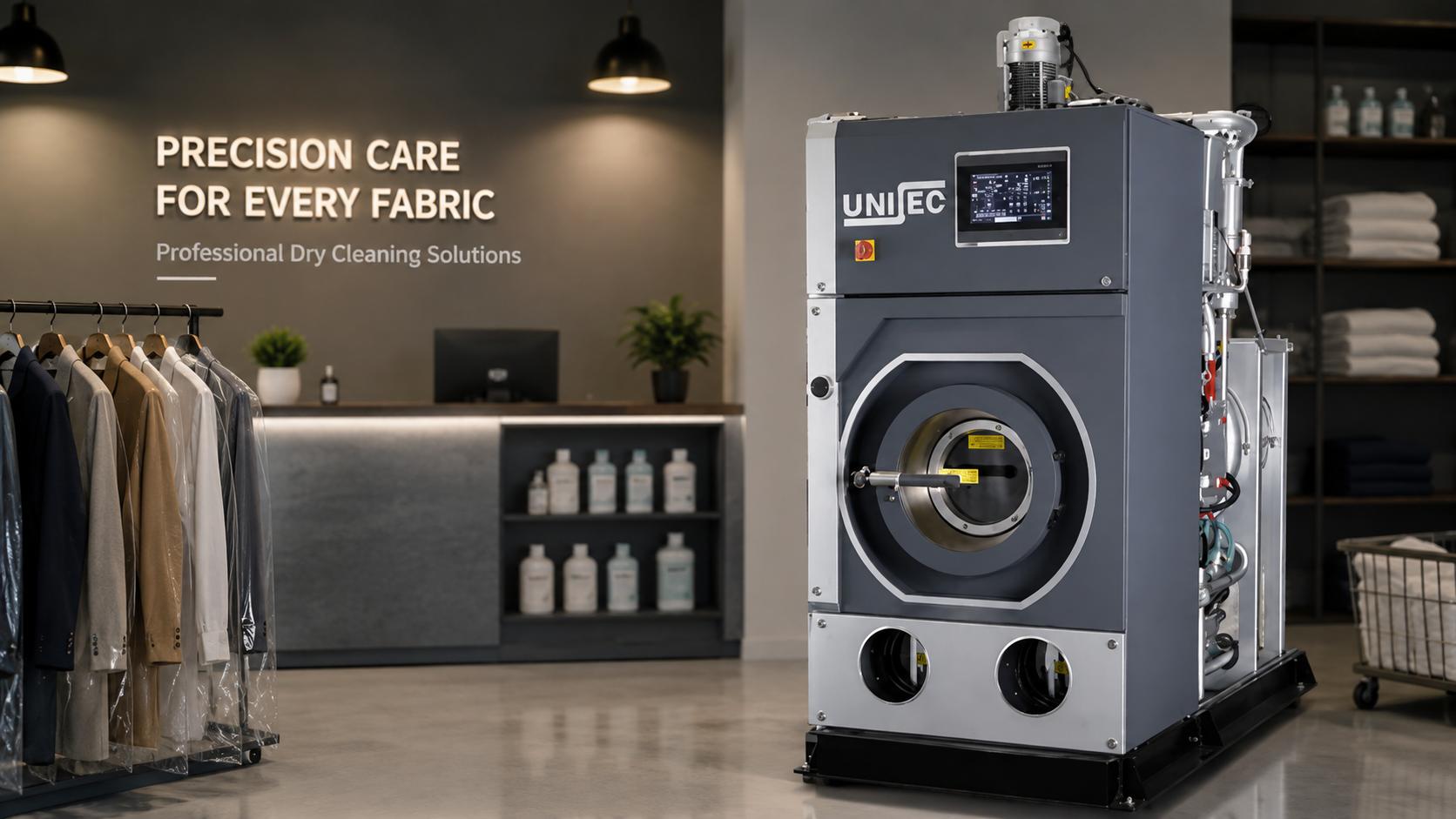
Opening a professional dry cleaning operation can be an attractive opportunity for entrepreneurs looking to enter the garment-care industry or existing laundry owners wanting to add a higher-value service. Unlike basic wash-and-fold services, dry cleaning allows businesses to handle suits, formalwear, premium garments, delicate fabrics, and other items that customers are often willing to pay more to maintain.
However, profitability depends on much more than purchasing a dry cleaning machine. Equipment capacity, location, service mix, utilities, operating processes, garment volume, pricing, and customer acquisition all affect the economics of the business.
Before investing in a dry cleaning setup, it is important to understand where the money goes, what equipment is actually required, and how quickly the investment could generate returns.
Is a Dry Cleaning Business Profitable?
A dry cleaning business can be profitable when there is sufficient garment volume and the operation maintains strong control over processing costs.
Dry cleaning generally serves higher-value garment categories compared with standard laundry. Customers may pay a premium for professional treatment of suits, blazers, jackets, dresses, wedding garments, uniforms, and delicate fabrics.
Profitability depends on factors such as:
-
Garments processed per day
-
Average selling price per garment
-
Local competition
-
Equipment utilization
-
Labour productivity
-
Solvent and chemical consumption
-
Utility expenses
-
Rewash or reprocessing rates
-
Pickup and delivery costs
The objective should therefore be to maximize profitable machine utilization rather than simply process the highest possible number of garments.
What Does a Complete Dry Cleaning Setup Include?
A professional dry cleaning setup is a complete garment-processing workflow rather than one standalone machine.
The process normally includes garment inspection and tagging, spotting, cleaning, drying, finishing, quality checking, packaging, and customer delivery.
Depending on your business model, the facility may require dedicated areas for dirty garments, cleaned garments, spotting, machine processing, pressing, storage, and packaging.
Planning this workflow correctly reduces unnecessary garment movement and helps prevent mix-ups, delays, and contamination.
What Equipment Do You Need to Start a Dry Cleaning Business?
The equipment requirement depends on the type and volume of garments you intend to process.
Core dry cleaning equipment may include:
-
Commercial dry cleaning machine
-
Professional spotting table
-
Steam press
-
Vacuum ironing table
-
Steam generator or boiler
-
Garment finishing equipment
-
Air compressor where required
-
Garment racks and trolleys
-
Packaging equipment
-
Tagging and billing systems
Businesses offering both wet laundry and dry cleaning may additionally require washer extractors, tumble dryers, and other commercial laundry equipment.
Instead of buying every possible machine initially, build your equipment list around the services that will generate revenue from the beginning.
How Much Does a Dry Cleaning Setup Cost?
There is no single dry cleaning setup cost because investment varies significantly depending on scale, equipment technology, store format, and processing capacity.
Major investment categories include:
|
Investment Area |
What It Covers |
|
Dry cleaning machine |
Capacity, technology and configuration |
|
Finishing equipment |
Pressing, ironing and garment finishing |
|
Utilities |
Electrical, steam, ventilation and compressed air |
|
Interiors |
Counters, garment racks and workflow areas |
|
Chemicals |
Solvents, spotting agents and consumables |
|
Technology |
POS, billing and garment tracking |
|
Working capital |
Rent, salaries, marketing and initial operations |
A small garment-care store with centralized processing has a very different investment requirement from a complete dry cleaning plant processing hundreds of garments daily.
For this reason, entrepreneurs should obtain a project-specific quotation rather than relying on a generic setup figure.
How to Choose the Right Dry Cleaning Machine
Your commercial dry cleaning machine is one of the most important investments in the facility.
Start by estimating expected daily garment volume and realistic machine utilization. Purchasing excessive capacity can lock capital into an underutilized asset, while an undersized machine may limit growth.
Compare machines based on:
-
Load capacity
-
Number of tanks
-
Filtration system
-
Distillation capabilities
-
Solvent management
-
Energy consumption
-
Programmable controls
-
Safety systems
-
Maintenance requirements
-
Spare-parts availability
-
Technical support
The lowest dry cleaning machine price does not automatically mean the lowest operating cost. Reliability and long-term serviceability should carry significant weight in the purchasing decision.
Which Garments and Services Generate the Best Margins?
A profitable garment care business should not depend entirely on basic garments.
Higher-value opportunities can include premium garment care, designer wear, suits and blazers, bridal garments, jackets, winter wear, curtains, specialty fabrics, uniforms, and stain-treatment services.
Businesses can also increase customer value through services such as express processing, pickup and delivery, garment finishing, stain treatment, minor alterations, and premium packaging.
The right service mix can increase revenue without requiring the same increase in customer count.
What Are the Major Operating Costs of a Dry Cleaning Business?
Understanding operating expenses is essential when calculating dry cleaning business profit.
Major recurring costs include labour, rent, electricity, steam generation, solvents and chemicals, spotting products, packaging, equipment maintenance, delivery, and marketing.
Poor process control can create additional hidden expenses through reprocessing, garment damage, excessive solvent consumption, machine downtime, and customer claims.
Preventive maintenance and proper operator training therefore have a direct impact on profitability.
How Much Can a Dry Cleaning Business Earn?
Revenue should be calculated using realistic garment volumes rather than optimistic assumptions.
Consider a simplified example of a facility processing 100 garments per day at an average billing value of ₹180 per garment.
That would represent:
Daily revenue: ₹18,000
Monthly revenue at 26 operating days: ₹4.68 lakh
If volume increases to 150 garments daily at the same average billing value, monthly revenue could reach approximately ₹7.02 lakh.
These figures represent gross revenue, not profit. Actual earnings depend on local pricing, utilization, rent, labour, utilities, chemicals, taxes, maintenance, and other operating expenses.
Dry Cleaning Investment & ROI: How Long Can Payback Take?
Calculating dry cleaning business ROI requires comparing total investment against the cash the operation generates after expenses.
For example, assume a complete project requires an investment of ₹25 lakh and generates an average operating surplus of ₹1 lakh per month after routine operating expenses.
A simple payback calculation would be:
₹25 lakh ÷ ₹1 lakh = 25 months
If the monthly surplus reaches ₹1.5 lakh, the simple payback period could fall to roughly 17 months.
These are illustrative calculations, not guaranteed returns. Real-world payback depends heavily on utilization, financing, taxes, maintenance, customer acquisition, pricing, and local demand.
Common Mistakes That Reduce Dry Cleaning Business Profit
One common mistake is investing heavily before understanding local demand. Other problems include selecting the wrong machine capacity, competing primarily on low prices, ignoring finishing quality, failing to train operators, poor stain identification, and neglecting preventive maintenance.
Another major mistake is treating the machine as the entire business. Customers judge the final garment, not the equipment behind it.
Consistent cleaning, professional finishing, reliable turnaround, careful packaging, and strong customer service are what create repeat business.
How to Build a Profitable Dry Cleaning Setup
Start with a realistic market assessment. Identify your target customers, expected garment volume, competitors, pricing, and premium service opportunities before finalizing equipment.
Next, build a dry cleaning setup around your expected processing volume while leaving reasonable capacity for growth. Standardize garment inspection, spotting, cleaning, finishing, and quality control procedures from day one.
Track key numbers such as garments processed per day, average order value, repeat customer rate, reprocessing percentage, utility cost, chemical consumption, and machine utilization. These figures reveal where profitability is being gained or lost.
How Orgaearth Can Help
Orgaearth helps entrepreneurs and established laundry businesses plan professional dry cleaning operations around their actual processing requirements. Rather than focusing only on machine supply, the approach considers capacity, workflow, utilities, garment categories, finishing requirements, and future expansion.
OrgaEarth provides professional dry cleaning equipment, commercial laundry machines, garment finishing solutions, laundry chemicals, and related equipment for complete garment-care operations. Support can include equipment selection, project consultation, installation and commissioning, operator training, preventive maintenance, spare-parts support, and Annual Maintenance Contracts. Whether you are starting a dedicated dry cleaning business or adding premium garment care to an existing laundry, the objective is to build an efficient operation with reliable equipment and sustainable operating costs.
Contact Us
Orgaearth Laundry Solutions
Plot no. 714, Udyog Vihar, Phase 5, Gurugram, Haryana, India-122016
Email: marketing@orgaearth.com
Contact No.: +91 7042912777
FAQs
Is a dry cleaning business profitable?
Yes, it can be profitable when there is sufficient garment volume, appropriate pricing, efficient equipment utilization, and strong control over operating expenses.
How much does a dry cleaning setup cost?
The investment varies according to machine capacity, finishing equipment, utilities, interiors, location, and business scale. A project-specific quotation provides a more reliable estimate than a generic figure.
What equipment is required for dry cleaning?
A typical setup can include a dry cleaning machine, spotting table, steam press, vacuum ironing table, steam generator, garment racks, packaging equipment, and supporting utility systems.
How much does a commercial dry cleaning machine cost?
Prices vary considerably based on capacity, technology, tank configuration, filtration, distillation, controls, and manufacturer. Total ownership cost should be considered alongside purchase price.
What is the profit margin in a dry cleaning business?
There is no universal margin. It depends on garment pricing, volume, rent, labour, chemicals, utilities, maintenance, delivery expenses, and equipment utilization.
How long does it take to recover a dry cleaning investment?
Payback depends on initial investment and monthly operating surplus. A properly planned facility with strong utilization may recover its investment significantly faster than an underutilized operation.
Can I add dry cleaning to an existing laundry business?
Yes. Adding dry cleaning can expand the range of garments you serve and increase revenue per customer, provided there is sufficient demand, suitable space, utilities, equipment, and trained operators.
- Managerial Effectiveness!
- Future and Predictions
- Motivatinal / Inspiring
- Fitness and Wellness
- Medical & Health
- Manufacturing
- Formazione
- Real-Estate
- Food Industry
- Hospitality
- Online Games
- Sports
- Home Services
- Civil Engineering
- Safety and Protection
- Software Products & Services
- Fashion and Jewellery
- Artificial Intelligence
- Entrepreneurship
- Mentoring & Guidance
- Marketing
- Networking
- HR & Recruiting
- Literature
- Shopping
- Career Management & Advancement