

 SkillClick
Generative AI Market Disruptions Reshaping Technology, Business Models, and Digital Innovation
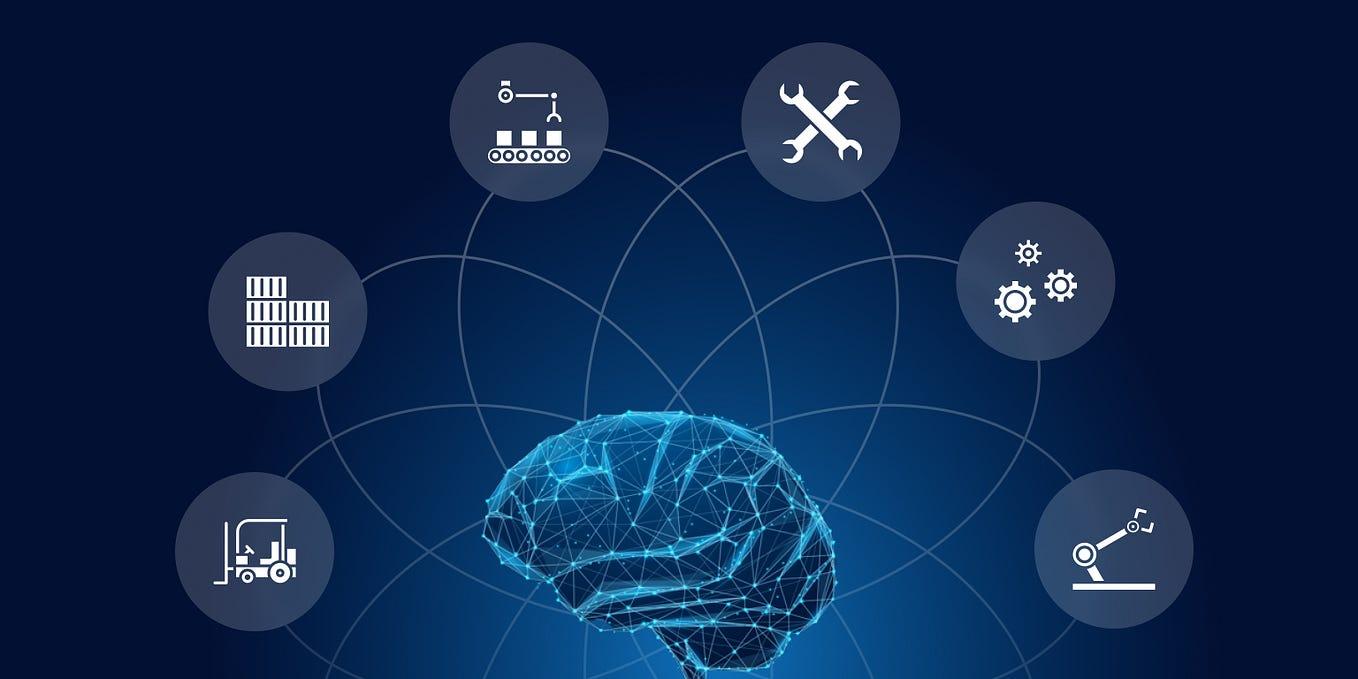
The Generative AI Market is undergoing a period of rapid transformation as artificial intelligence systems move from experimental applications into mainstream business operations. Generative AI can create text, images, software code, audio, video, designs, and other digital content, making it fundamentally different from traditional analytical AI applications.
The increasing adoption of large language models, multimodal systems, AI agents, and domain-specific models is creating new opportunities while simultaneously disrupting established technologies, workflows, and competitive structures. These changes are affecting software development, marketing, customer service, healthcare, education, finance, media, manufacturing, and numerous other industries.
Understanding Generative AI Market Disruptions requires examining not only technological advancement but also changes in workforce structures, data strategies, software economics, intellectual property, cybersecurity, and organizational decision-making.
Rapid Evolution of AI Models
One of the most significant disruptions is the speed at which generative AI models are evolving. Earlier systems were primarily designed to generate basic text or respond to straightforward prompts. Newer models increasingly support complex reasoning, multimodal inputs, longer contexts, structured outputs, and task automation.
This evolution is changing expectations around enterprise software. Businesses that previously relied on separate tools for writing, analysis, translation, summarization, coding, and customer support can increasingly access several capabilities through integrated AI platforms.
The rapid improvement of models also creates a challenge for organizations. Technology investments can become outdated quickly, encouraging companies to adopt flexible architectures that allow models and AI services to be replaced without rebuilding entire systems.
Disruption of Traditional Software Workflows
Generative AI is transforming how employees interact with software. Instead of navigating multiple menus and manually completing repetitive processes, users can increasingly describe desired outcomes using natural language.
For example, a marketing employee may request a campaign concept, generate several variations, analyze customer feedback, and prepare promotional material within a single AI-assisted workflow. Developers can use AI to generate code, identify potential errors, create documentation, and accelerate testing.
This shift may reduce the importance of traditional software interfaces for certain tasks. Applications are increasingly expected to become intelligent assistants rather than passive tools.
As AI becomes embedded directly into enterprise platforms, competition is also shifting from standalone applications toward ecosystems capable of combining data, automation, and intelligent decision support.
Transformation of Workforce Roles
Workforce disruption is another defining characteristic of the Generative AI Market. Generative AI does not necessarily eliminate entire occupations immediately; instead, it often changes the composition of individual jobs.
Routine drafting, data summarization, basic coding, translation, document preparation, and content creation can increasingly be automated or accelerated. Employees may therefore spend more time reviewing outputs, solving complex problems, managing relationships, and making strategic decisions.
This creates demand for new capabilities. AI literacy, prompt design, model evaluation, data governance, and human-AI collaboration are becoming increasingly valuable skills.
Organizations that successfully manage this transition may use AI to increase employee productivity rather than simply reduce labor requirements. However, companies must also address training gaps and resistance to technological change.
Emergence of AI-Native Business Models
Generative AI is disrupting conventional software economics by introducing AI-native products and services. Businesses can now develop applications that automatically generate personalized recommendations, documents, creative assets, software components, and customer interactions.
This creates opportunities for smaller companies to build sophisticated services without developing every underlying AI capability internally.
At the same time, established businesses face pressure to integrate generative AI into existing products. Companies that fail to adapt may find their offerings less competitive as customers increasingly expect intelligent automation and personalized experiences.
Subscription-based software may also evolve as businesses experiment with usage-based AI pricing, outcome-based services, and hybrid commercial models.
Multimodal AI Changes Content Creation
The convergence of text, images, audio, video, and other data formats represents another major disruption. Multimodal AI allows users to provide different types of information and receive coordinated outputs.
A product designer, for example, could provide a written concept and reference images and request design variations. A business could analyze customer conversations, images, and documents through a unified AI system.
This capability is disrupting traditional content production workflows. Creative teams can generate prototypes faster, test more concepts, and personalize content for different audiences.
However, increased synthetic content production also raises questions surrounding authenticity, originality, copyright, and the ability of audiences to distinguish human-created material from AI-generated content.
AI Agents and Autonomous Workflows
The development of AI agents could represent one of the next major stages of disruption. Rather than simply answering prompts, agentic systems can potentially plan tasks, use software tools, retrieve information, execute actions, and monitor outcomes.
This can transform business process automation. An AI system may eventually handle multi-step activities such as preparing reports, coordinating information across applications, analyzing documents, and initiating routine operational tasks.
Agent-based systems could reduce the need for employees to manually coordinate multiple software applications. Nevertheless, autonomous systems require strong controls because errors can propagate across several steps when AI is given greater authority to act.
Data and Infrastructure Disruptions
Generative AI is also changing the economics of computing infrastructure. High-performance processors, specialized AI accelerators, cloud platforms, storage systems, and data-center capacity are becoming strategically important.
Organizations increasingly need efficient methods for managing model inference, data processing, security, and computational costs. This is encouraging interest in smaller specialized models, model optimization, retrieval-augmented systems, and hybrid deployment architectures.
Businesses may increasingly combine public AI services with private models trained or customized for specific organizational requirements. This creates a more diverse AI infrastructure landscape rather than a single-model environment.
Intellectual Property and Content Governance
The ability of AI systems to generate content at scale is disrupting conventional approaches to intellectual property management. Businesses must determine how AI-generated material can be used, modified, distributed, and protected.
Questions around training data, copyrighted material, ownership, attribution, and originality are becoming increasingly important. Companies using generative AI commercially may need formal policies governing approved tools, sensitive information, human review, and content ownership.
These governance requirements can influence technology purchasing decisions. Enterprises are likely to favor AI solutions that provide stronger transparency, security controls, administrative features, and compliance capabilities.
Cybersecurity Disruption
Generative AI is creating both defensive and offensive cybersecurity possibilities. Security teams can use AI to analyze large volumes of logs, summarize incidents, identify unusual behavior, and accelerate response procedures.
At the same time, malicious actors can use generative systems to produce convincing phishing messages, automate social engineering content, create deceptive material, and accelerate certain cyberattack processes.
This creates an ongoing technological competition between attackers and defenders. Organizations will increasingly need AI-enabled security tools alongside stronger authentication, employee training, monitoring, and governance frameworks.
Industry-Specific Transformation
The disruptive effects of generative AI vary significantly by industry. Healthcare organizations can use AI to assist with documentation and information management. Financial institutions can apply it to customer communication, research assistance, and operational processes.
Manufacturers can explore AI-assisted engineering, maintenance documentation, and product development. Retailers can use generative systems for personalized marketing, customer interaction, and merchandising support.
Media and entertainment businesses face particularly significant changes because AI can accelerate script development, visual production, localization, and digital content generation.
The result is not a single universal disruption pattern. Instead, each industry is developing different combinations of automation, augmentation, and human oversight.
Regulatory and Organizational Disruption
Regulation is becoming an important factor shaping the development of generative AI. Governments and organizations are increasingly focused on transparency, privacy, security, accountability, and responsible AI deployment.
Regulatory requirements may increase compliance costs in the short term but can also encourage greater confidence among businesses and consumers. Organizations will need clear governance structures covering model selection, data usage, risk assessment, human oversight, and monitoring.
Companies that establish responsible AI practices early may gain an advantage as enterprise adoption becomes more sophisticated.
Future Direction of Generative AI Disruptions
The next phase of disruption is likely to involve deeper integration rather than simple chatbot adoption. AI capabilities are expected to become embedded into everyday applications, enterprise systems, search experiences, creative platforms, development environments, and operational processes.
The distinction between conventional software and AI-powered software may become increasingly blurred. Businesses may compete based on how effectively they combine proprietary data, intelligent automation, human expertise, and AI infrastructure.
Ultimately, the most important disruption may be organizational rather than technological. Companies will need to redesign workflows, redefine employee responsibilities, develop new governance practices, and reconsider how digital products are created and delivered.
Conclusion
Generative AI is disrupting technology markets by changing how content is produced, software is used, work is organized, and business processes are automated. The emergence of multimodal models, AI agents, specialized systems, and AI-native applications is broadening the impact across industries.
The Generative AI Market Disruptions are therefore not limited to improvements in artificial intelligence itself. They represent a broader transformation involving infrastructure, workforce skills, cybersecurity, intellectual property, software economics, and competitive strategy.
Organizations that approach these changes strategically can use generative AI to improve productivity, accelerate innovation, personalize services, and develop new sources of value. Those that treat the technology as a temporary trend may face growing pressure as AI becomes an increasingly fundamental component of the digital economy.
- Managerial Effectiveness!
- Future and Predictions
- Motivatinal / Inspiring
- Fitness and Wellness
- Medical & Health
- Manufacturing
- Education
- Real-Estate
- Food Industry
- Hospitality
- Online Games
- Sports
- Home Services
- Civil Engineering
- Safety and Protection
- Software Products & Services
- Fashion and Jewellery
- Artificial Intelligence
- Entrepreneurship
- Mentoring & Guidance
- Marketing
- Networking
- HR & Recruiting
- Literature
- Shopping
- Career Management & Advancement