

 SkillClick
Understanding PTSD Symptoms: When Trauma Begins to Affect Everyday Life
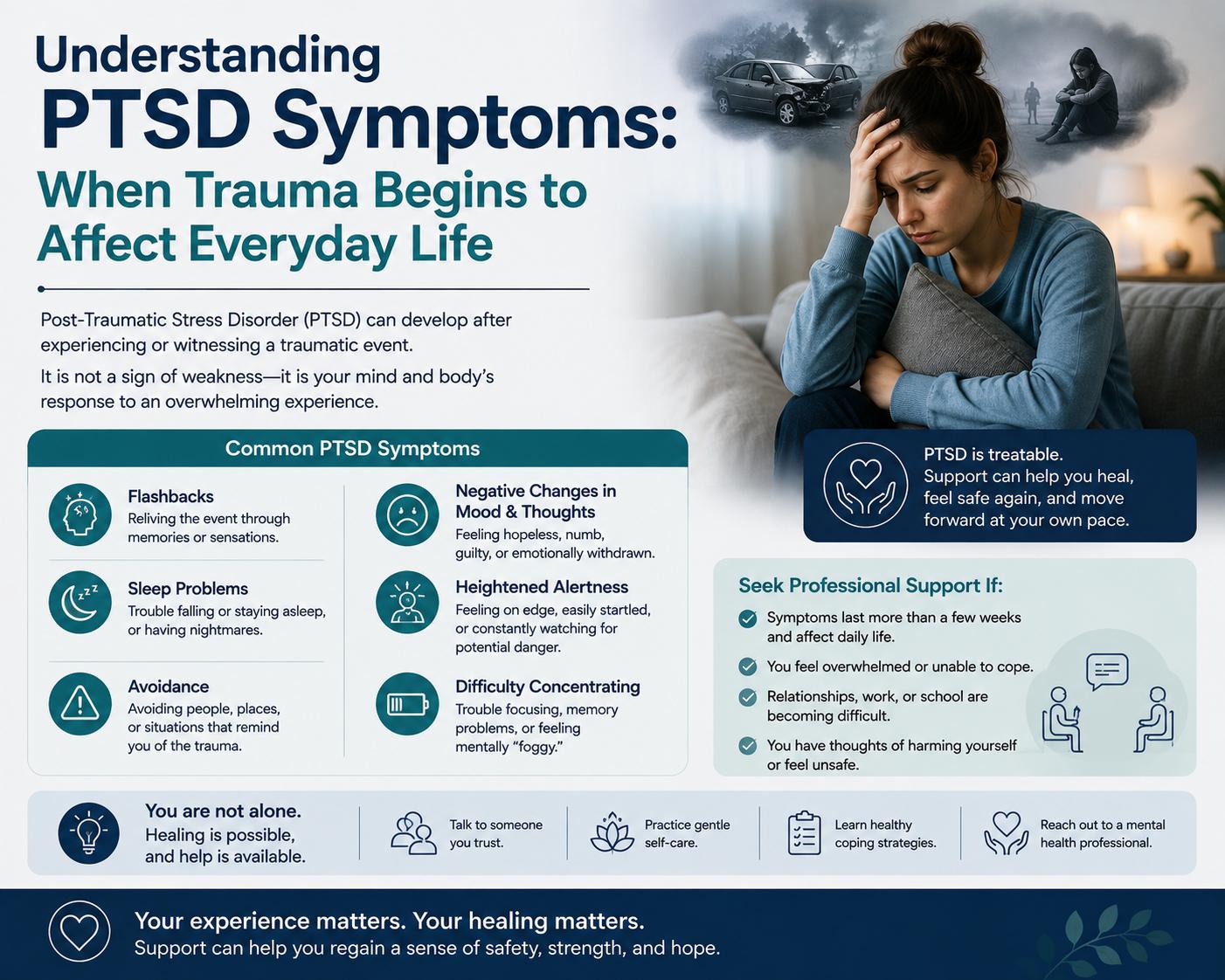
PTSD symptoms can develop after someone experiences or witnesses a traumatic event and may affect thoughts, emotions, behavior, sleep, relationships, and everyday functioning. While distress after trauma can be a normal part of recovery, persistent symptoms that continue, intensify, or interfere with daily life may indicate that professional support is appropriate. Recognizing the pattern matters because PTSD can affect more than memories of the event—it can change how a person feels, responds to situations, and experiences ordinary life.
A person does not always recognize PTSD symptoms immediately. Sometimes they emerge soon after trauma; in other cases, symptoms become noticeable later. Some people may also try to avoid thinking or talking about what happened, making it harder to recognize how much the experience is affecting them.
Understanding what PTSD can look like can help you recognize concerning changes without trying to diagnose yourself.
In This Guide You'll Learn
-
What PTSD symptoms can look like in everyday life
-
How trauma-related symptoms can affect thoughts, emotions, and behavior
-
When symptoms may be interfering with relationships and daily functioning
-
When professional support may be appropriate after trauma
What Are PTSD Symptoms?
Post-traumatic stress disorder (PTSD) is a mental health condition that can develop after exposure to a traumatic experience. PTSD symptoms can involve several different aspects of a person's experience rather than one single reaction.
Someone may have unwanted memories of the event, avoid reminders, remain unusually alert to possible danger, or experience changes in mood and thinking.
These reactions can vary considerably between people. Two individuals exposed to similar traumatic circumstances may have very different responses.
PTSD symptoms are generally understood across several broad patterns:
-
Intrusive experiences, such as unwanted memories, nightmares, or distressing reminders
-
Avoidance, such as trying to stay away from people, places, conversations, or thoughts associated with the trauma
-
Changes in mood and thinking, including persistent fear, guilt, shame, detachment, or difficulty experiencing positive emotions
-
Changes in arousal and reactivity, such as being easily startled, irritable, tense, watchful, or having difficulty sleeping
The presence of one or more of these experiences does not by itself establish PTSD. A professional assessment considers the overall pattern, duration, severity, and effect on functioning.
How PTSD Can Show Up in Everyday Life
Trauma-related symptoms are not always obvious. Sometimes the most noticeable changes occur in ordinary routines.
Intrusive Memories and Reminders
A person may experience memories of the traumatic event without intentionally thinking about it.
These experiences can include:
-
Unwanted memories
-
Distressing dreams or nightmares
-
Strong emotional reactions to reminders
-
Physical sensations associated with remembering the event
-
Feeling as though the trauma is happening again in some way
A reminder does not have to be an exact copy of the original situation. A sound, smell, location, conversation, date, or similar circumstance may trigger distress.
For someone experiencing this, an otherwise ordinary environment can suddenly feel unsafe or emotionally overwhelming.
Avoiding Trauma-Related Reminders
Avoidance can take different forms.
Someone may avoid discussing the traumatic experience, refuse to visit a particular location, avoid certain people, stop watching certain types of media, or try to push away thoughts about what happened.
Avoidance can sometimes provide short-term relief. However, when it begins limiting daily activities, relationships, work, travel, or other important parts of life, it may become a significant concern.
For example, someone who was involved in a serious car accident may begin avoiding driving altogether. Another person may continue driving but avoid certain roads or situations associated with the event.
Changes in Mood and Thinking
Trauma can affect how someone thinks about themselves, other people, and the world.
Some people experience:
-
Persistent fear or anxiety
-
Guilt or shame
-
Difficulty trusting others
-
Feeling emotionally numb or disconnected
-
Loss of interest in activities
-
Persistent negative thoughts
-
Difficulty experiencing positive emotions
-
A sense that the world is constantly dangerous
These changes can affect relationships as well as a person's sense of identity and emotional well-being.
Someone might think, "I should have prevented it," even when the event was outside their control. Others may begin expecting something bad to happen even in situations that are objectively safe.
Changes in Alertness and Emotional Reactions
Some PTSD symptoms involve the body's response to perceived danger.
A person may become unusually watchful or easily startled. They may react strongly to unexpected sounds, have difficulty relaxing, or feel constantly "on edge."
Other possible changes include:
-
Irritability or anger
-
Difficulty concentrating
-
Sleep problems
-
Strong startle reactions
-
Reckless or unusually risky behavior
-
Physical tension
-
Difficulty settling down after becoming upset
These reactions can be exhausting, particularly when they continue long after the original danger has passed.
Why Everyday Situations Can Feel Different
The nervous system's response to danger can remain highly sensitive after trauma. As a result, situations that once felt routine may begin to trigger a strong emotional or physical reaction.
For example, a person may feel tense when entering a crowded room, become startled by a door slamming, or have difficulty sleeping because they remain alert to sounds around them.
The reaction can feel confusing when the person consciously knows they are currently safe.
When PTSD Symptoms Begin Affecting Daily Functioning
One of the most important questions is not simply whether symptoms exist, but what they are doing to your everyday life.
PTSD symptoms may become particularly concerning when they interfere with:
|
Area of life |
Possible impact |
|
Work or school |
Difficulty concentrating, attending, or completing responsibilities |
|
Sleep |
Nightmares, difficulty falling asleep, or frequent waking |
|
Relationships |
Withdrawal, irritability, difficulty trusting, or emotional distance |
|
Social activities |
Avoiding people, places, or gatherings |
|
Daily routines |
Difficulty maintaining normal activities |
|
Emotional well-being |
Persistent fear, guilt, numbness, or distress |
|
Sense of safety |
Constantly scanning for danger or feeling unable to relax |
A person does not need to struggle in every area for professional support to be worthwhile.
Even one major change can be significant if it is persistent or substantially affects quality of life.
Is It Normal to Have Symptoms After Trauma?
Distress following a traumatic event does not automatically mean someone has PTSD.
People can experience fear, sadness, confusion, sleep disruption, heightened alertness, or other emotional reactions after trauma. Recovery does not always happen immediately.
What matters is how the symptoms develop over time and whether they remain severe or disruptive.
If trauma-related reactions are continuing, worsening, or making it difficult to function, talking with a qualified mental health professional can help clarify what may be happening.
You do not need to determine whether your experiences meet diagnostic criteria before seeking support.
When Should You Consider Professional Support?
Professional support may be appropriate when trauma-related symptoms are persistent, difficult to manage, or interfering with important areas of life.
Consider reaching out if you notice that you are:
-
Avoiding more and more activities because of trauma reminders
-
Experiencing frequent distressing memories or nightmares
-
Feeling constantly unsafe despite being in a safe environment
-
Having significant difficulty sleeping
-
Becoming increasingly isolated
-
Struggling to work, study, or maintain relationships
-
Experiencing persistent guilt, shame, fear, or emotional numbness
-
Finding that symptoms are not improving or are getting worse
You do not have to wait until symptoms become overwhelming.
Actionable Takeaway
If you are unsure whether trauma is affecting your life significantly, write down a few specific changes you have noticed. Include when they began, what situations trigger them, and how they affect sleep, work, relationships, or daily activities. This information can make a professional conversation more useful.
What Happens When You Seek Help for PTSD Symptoms?
Seeking professional support does not mean you are required to have a particular diagnosis or treatment.
A qualified mental health professional may ask about the traumatic experience, your current symptoms, when they began, situations that trigger them, and how they affect your everyday functioning.
They may also ask about your emotional well-being, sleep, relationships, previous mental health experiences, and current concerns.
The purpose is to develop a clearer understanding of your experience and determine what kind of support may be appropriate.
If PTSD is being considered, a professional may assess whether your symptoms fit the condition and whether another issue could also be contributing to what you are experiencing.
Trauma-related concerns can be complex, so an evaluation should consider the whole person rather than focusing on one symptom.
A Real-Life Example of Trauma Affecting Daily Life
Imagine someone who was involved in a serious car accident several months ago.
Initially, they felt shaken but expected to recover. Over time, however, they began avoiding driving, experiencing distress when hearing sudden braking sounds, sleeping poorly, and feeling unusually tense whenever they were in a vehicle.
They continued going to work, but commuting became increasingly difficult. Eventually, they began asking other people for rides and avoided social activities that required traveling.
The problem is no longer limited to remembering the accident. Trauma-related reactions are affecting mobility, sleep, social activities, and daily responsibilities.
Speaking with a qualified professional could give this person an opportunity to describe these changes and explore whether further assessment or support would be appropriate.
This example does not mean that every person with similar experiences has PTSD. It illustrates why the impact of symptoms on everyday functioning is an important part of understanding trauma-related difficulties.
What Can Make PTSD Symptoms Harder to Recognize?
Several factors can make trauma-related difficulties less obvious.
Some people minimize their experiences because they believe others have experienced worse trauma. Others may assume that avoiding reminders is simply a personal preference rather than recognizing it as part of a larger pattern.
Someone may also continue performing well at work while struggling significantly in private.
Another person might believe that because months have passed, they should have "moved on."
There is no single way trauma affects people. Comparing your response with someone else's can make it harder to recognize when you need support.
A more useful question is:
Has my response to what happened changed the way I live, think, feel, or relate to other people?
If the answer is yes, discussing those changes with a professional may be worthwhile.
When Is Urgent Support Necessary?
Most trauma-related concerns can be discussed through a routine mental health appointment, but some situations require immediate attention.
Seek urgent professional or emergency assistance if you or someone else is in immediate danger, experiencing thoughts of suicide or self-harm, or feels unable to remain safe.
Severe distress should not be handled alone when there is an immediate safety concern.
For ongoing PTSD symptoms without an immediate crisis, a qualified mental health professional can help assess the situation and discuss appropriate next steps.
Frequently Asked Questions
What are the most common PTSD symptoms?
Common PTSD symptoms can include intrusive memories or nightmares, avoidance of trauma reminders, negative changes in mood or thinking, heightened alertness, irritability, strong startle responses, sleep difficulties, and concentration problems. Symptoms vary between individuals.
Can PTSD symptoms appear months after trauma?
Yes. Trauma-related symptoms do not always become fully noticeable immediately after an event. If distressing reactions emerge or become more apparent later, discussing them with a qualified professional can help clarify what may be contributing to them.
How do PTSD symptoms affect everyday life?
PTSD symptoms can affect sleep, concentration, work or school, relationships, social activities, and a person's sense of safety. Avoidance and persistent alertness can also make ordinary situations more difficult.
Do all people with trauma symptoms have PTSD?
No. Distress after trauma can occur without developing PTSD. A professional assessment considers the nature and pattern of symptoms, their persistence, and their effect on functioning before determining whether PTSD or another concern may be involved.
When should I seek help for PTSD symptoms?
Consider professional support when trauma-related symptoms persist, worsen, interfere with daily responsibilities, disrupt relationships or sleep, or cause significant distress. Immediate help is appropriate when there is an urgent safety concern.
Final Thoughts
PTSD symptoms can affect much more than a person's memories of a traumatic event. They may influence sleep, concentration, relationships, emotional responses, daily routines, and a person's sense of safety.
Not every reaction to trauma means PTSD is present. What deserves attention is a persistent or disruptive pattern that makes everyday life noticeably different or increasingly difficult.
If you recognize these changes in yourself, you do not need to determine the diagnosis on your own. A qualified mental health professional can help you describe what you have been experiencing, assess the pattern, and determine whether additional support may be appropriate.
Recognizing that trauma is affecting your daily life is not a sign of weakness. It can be an important first step toward understanding what you are experiencing and deciding what support you may need.
- Managerial Effectiveness!
- Future and Predictions
- Motivatinal / Inspiring
- Fitness and Wellness
- Medical & Health
- Manufacturing
- Education
- Real-Estate
- Food Industry
- Hospitality
- Online Games
- Sports
- Home Services
- Civil Engineering
- Safety and Protection
- Software Products & Services
- Fashion and Jewellery
- Artificial Intelligence
- Entrepreneurship
- Mentoring & Guidance
- Marketing
- Networking
- HR & Recruiting
- Literature
- Shopping
- Career Management & Advancement