

 SkillClick
India Curing Agents Gain Momentum Across Coatings, Automotive, Construction and Electronics
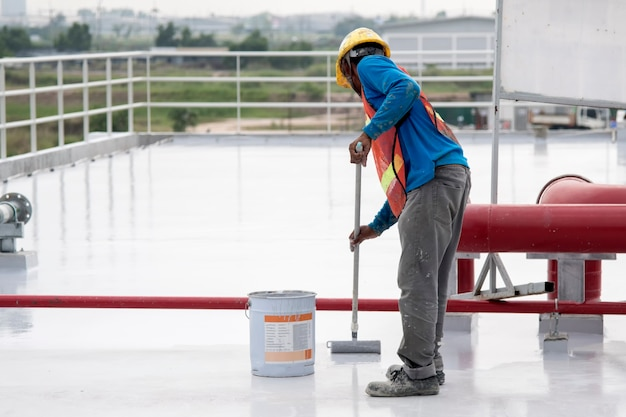
India’s expanding manufacturing base is increasing demand for curing agents used in coatings, adhesives, composites, flooring systems, electrical components, and structural applications. These chemicals react with resins to create hardened, cross-linked materials with improved strength, chemical resistance, adhesion, and durability. As automotive, construction, electronics, and infrastructure applications require higher-performance materials, manufacturers are adopting more specialised curing systems designed for demanding operating conditions.
A recent study by MarkNtel Advisors highlights that the India curing agent sector was valued at USD 377 million in 2025 and is projected to grow from USD 405 million in 2026 to USD 778 million by 2032, registering a CAGR of 11.49% during 2026–2032. Epoxy curing agents account for nearly 58% by type in 2026, while amine-based chemistry represents around 47%.
Epoxy Systems Lead High-Performance Applications
Epoxy curing agents hold the leading product position because cured epoxy systems offer strong adhesion, mechanical strength, chemical resistance, and dimensional stability. These characteristics make them useful across industrial coatings, flooring, adhesives, electrical encapsulation, composites, and repair materials.
Different curing agents allow formulators to control working time, curing speed, temperature requirements, flexibility, and final performance. Selecting the appropriate chemistry therefore depends heavily on the environment in which the finished material will operate.
Automotive Manufacturing Broadens Material Requirements
Automotive manufacturers increasingly combine metals, plastics, composites, electronic systems, and advanced coatings within modern vehicles. Adhesives and cured resin systems can support structural bonding, protective coatings, component assembly, and lightweight material integration.
India produced large volumes of passenger vehicles, commercial vehicles, two-wheelers, and three-wheelers during 2025, according to government data on automotive manufacturing activity. Expansion of vehicle and component production creates additional opportunities for curing technologies capable of delivering dependable bonding and surface protection.
Construction Creates Demand for Durable Resin Systems
Construction applications use curing agents in epoxy flooring, protective coatings, concrete repair materials, sealants, structural adhesives, and waterproofing systems. Industrial buildings, warehouses, commercial properties, parking facilities, and infrastructure projects often require surfaces capable of resisting chemicals, abrasion, moisture, and repeated mechanical loads.
Epoxy-based systems can provide these properties when resin selection, curing chemistry, surface preparation, and installation conditions are properly controlled. Faster-curing technologies can also help reduce downtime during maintenance and refurbishment projects.
Electronics Manufacturing Supports Specialized Formulations
Electronics require materials that protect sensitive components against moisture, vibration, heat, chemicals, and mechanical stress. Cured resin systems can be used in encapsulation, potting compounds, adhesives, printed circuit assemblies, and protective coatings.
India’s electronics production increased from ₹11.32 lakh crore in FY2024–25 to ₹13.11 lakh crore in FY2025–26, according to the government’s electronics manufacturing update. Continued expansion increases requirements for specialised curing systems compatible with increasingly compact and technically demanding electronic components.
Amine-Based Chemistry Maintains Strong Adoption
Amine curing agents hold a major share because they are widely used with epoxy resins and can provide strong chemical and mechanical performance. Different amine chemistries can be selected according to curing temperature, application speed, flexibility, moisture tolerance, and required service properties.
Formulators can also modify curing systems to provide longer working times or faster hardening. This flexibility makes amine chemistry suitable across coatings, adhesives, composites, flooring, and industrial maintenance applications.
Lower-Emission Formulations Influence Development
Environmental requirements and workplace considerations are encouraging coating and adhesive manufacturers to reduce reliance on highly solvent-intensive formulations. Curing-agent suppliers increasingly need to support high-solids, waterborne, powder, and other systems designed to lower emissions while maintaining performance.
The U.S. Environmental Protection Agency identifies low- and no-VOC coating technologies including waterborne, UV-cured, high-solids, and powder coatings. Similar formulation trends can encourage innovation in curing chemistry for manufacturers serving international and environmentally sensitive applications.
Faster Curing Supports Manufacturing Efficiency
Production speed is becoming increasingly important across automated manufacturing environments. Faster curing can shorten assembly cycles, reduce handling times, and allow coated or bonded components to move through production more efficiently.
However, speed must be balanced with working time and final material properties. Excessively rapid curing can create application difficulties, making controlled reaction profiles important for high-volume manufacturing.
Advanced Materials Will Shape Future Demand
India curing agents are becoming increasingly connected with epoxy coatings, automotive production, electronics manufacturing, construction materials, and advanced adhesives. Their value lies in converting reactive resin systems into durable materials capable of meeting specific mechanical and environmental requirements.
Future development will depend on faster curing, lower-emission formulations, improved chemical resistance, automation compatibility, and specialised products for electronics and lightweight materials. As Indian manufacturing moves toward higher-value production, curing agents will remain important enabling chemicals across multiple industrial value chains.
- Managerial Effectiveness!
- Future and Predictions
- Motivatinal / Inspiring
- Fitness and Wellness
- Medical & Health
- Manufacturing
- Education
- Real-Estate
- Food Industry
- Hospitality
- Online Games
- Sports
- Home Services
- Civil Engineering
- Safety and Protection
- Software Products & Services
- Fashion and Jewellery
- Artificial Intelligence
- Entrepreneurship
- Mentoring & Guidance
- Marketing
- Networking
- HR & Recruiting
- Literature
- Shopping
- Career Management & Advancement