

 SkillClick
Workplace Mental Health and Career Breaks Without Stigma
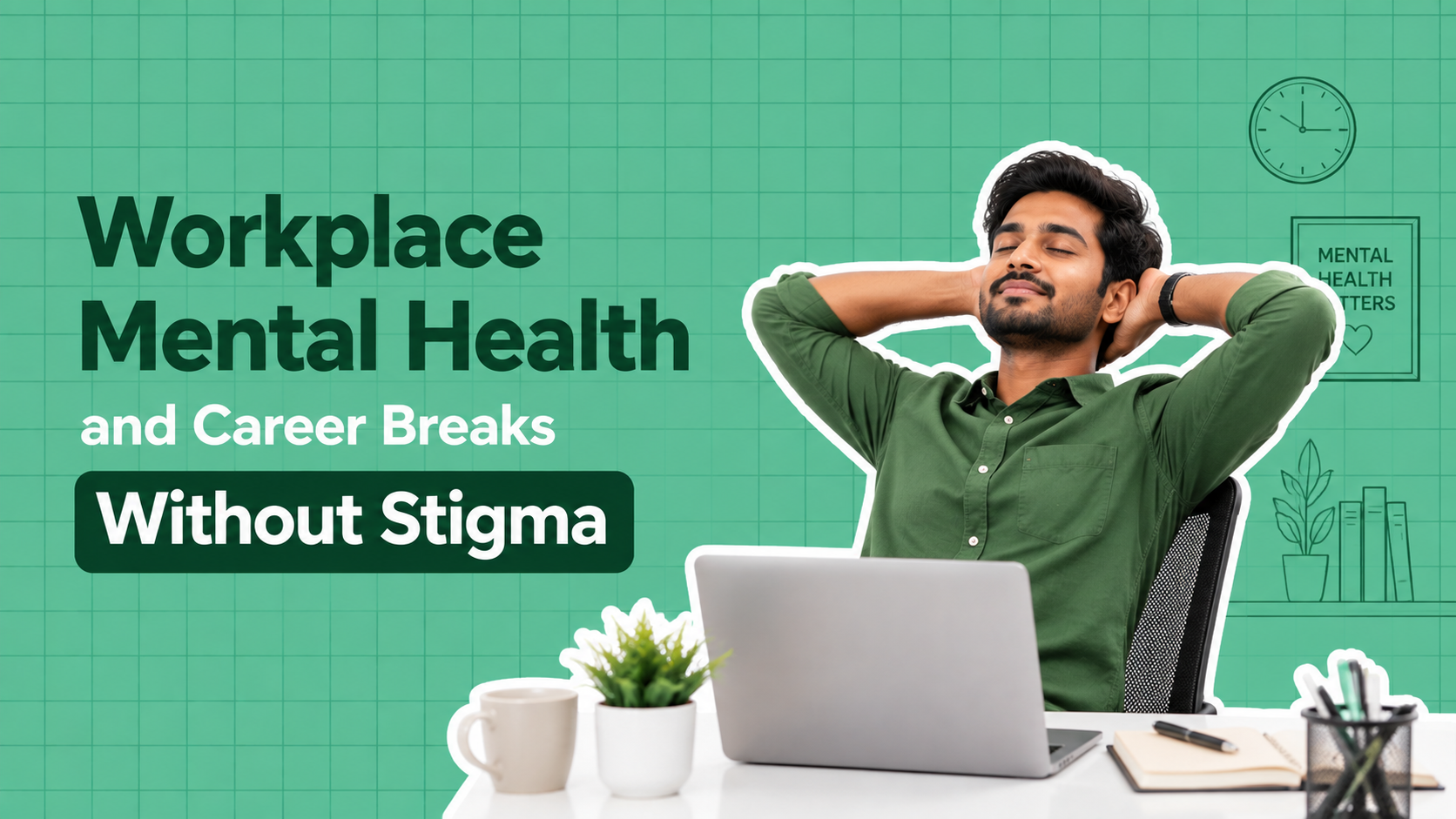
Employees who step away from their careers for mental health reasons whether a brief pause or a more extended break frequently face genuine, well-documented career penalties upon their return, revealing a significant gap between organisations' stated commitment to Workplace Mental Health and their actual treatment of employment gaps taken for this reason.
Why Career Breaks for Mental Health Carry Distinct Stigma
Employment Gaps Are Often Viewed With Suspicion Generally
Hiring practices across many industries still carry an implicit bias against unexplained employment gaps, and this bias compounds significantly when the reason involves a mental health condition, given persistent Mental Health Stigma in India shaping how such disclosures are perceived.
Assumptions About Reliability Following a Break
Candidates or returning employees who have taken a mental health-related break sometimes face unspoken assumptions about their ongoing reliability or capability, despite genuine treatment and recovery having occurred during their time away.
Pressure to Fabricate Alternative Explanations
Given this stigma, many individuals feel pressured to construct alternative explanations for their career gap travel, family reasons rather than disclosing the genuine reason, reflecting a workplace culture that hasn't yet made honest disclosure feel safe.
Why This Gap Between Policy and Practice Matters
It Undermines Broader Mental Health Advocacy Credibility
Organisations that publicly emphasise Mental Health Advocacy while implicitly penalising employees who took time away for genuine mental health treatment create a credibility gap that employees notice and that can undermine trust in the organisation's broader wellness messaging.
It Discourages People From Taking Needed Breaks in the First Place
Knowing that a mental health-related career break might carry future professional consequences discourages people from taking genuinely needed time away, potentially allowing conditions to worsen rather than being addressed proactively through adequate rest and treatment.
What Genuinely Stigma-Free Treatment Looks Like
Hiring Practices That Don't Penalise Honest Disclosure
Organisations genuinely committed to reducing this stigma review their hiring and interview practices to ensure candidates who honestly disclose a mental health-related career break aren't unfairly disadvantaged compared to those with unexplained or vaguely described gaps.
Internal Career Break Policy Addressing Mental Health Explicitly
Rather than only addressing career breaks in general terms, explicitly including mental health-related breaks within return-to-work and career progression policy signals genuine, specific organisational commitment beyond generic language.
Return-to-Work Support Without Career Penalty
Employees returning from a mental health-related career break should have genuine access to the same advancement opportunities as colleagues without such a gap, rather than facing an implicit, unstated penalty in future promotion or opportunity consideration.
What Individuals Considering or Returning From Such a Break Can Consider
Assessing the Genuine Safety of Disclosure
Given that organisational cultures vary considerably in their actual, lived support for this kind of honesty, individuals benefit from genuinely assessing specific organisational signals how others' breaks have been handled, general leadership attitudes before deciding how much to disclose.
Framing the Break Constructively, Without Requiring Deception
Individuals can choose to describe a mental health-related break honestly, in general terms reflecting personal wellbeing, without necessarily disclosing extensive clinical detail, allowing for honesty without requiring an uncomfortable level of specific disclosure.
Building Broader Cultural Change
Sharing Positive Examples Where Appropriate
Organisations that can point to genuine examples of employees who took a mental health-related break and continued to thrive professionally, with appropriate consent, help build broader confidence that this kind of honesty won't carry the career consequences many currently fear.
Training Hiring Managers Specifically on This Bias
Hiring manager training that explicitly addresses unconscious bias against mental health-related employment gaps helps counter assumptions that might otherwise unfairly influence hiring decisions.
Conclusion
Genuine Workplace Mental Health commitment requires organisations to examine whether their actual practice around career breaks matches their stated values ensuring employees who take time away for mental health reasons don't face unspoken career penalties that contradict broader Mental Health Advocacy messaging. Closing this gap between stated policy and lived practice represents an important, often overlooked dimension of genuinely reducing Mental Health Stigma in India within professional contexts.
- Managerial Effectiveness!
- Future and Predictions
- Motivatinal / Inspiring
- Fitness and Wellness
- Medical & Health
- Manufacturing
- Education
- Real-Estate
- Food Industry
- Hospitality
- Online Games
- Sports
- Home Services
- Civil Engineering
- Safety and Protection
- Software Products & Services
- Fashion and Jewellery
- Artificial Intelligence
- Entrepreneurship
- Mentoring & Guidance
- Marketing
- Networking
- HR & Recruiting
- Literature
- Shopping
- Career Management & Advancement