

 SkillClick
Agriculture Pipe Manufacturer Guide: Matching Pipe Strength With Farm Water Pressure
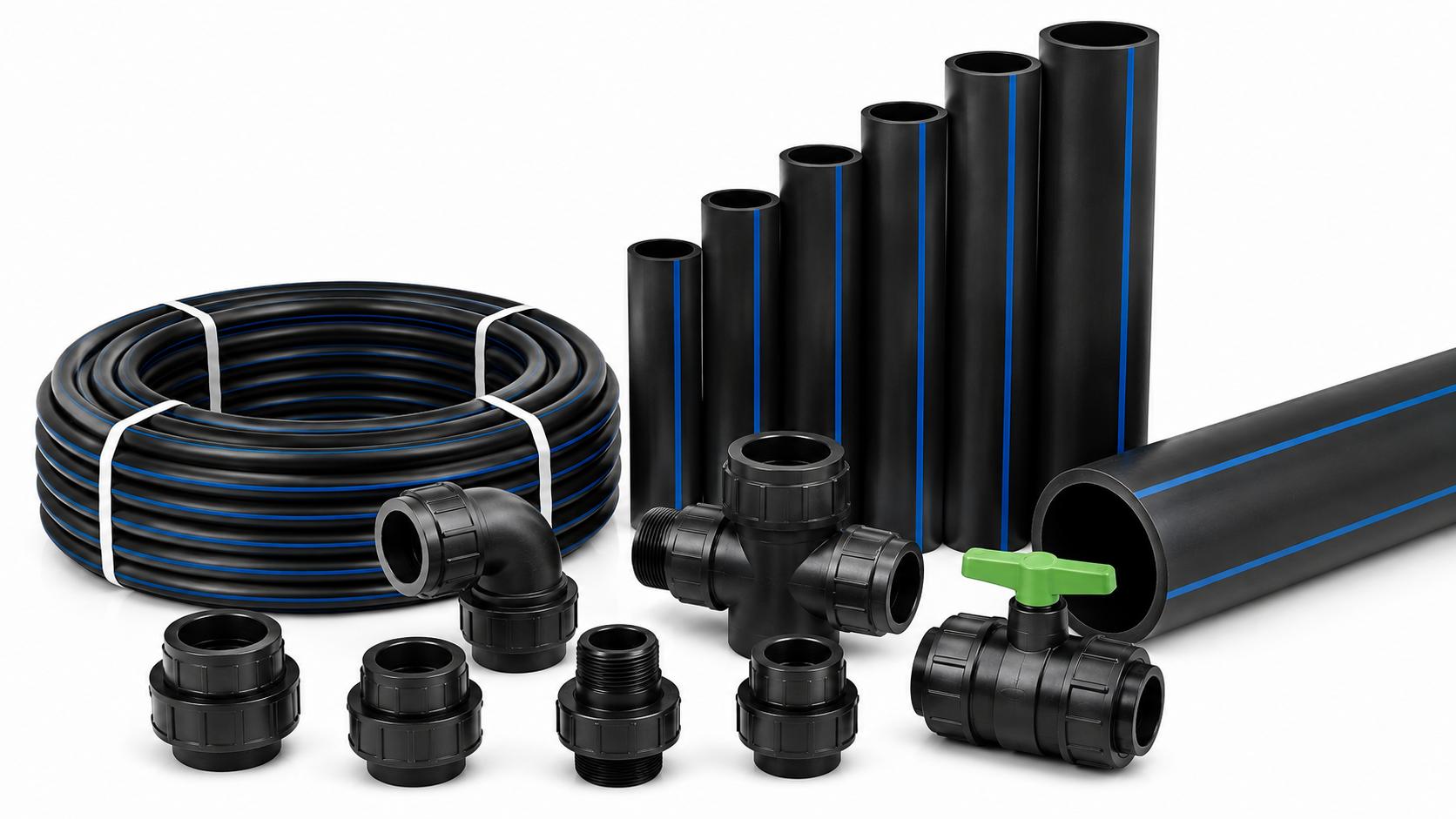
Your pump is rated for 5 bar. Your pipe is rated for 6.5 bar. On paper, that gap looks safe. In practice, it isn't the pump's rated output that bursts a pipe — it's the pressure spike that happens for a fraction of a second every time a valve slams shut or a pump kicks on cold. That surge routinely runs well above steady-state pressure, and it's exactly the number most buyers never ask about when they're comparing an Agriculture Pipe Manufacturer against another.
Matching pipe strength to farm water pressure isn't about picking the highest bar rating available. It's about understanding what your system actually does to a pipe under real operating conditions, not just what the pump nameplate says.
The Strength Numbers Buyers Read Wrong
Pressure rating and wall thickness get treated as one number when they're really two separate decisions.
Agriculture Pipes in the UPVC range carry pressure ratings up to 6.5 bar, with wall thickness scaling from 2mm to 10mm depending on the class ordered, across a diameter range of 20mm to 400mm. Here's the part that trips buyers up: pressure rating is measured under steady, sustained load — not under the transient spike that happens during pump startup or a fast valve closure. That spike, known in the trade as water hammer, can briefly exceed steady operating pressure by a meaningful margin, and a pipe sized to just clear your steady-state pressure with no buffer is the one most likely to fail at a joint during that spike, not during normal operation.
Why Wall Thickness Class Matters More Than the Bar Rating Alone
A pipe rated 6.5 bar at 6mm wall thickness and a pipe rated 6.5 bar at 8mm wall thickness aren't interchangeable in practice, even though the printed rating looks identical. Thicker walls absorb pressure spikes with more margin before reaching failure stress, which is why two pipes with the same headline pressure rating can behave very differently under the exact same water hammer event. Buyers comparing quotes by pressure rating alone are comparing an incomplete number.
Five Questions That Reveal Whether a Supplier Understands Pressure Matching
Ask whether they factor in water hammer risk when recommending a pressure class, or only match steady-state operating pressure — a weak answer has never heard the term. Ask what wall thickness they'd recommend if your farm uses fast-closing solenoid valves versus manual gate valves — a weak answer treats both the same. Ask for batch-level burst-pressure test data, not just a printed spec sheet — a weak answer offers a certificate with no test numbers attached. Ask how pipe strength should change if you're adding a booster pump mid-season — a weak answer doesn't connect pump changes to pipe requirements at all. And ask directly whether this is a question Agriculture Pipes And Fittings Manufacturers get asked often — a surprisingly honest answer from a real manufacturer is "rarely, and that's part of the problem."
That last answer, when a supplier gives it, tells you more than any spec sheet. It means they've actually seen what happens when this gets ignored.
Strength-Matching Benefits That Protect the Whole System
-
Wall thickness sized above minimum for pressure spikes reduces burst risk at joints during pump startup or valve closure, directly cutting warranty claims and emergency repair calls.
-
Pressure class matched to actual system dynamics, not just steady flow, protects margin by avoiding both over-speccing (unnecessary cost) and under-speccing (failure risk).
-
Solvent-welded joints on higher-pressure sections hold up better under repeated surge cycling than a loosely seated push-fit connection, improving long-term operational reliability.
-
Diameter sized correctly for flow rate avoids the velocity increase that makes water hammer worse in undersized lines, reducing pressure-spike severity at the source.
-
Consistent batch-level wall thickness means the pressure rating printed on the pipe actually holds across the full length, not just at the sampled section, protecting against the weak-point failures that show up mid-season.
-
Chemical and UV resistance appropriate to installation type prevents material degradation that would otherwise lower the effective pressure tolerance of an aging pipe over its working life.
None of these benefits show up until a surge event actually happens. That's exactly why they're underpriced during sourcing and overvalued the first time a mainline bursts.
Sourcing Pressure-Rated Pipe Close to Where Pumps Actually Run
Farms and irrigation contractors across Delhi NCR, western Uttar Pradesh, and Punjab operate a wide mix of pump types and valve configurations, which means pressure-matching conversations vary property to property even within the same district. Manufactured in Kundli, Sonipat near NH44, that proximity to the region shortens the loop between a buyer describing their pump setup and getting pipe that's actually matched to it, instead of routing that conversation through a distant supplier with no regional context.
Working with Agriculture Pipes And Fittings Suppliers In India who understand regional pump and valve patterns — rather than quoting pressure class off a generic spec sheet — reduces the chance of under-speccing pipe for conditions the supplier never asked about.
What Pressure Testing Actually Looks Like on Our Floor
We manufacture UPVC Agriculture Pipes And Fittings and test every production batch for dimensional accuracy and pressure resistance before dispatch. One thing we've learned from handling pressure-related complaints over the years: the failure almost never happens where the buyer expects it. It shows up at a joint near a valve or pump connection, where surge pressure concentrates, not along a straight, unremarkable stretch of pipe. That's why we ask about valve type and pump configuration during quoting now, instead of only asking about steady flow rate.
We don't claim every wall-thickness batch clears tolerance on the first pass. When a batch measures outside spec during routine QC inspection, we hold it for rework rather than let a marginal pipe reach a farm where a pressure spike could turn a manufacturing tolerance issue into a burst mainline.
Tell Us Your Pump and Valve Setup Before You Order
If you're sourcing pipe for a new or expanding irrigation system, tell us your pump's rated pressure, your valve type, and your expected diameter and volume — we'll recommend a wall thickness class that accounts for surge conditions, not just steady-state pressure. MOQ scales with diameter and pressure class, so send your full requirement and we'll quote against it directly rather than a rounded placeholder. Enquiries typically get a response within one business day.
Strength on Paper Isn't Strength Under Surge
Matching Agriculture Pipes and Fittings to actual farm water pressure means looking past the printed bar rating to wall thickness class, valve type, and surge conditions the spec sheet alone won't tell you. Flowtek builds ISO-certified UPVC piping systems from Kundli, Sonipat sized for the pressure spikes real irrigation systems generate, not just their steady-state averages. The buyers who ask about water hammer before ordering are the ones who aren't troubleshooting a burst mainline mid-season.
Questions Buyers Ask About Pressure and Pipe Strength
How do I know what pressure class my irrigation system actually needs?
Start with your pump's rated output, then account for valve type — fast-closing solenoid valves create sharper pressure spikes than manual gate valves. We'd rather walk through both details with you than quote a pressure class based on steady flow alone, since that number alone can undersize what you actually need.
Do Agriculture Pipes Suppliers usually factor in water hammer, or just steady pressure?
Most quote against steady-state pressure only, honestly, because it's the simpler number to work with. We ask about valve type and pump startup behaviour specifically because ignoring surge pressure is one of the more common ways buyers end up with an undersized pipe that looks correct on paper.
What's the MOQ for a higher wall-thickness pressure class?
It runs higher than standard-class MOQ because thicker-wall production changes the batch economics, so we'll confirm the exact figure once we know your required diameter and pressure class together.
Can Agriculture Pipes And Fittings Dealer networks recommend the right pressure class, or should I go direct?
Our dealer network can handle straightforward requirements, but for systems involving booster pumps, mixed valve types, or unusual layouts, going direct to our technical team catches details a dealer-level conversation sometimes misses.
Are Agriculture Pipes Manufacturers In India required to publish burst-pressure test data?
There's no universal requirement enforcing it, which is exactly why it's worth asking for directly rather than assuming a printed spec sheet reflects actual batch testing. We can share test data tied to your specific order on request.
Do Agriculture Pipes Dealer In India partners stock multiple wall-thickness classes, or just one standard?
Stock varies by location, so it's worth confirming with the specific dealer rather than assuming every class is on hand. If a dealer doesn't carry your required class, we can route the order through direct dispatch instead.
What happens if a batch fails pressure testing after dispatch?
We compare the reported failure against the approved sample and our internal test records first. Confirmed manufacturing defects are corrected in the next batch at our cost — this isn't handled as a vague case-by-case negotiation after the shipment has already reached the farm.
- Managerial Effectiveness!
- Future and Predictions
- Motivatinal / Inspiring
- Fitness and Wellness
- Medical & Health
- Manufacturing
- Education
- Real-Estate
- Food Industry
- Hospitality
- Online Games
- Sports
- Home Services
- Civil Engineering
- Safety and Protection
- Software Products & Services
- Fashion and Jewellery
- Artificial Intelligence
- Entrepreneurship
- Mentoring & Guidance
- Marketing
- Networking
- HR & Recruiting
- Literature
- Shopping
- Career Management & Advancement