

 SkillClick
Here's Why Connected Primary Care Beats the Old Care Model
My neighbor spent forty minutes on hold last winter just to book a follow-up for her blood pressure meds. By the time someone picked up, she'd already given up and gone to urgent care instead, paying more for something that should've been a five-minute chat with her regular doctor. Honestly, that story isn't rare anymore. It's kind of the default experience for a lot of people, and it's exactly the kind of broken pattern that's pushing families to look for something better.
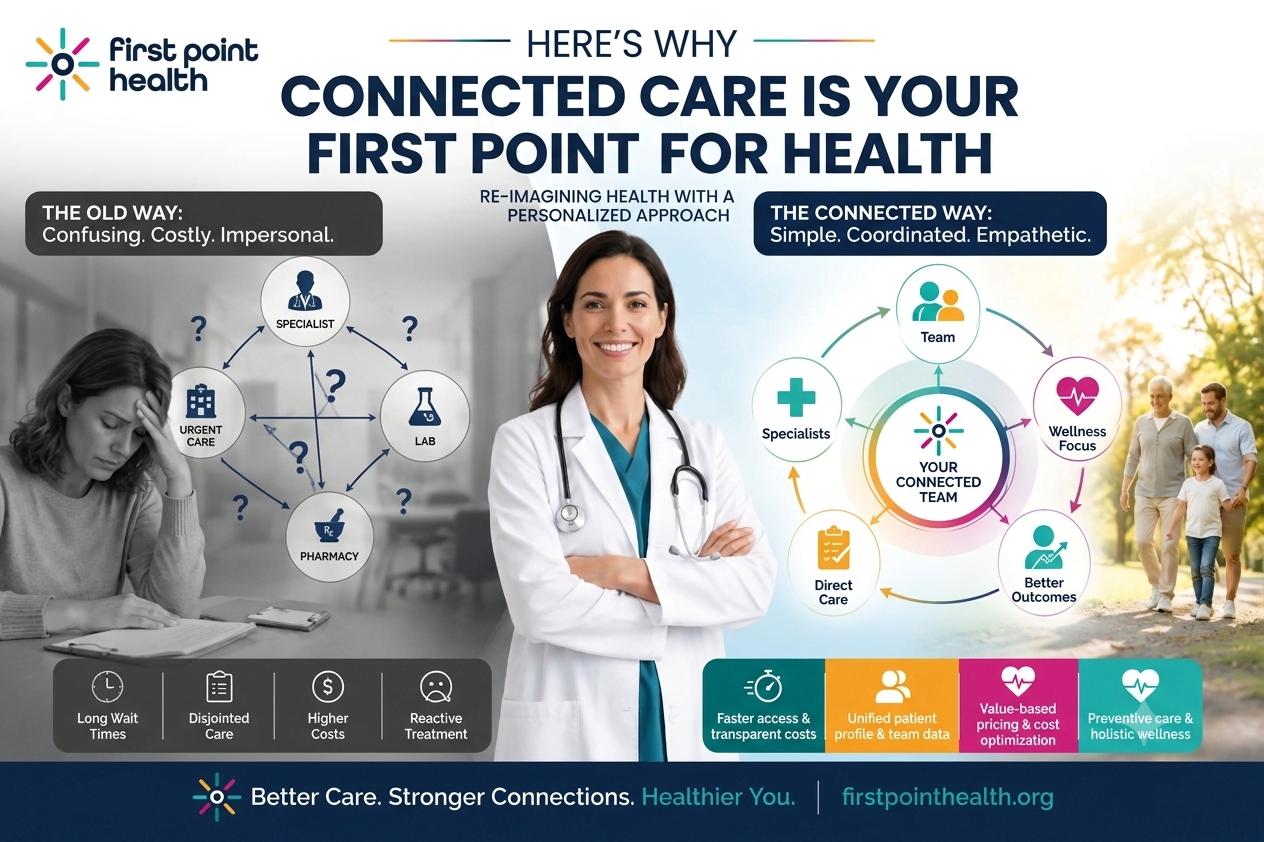
That "something better" is what people are now calling connected primary care, and once you've actually used it, going back to the old system feels almost impossible. The old model treated your health like a series of disconnected appointments , a checkup here, a referral there, a specialist who never talks to your regular doctor. Connected primary care flips that. It treats your health like one ongoing story, with a team that actually knows the chapters that came before.
I've watched this shift happen firsthand, and I want to walk you through why it matters, what it actually looks like day to day, and why it's becoming the standard rather than the exception.
The Old Model Was Never Really Built for You
Let's be real for a second. The traditional primary care setup wasn't designed around patients , it was designed around volume. Fifteen-minute slots, rotating doctors, and referrals that vanish into a black hole of paperwork. You'd see someone new every visit, repeat your entire history for the third time that year, and hope the specialist your doctor sent you to actually got the notes.
That model works fine on paper. In real life, it leaves people frustrated, under-treated, and honestly a little distrustful of the whole system. I've talked to patients who stopped going in for checkups altogether, not because they didn't care about their health, but because the process itself felt exhausting.
What Makes Connected Primary Care Different
Connected primary care isn't a buzzword , it's a structural change in how care gets delivered. A few things separate it from the old way:
-
Consistent providers. You see the same doctor or care team most visits, not a new face every time.
-
Coordinated referrals. Specialist visits are actually tracked and followed up on, not just handed off and forgotten.
-
Preventive focus. Screenings and routine checkups happen on schedule, before small issues turn into big ones.
-
Faster access. Same-week appointments instead of waiting weeks for something that can't wait.
-
Chronic care management. Ongoing conditions get tracked over months and years, not treated as one-off visits.
What I've noticed, and what patients tend to say too, is that the biggest difference isn't even clinical , it's emotional. People feel heard. Someone remembers what you said last time. That sounds small, but it changes how willing you are to actually show up for your own health.
Why This Model Beats Fragmented Care, Point by Point
Fragmented care forces patients to become their own coordinators. You're the one chasing down records, explaining your history to strangers, and hoping nothing slips through the cracks. Connected care takes that burden off your shoulders.
Take chronic conditions, for example. Diabetes, hypertension, thyroid issues , these aren't problems you solve in a single visit. They need a team that's paying attention over time, adjusting treatment as your body changes, catching warning signs early instead of after a crisis. A rotating cast of providers just can't do that well. A connected team can, because the same people are following your file month after month.
Referrals are another sore spot in the old system. I've heard so many stories of patients being sent to a specialist and then... nothing. No follow-up, no record-sharing, no closing the loop. Connected primary care treats referrals as part of the same continuous relationship, not a handoff into the void.
Real-World Context: Why Location and Access Still Matter
Here's something people don't talk about enough , access isn't just about quality of care, it's about whether care is realistically reachable. In smaller cities and working-class neighborhoods especially, people skip preventive visits simply because getting an appointment takes too long or the clinic is too far.
This is where clinics like First Point Health stand out a bit. Operating across Michigan, they've built their model specifically around consistent care teams, same-week appointments, and coordinated referrals , basically addressing the exact pain points I just described. They also run Federally Qualified Health Centers alongside their regular offices, meaning people get seen regardless of income, housing situation, or insurance status. That's not a small detail. A lot of "modern" healthcare brands talk about accessibility without actually building for it.
The Long-Term Payoff
Connected care isn't just nicer in the moment , it changes outcomes over time. When your provider actually remembers your history, catches patterns across visits, and coordinates your specialist care, problems get caught earlier. Preventive screenings actually happen instead of getting pushed off for another year. Chronic conditions stay managed instead of spiraling into emergency room visits.
There's also a quieter benefit here: trust. Once you've had a few visits with the same team, you stop dreading appointments. You ask more questions. You mention the symptom you almost didn't bring up. That kind of openness only happens when the relationship feels real, not transactional.
So, What Should You Take Away From This?
The old care model asked patients to do the coordinating themselves , chase referrals, repeat histories, hope for the best. Connected primary care flips that responsibility back onto the care system, where honestly, it always should've been.
If you're tired of starting from scratch at every appointment, or you've had a referral disappear into thin air, it might be worth looking into a connected model near you for primary care medical services. Places like First Point Health are proof that this approach isn't theoretical , it's already changing how people experience everyday healthcare across Michigan. Book that appointment you've been putting off. Your future self will probably thank you.
FAQs
1. What exactly does "connected primary care" mean?
It means your care team, your history, and your referrals are all linked together instead of scattered across different visits and providers. You're not starting over every time.
2. How is this different from just having a regular family doctor?
A regular doctor visit can still be fragmented if referrals and follow-ups aren't tracked. Connected care specifically focuses on continuity , same providers, shared records, and active follow-through on specialist care.
3. Is connected primary care only for people with chronic conditions?
Not at all. It benefits everyday checkups and preventive screenings just as much as ongoing conditions like diabetes or hypertension. Honestly, it's useful at every stage of health.
4. Does connected care cost more than traditional primary care?
Usually not. Most clinics working this way, including First Point Health, accept major insurance plans, and some also operate community health centers for patients without insurance.
5. How fast can I actually get an appointment with this model?
That's one of the bigger selling points , many connected care clinics offer same-week appointments instead of the multi-week waits common with traditional practices.
- Managerial Effectiveness!
- Future and Predictions
- Motivatinal / Inspiring
- Fitness and Wellness
- Medical & Health
- Manufacturing
- Education
- Real-Estate
- Food Industry
- Hospitality
- Online Games
- Sports
- Home Services
- Civil Engineering
- Safety and Protection
- Software Products & Services
- Fashion and Jewellery
- Artificial Intelligence
- Entrepreneurship
- Mentoring & Guidance
- Marketing
- Networking
- HR & Recruiting
- Literature
- Shopping
- Career Management & Advancement