

 SkillClick
What Coordinated Healthcare Really Means for Every Patient
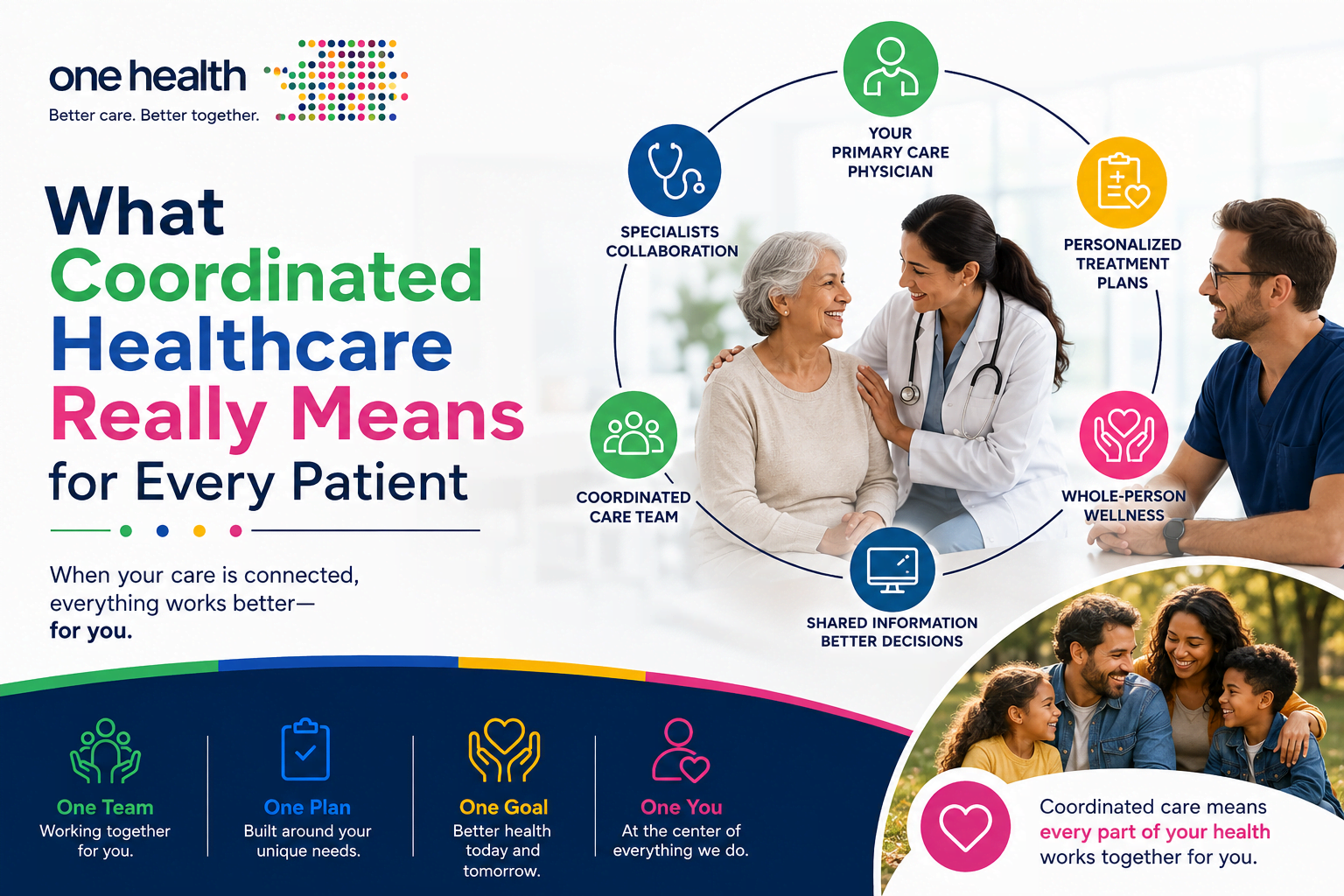
A few months back, a friend of mine spent an entire Tuesday afternoon in a waiting room, filling out the same medical history form she'd already filled out twice that year, once for her cardiologist, once for her primary care doctor. Same allergies. Same medications. Same surgery from 2019. Nobody had bothered to share the file.
That's not a rare story. Honestly, it's the norm for most people navigating the healthcare system today. You see one doctor for your heart, another for your joints, a third for a prescription refill, and somehow, none of them are talking to each other. You end up being the one carrying your own paperwork from office to office, hoping nothing gets lost or repeated (or worse, contradicted).
Coordinated healthcare solutions is the idea, and increasingly, the practice, of fixing exactly that. It means your providers, your records, and your treatment plan actually connect, instead of existing as separate islands that you're left to bridge on your own.
This isn't just a nice-to-have. For patients managing more than one condition, or caring for an aging parent juggling four specialists, coordination is often the difference between healing and just getting shuffled around. In this piece, I'll walk through what coordinated healthcare actually looks like in practice, why the fragmented version became the default in the first place, and what to ask for if you want better from your own care team..
What Coordinated Healthcare Actually Looks Like
So what does the alternative actually look like, in real terms? Not in theory, in practice, at the appointment level.
-
One care team that talks to each other. Your specialist and your primary doctor are actually reviewing the same notes, not working from memory of a five-minute phone call.
-
Shared records, not repeated paperwork. You shouldn't have to re-explain your own medical history every single time you sit down in a new waiting room.
-
A physician leading the decisions, not an insurance algorithm or a scheduling system deciding what happens next.
-
A plan that follows you, from the doctor's office, to the specialist, to the pharmacy, and back home again, instead of resetting at every door.
I'll be honest, this sounds almost obvious when you list it out like that. Which is kind of the point. None of this is revolutionary. It's just care that's actually connected, the way most people probably assumed it already was before they experienced otherwise.
For someone managing diabetes alongside a heart condition, or a caregiver trying to keep track of an elderly parent's five different prescriptions, this kind of coordination isn't a luxury add-on. It's what keeps things from slipping through the cracks, a missed drug interaction, a delayed diagnosis, a follow-up that never happens.
Why Physician-Led, Patient-First Models Matter
Here's where I'll get a little opinionated: I think the who's making decisions question matters just as much as the how connected is the system question.
A lot of healthcare organizations today are run by investors first, patients second, and that shapes everything, from which services get funded to how much time a physician actually gets with each patient. When decisions are driven by shareholder returns, coordination often becomes the thing that gets deprioritized, because it doesn't show up cleanly on a quarterly earnings report.
This is part of what makes a model like One Health's approach worth paying attention to. As a nonprofit built by operators rather than investors, the organization reinvests back into care instead of distributing profits, connecting specialty services, pharmacy, and care management under one coordinated structure, with physicians actually leading clinical decisions rather than following a shareholder mandate. It's a fairly direct answer to the fragmentation problem: if the incentive structure rewards connected, patient-first care rather than volume, coordination stops being optional and starts being the default.
I'm not saying every physician-led or nonprofit model gets this perfectly right. But the incentive alignment matters. When the people making care decisions are the same people accountable for outcomes, not a boardroom two steps removed from the exam room, coordinated healthcare tends to happen more naturally.
What to Ask For as a Patient
If you're evaluating a provider, a specialist, or a care network, here are a few questions worth asking upfront:
-
Do my providers share records directly, or am I the one relaying information between them?
-
Who's actually making the clinical call, my doctor, or someone further removed from my case?
-
Is there a single point of contact coordinating my care across specialties, pharmacy, and follow-up?
-
What happens after I leave the office, is there a plan that follows me home, or does it end at the door?
If the answers feel vague, that's usually a sign the system you're plugged into wasn't built with real continuity of care in mind.
Closing Thoughts
Coordinated healthcare isn't a buzzword you skim past in a brochure. It's the difference between care that happens to you, disconnected, repetitive, easy to fall through, and care that happens for you, where your doctors, your history, and your treatment plan are all actually in sync.
So what's the real takeaway here? Fragmented care costs you time, energy, and sometimes your health. physician-led care coordination gives that back, fewer repeated tests, fewer gaps, and a physician-led team that's actually paying attention to the whole picture, not just the piece in front of them.
If your current care feels scattered, don't just accept it as normal. Ask the questions. Push for the connected version. Your health deserves a team that's actually working together, not one you're stitching together yourself, one waiting room at a time.
Frequently Asked Questions
1. What does coordinated healthcare actually mean for a regular patient?
It means your doctors, specialists, and records are connected, so you're not repeating your history at every visit or acting as the go-between for your own care team.
2. How is coordinated care different from just seeing multiple specialists?
Seeing multiple specialists doesn't guarantee they're communicating. Coordinated care means those specialists are actively sharing notes, test results, and treatment decisions with each other and your primary provider.
3. Does coordinated healthcare cost more?
Not necessarily. In many cases, it actually reduces costs over time by cutting down on duplicate tests, avoidable complications, and emergency visits caused by gaps in communication.
4. Can I ask my current doctor for more coordinated care?
Yes and you should. Ask whether your providers share records directly and who's coordinating your care across specialties. If the answer is unclear, it's worth exploring a practice or network built around coordination.
5. Why does physician-led care matter in a coordinated model?
When physicians, not administrators or outside investors are driving clinical decisions, care tends to stay focused on outcomes rather than volume, which naturally supports better coordination across your entire treatment plan.
- Managerial Effectiveness!
- Future and Predictions
- Motivatinal / Inspiring
- Fitness and Wellness
- Medical & Health
- Manufacturing
- Education
- Real-Estate
- Food Industry
- Hospitality
- Online Games
- Sports
- Home Services
- Civil Engineering
- Safety and Protection
- Software Products & Services
- Fashion and Jewellery
- Artificial Intelligence
- Entrepreneurship
- Mentoring & Guidance
- Marketing
- Networking
- HR & Recruiting
- Literature
- Shopping
- Career Management & Advancement