

 SkillClick
Modern Ceiling Fans Explained: From Contemporary Designs to Energy-Efficient Motors and Smart Features
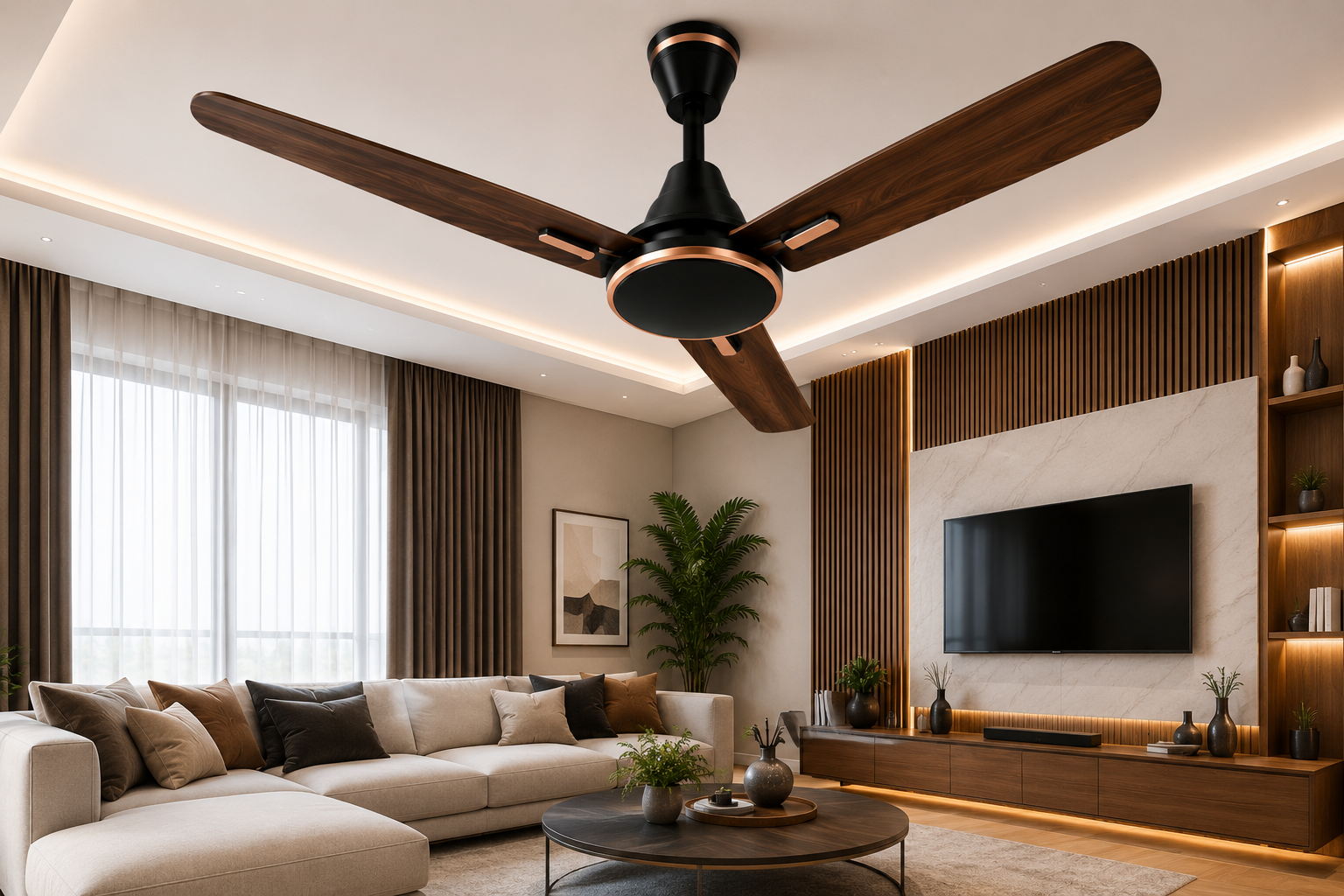
A buyer new to sourcing this category hears "modern ceiling fan" used to describe three completely different things in the same week — a fan with a sleek finish and an old-style AC motor, a BLDC fan with a plain, dated blade design, and a fan with neither but a remote control thrown in. Modern Ceiling Fans as a category term gets applied loosely enough that it's worth breaking down what actually qualifies, before comparing suppliers or placing an order.
For procurement teams new to this category, or expanding into it from adjacent product lines, understanding what genuinely distinguishes a modern fan from a traditional one — across design, motor technology, and functionality — matters more than trusting the label on a product page. Modern Ceiling Fans Manufacturers don't all apply the term consistently, and that inconsistency creates real sourcing risk if a buyer doesn't know what to actually check.
This isn't just a terminology exercise. Getting these distinctions right changes which suppliers, and which specific models, actually fit what a buyer's own customers expect from a "modern" fan.
The Three Things That Actually Make a Fan Modern
Contemporary Design and Blade Engineering
Modern design in this category typically means aerodynamically engineered blade profiles — shaped specifically to move air efficiently rather than styled purely for appearance — paired with sleeker motor housings and finishes suited to current interior trends, from wood-toned coatings to minimalist metallic finishes. Low-profile ceiling-hugger configurations and standard downrod options both fall under "modern" design, and the right choice depends on ceiling height and room application rather than one style being universally more current than the other.
Energy-Efficient Motor Technology
BLDC (Brushless DC) motor technology is the core technical distinction behind most genuinely modern Celing fans, typically drawing 28–35W compared to the 70–80W a standard AC motor requires for comparable airflow — a real, measurable difference rather than a marketing distinction. The detail buyers new to this category often miss: a fan can have thoroughly modern styling while still running on an older AC motor, so design language alone doesn't confirm motor technology, and the two need to be checked separately.
Smart and Convenience Features
Remote control operation, multi-speed settings, timer functions, sleep mode, and boost mode are the functional layer that typically accompanies modern BLDC fans, though not every model in a manufacturer's range includes the full function set. Some manufacturers extend into app-based or IoT-style control as an additional layer beyond standard remote operation, which is a meaningful functional distinction worth confirming per model rather than assuming from general category marketing.
How to Confirm a Manufacturer's "Modern" Claim Actually Holds Up
Ask for the specific motor type and wattage figure on the datasheet, not just a general reference to "energy efficient" styling. Request blade profile details — pitch angle, width, aerodynamic testing — rather than accepting a design description based on appearance alone. Compare the actual function list per model against what's implied by broader category marketing, since "smart" and "modern" get applied inconsistently even within a single manufacturer's range. Verify whether design, motor technology, and smart features are all genuinely present together in the specific model you're considering, rather than assuming a fan strong in one dimension is automatically strong in all three. And confirm what documentation — datasheets, testing records, warranty terms — actually backs up each of these three claims, since a manufacturer unable to provide model-specific documentation across all three areas is likely relying on general category language to cover gaps in at least one of them.
A supplier confident in their modern-fan claims answers all three dimensions specifically. One relying mostly on styling photos and general marketing copy is usually strong in only one or two of the three areas that actually define the category.
What Understanding These Three Pillars Actually Protects for Buyers
Confirming genuine motor technology protects your energy-efficiency claims to end customers, since reselling an AC-motor fan under "modern" styling without BLDC specifics creates a mismatch buyers eventually notice on their electricity bill.
Verified blade engineering protects your product's actual performance reputation, since a fan styled to look aerodynamic but not actually engineered for efficient airflow underdelivers compared to what its appearance implies.
Confirmed smart-feature sets protect your product listings from overpromising functionality a specific model doesn't include, reducing returns tied to features customers expected but didn't receive.
Documentation across all three pillars protects you during a specification dispute, giving you something concrete to reference rather than relying on a supplier's general assurance after a customer complaint arrives.
Understanding this distinction protects your sourcing decisions from paying a "modern" price premium for a fan that's actually only modern in one dimension — styling without motor efficiency, or motor efficiency without genuine design engineering.
Where Rajkot Fits Into Sourcing Genuinely Modern Fans
We manufacture out of J K Industrial Park in Taravada, Rajkot, Gujarat, and our approach to "modern" specifically means confirming all three pillars together per model — BLDC motor technology, aerodynamically engineered blades, and a documented smart-feature set — rather than applying the term based on styling alone.
For Modern Ceiling Fans Suppliers in India and Modern Ceiling Fans Dealers in India new to evaluating this category, it's worth building a habit of checking all three dimensions with any manufacturer you're considering, not just the one that happens to be emphasized in that specific supplier's marketing material.
Buyers comparing Modern Ceiling Fans Manufacturers in India on genuine category fit should ask for documentation across design, motor, and feature set together, rather than accepting a supplier's confident claim in one area as evidence the other two are equally strong.
What Explaining This Distinction to Buyers Has Taught Us Since 2017
Since establishing in Taravada in 2017 under owner Maulik Vasoya, we've focused specifically on BLDC ceiling fan manufacturing, which meant treating motor technology as the starting point rather than an add-on to a design-first product line.
One thing that surprised us early in conversations with newer procurement contacts: many assumed "modern" primarily referred to appearance, and were genuinely unaware that motor technology was a separate, checkable specification entirely apart from styling. We started leading with motor technology explanations in our own product documentation after noticing how often that gap in category knowledge shaped a buyer's early questions, rather than assuming every procurement contact already understood the distinction.
We work directly with wholesalers, procurement managers, and brand owners who want to understand what they're actually buying across all three dimensions, not just trust a category label.
Tell Us Where You're Starting From
Send us your required models or general application, along with your target order volume, and we'll walk you through how our range addresses design, motor technology, and smart features specifically for the models that fit your requirement. MOQ varies by model, so tell us your actual volume need and we'll confirm the real figure rather than a blanket minimum.
If you're new to sourcing this category and unsure which specific features actually matter for your market, tell us that directly. We'd rather walk through the distinctions with you than have you guess based on general marketing language across multiple suppliers.
Modern Means All Three, Not Just One
A genuinely Modern Ceiling Fans category claim rests on three things holding true together — contemporary design engineering, efficient motor technology, and a documented smart-feature set — not just one dimension carrying the whole label. The Modern Ceiling Fans Manufacturers worth sourcing from can substantiate all three specifically, model by model, rather than leaning on general category language to cover a gap in one area. Buyers who understand this distinction ask sharper questions from their very first sourcing conversation, and that clarity is what actually prevents a mismatched order later.
Questions Buyers New to This Category Ask Us
Is a fan automatically "modern" if it has a sleek, contemporary design?
Not necessarily — design styling and motor technology are separate specifications, and a fan can look thoroughly modern while still running on an older AC motor. Always confirm motor type and wattage separately from design and finish details.
Do Modern Ceiling Fans Suppliers typically explain the difference between BLDC and AC motors clearly?
Not always without being asked directly, and it's a reasonable thing to request in plain terms if you're newer to this category. We'll admit that even experienced procurement contacts sometimes assume "modern" refers mainly to appearance, so don't hesitate to ask a supplier to walk through the actual motor technology specifically.
How do Modern Ceiling Fans Dealers evaluate whether a manufacturer's smart-feature claims apply to every model?
Ask for the specific function list per model rather than assuming every fan in a manufacturer's range shares the same feature set. Boost mode, sleep mode, and timer functions frequently vary between models even within a single product line.
Can a buyer request documentation covering all three pillars — design, motor, features — for one specific model?
Yes, and this is a reasonable request that helps confirm whether a specific fan genuinely qualifies as modern across all three dimensions, not just the one a supplier chooses to emphasize in their marketing.
What's the most common mistake new buyers make when sourcing modern ceiling fans?
Assuming that strength in one dimension — usually design or price — implies strength in the other two. A visually striking fan isn't automatically energy-efficient, and an energy-efficient fan isn't automatically well-engineered aerodynamically.
Is BLDC motor technology always more expensive than standard AC motors?
Generally yes, at the unit cost level, reflecting the more precise components and electronics involved. That upfront cost difference is usually offset over time through lower power consumption, but buyers should factor in both the initial price difference and the long-term efficiency case when comparing options.
How should buyers evaluate smart features if their market doesn't have reliable app or IoT infrastructure yet?
Consider standard remote-based functions — timer, sleep mode, boost mode — as the more universally practical feature set for markets where app-based control infrastructure isn't yet a priority for end customers. IoT integration is a genuine feature worth having available, but it shouldn't be the deciding factor if your actual market isn't positioned to use it yet.
- Managerial Effectiveness!
- Future and Predictions
- Motivatinal / Inspiring
- Fitness and Wellness
- Medical & Health
- Manufacturing
- Education
- Real-Estate
- Food Industry
- Hospitality
- Online Games
- Sports
- Home Services
- Civil Engineering
- Safety and Protection
- Software Products & Services
- Fashion and Jewellery
- Artificial Intelligence
- Entrepreneurship
- Mentoring & Guidance
- Marketing
- Networking
- HR & Recruiting
- Literature
- Shopping
- Career Management & Advancement