

 SkillClick
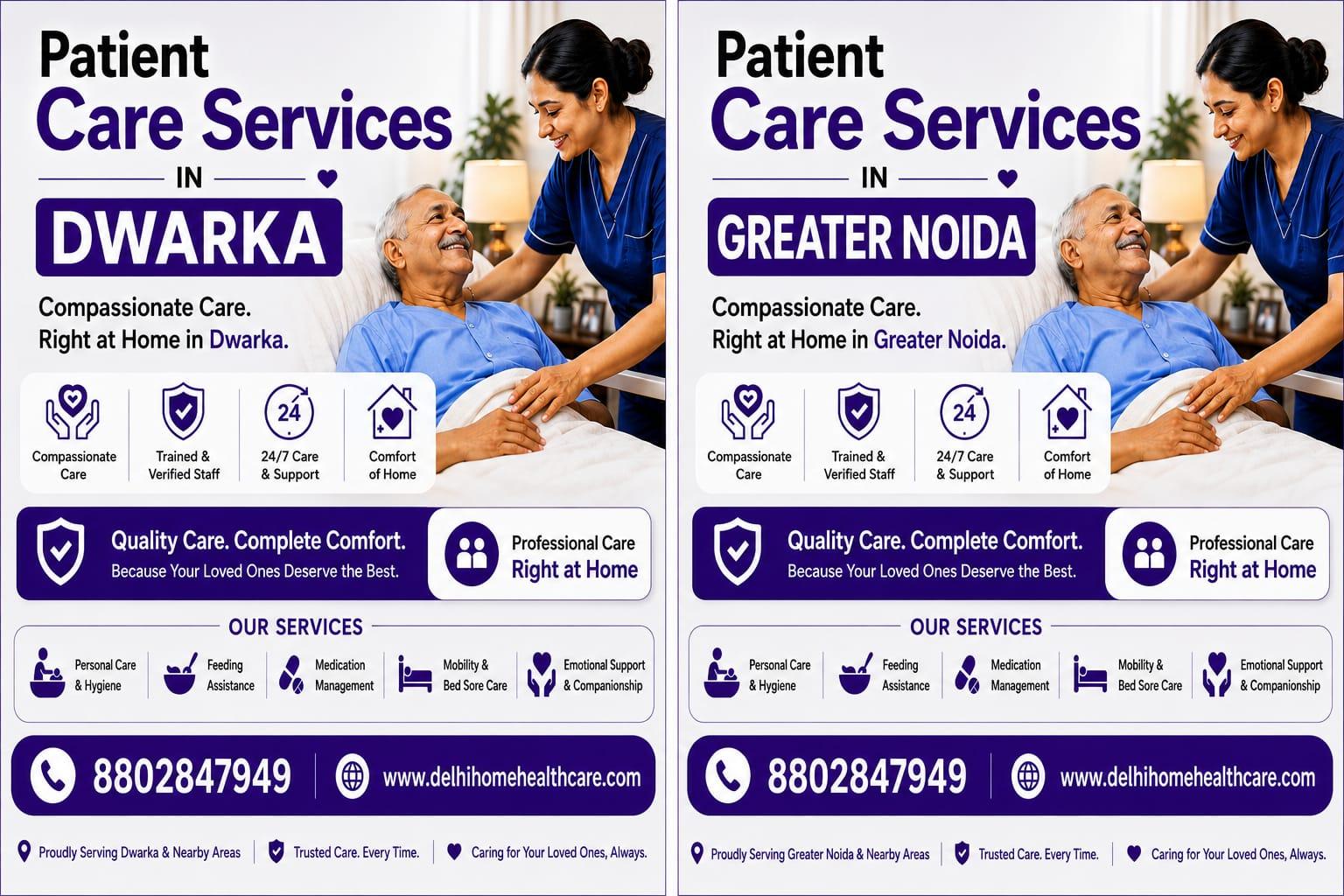
360° Comprehensive Post-Stroke Cognitive Rehabilitation, Speech Therapy & Dysphagia Care Guide for Greater Noida, Dwarka Delhi, and Delhi NCR
An exhaustive clinical, cognitive, and practical nursing manual covering post-stroke brain recovery, aphasia speech therapy, swallowing difficulty (dysphagia) management, Ryle's tube care, and 24/7 patient attendant services across Greater Noida, Dwarka Delhi, and the National Capital Region.
1. The Post-Stroke Cognitive Horizon: Understanding Brain Plasticity at Home
A brain stroke—whether ischemic or hemorrhagic—causes immediate disruptions to blood flow, leading to neural tissue damage. Beyond motor weakness or paralysis, stroke survivors frequently struggle with severe cognitive impairments, including loss of speech (aphasia), swallowing difficulty (dysphagia), memory loss, emotional instability, and spatial confusion. Re-learning simple daily tasks can be overwhelming for both the patient and their family.
While hospital stroke units focus on acute thrombolysis, surgical intervention, and initial stabilization, long-term neuro-cognitive restoration relies on neuroplasticity—the brain's remarkable ability to reorganize neural pathways. The initial 3 to 12 months post-discharge represent the most critical biological window for brain retraining. Keeping a stabilized stroke patient in a noisy, impersonal hospital room increases confusion, sleep disturbance, and depression.
Transitioning to a structured home healthcare environment creates a calm, supportive setting for cognitive exercises, speech therapy routines, and swallowing re-education. Certified neuro-nurses and trained patient care attendants work alongside speech therapists to manage daily feedings, assist with communication devices, and enforce safety protocols directly at the patient's bedside.
2. Clinical Advantages of Structured In-Home Cognitive & Dysphagia Recovery
Managing post-stroke cognitive and swallowing deficits at home delivers distinct physical, psychological, and safety benefits over long-term institutional care:
Enhanced Neuroplasticity in Familiar Domestic Surroundings
The human brain rewires damaged neural pathways more effectively when the individual feels secure and emotionally comfortable. Recovering at home—surrounded by family members, personal items, and familiar domestic routines—lowers stress hormones like cortisol, supporting cognitive retention and language restoration.
Prevention of Aspiration Pneumonia and Infection
Stroke survivors with swallowing difficulties (dysphagia) risk inhaling liquids or food particles into their lungs, leading to life-threatening aspiration pneumonia. A dedicated home care setup enforces strict feeding positioning and oral hygiene, minimizing pulmonary complications and hospital readmissions.
100% Undivided Caregiver Attention and Patience
Communicating with an aphasic or cognitive-impaired patient requires immense time, calm repetition, and patience. Hospital ward staff split duties among multiple beds. In contrast, a private home caregiver focuses entirely on one individual, ensuring gentle communication and prompt assistance.
Substantial Financial Optimization for Families
Extending hospital stays solely for speech therapy, tube feeding, or cognitive monitoring creates heavy financial strain. Establishing structured home nursing care cuts daily medical expenses by up to 60% without compromising clinical oversight.
3. Specialized Stroke Recovery Modules: Aphasia, Dysphagia & Memory Care
Post-stroke care plans are customized according to the exact location and severity of brain tissue damage:
3.1 Speech Restoration & Aphasia Management
Stroke survivors experiencing expressive or receptive aphasia struggle to speak, understand words, or read. Caregivers support communication through:
- Speech Therapy Practice: Guiding daily articulation drills, tongue exercises, and word association games as prescribed by speech language pathologists (SLPs).
- Non-Verbal Communication Aids: Utilizing picture cards, communication boards, and digital apps to help patients express daily needs without frustration.
- Patient, Low-Stress Interaction: Speaking clearly in short sentences, giving ample response time, and avoiding interrupting the patient.
3.2 Dysphagia Management & Swallowing Re-Education
Swallowing impairment requires precise clinical feeding strategies to ensure safe nutrition:
- Dietary Modification: Serving pureed meals, thickened liquids, and soft blends to prevent choking.
- Postural Feeding Adjustments: Ensuring the patient sits upright at 90 degrees during meals and maintaining an elevated position for 30–45 minutes after eating.
- Oral Swab Hygiene: Cleaning the oral cavity post-meals to clear food debris and prevent bacterial buildup.
3.3 Cognitive Stimulation & Memory Retraining
Caregivers engage stroke survivors in structured memory recall activities, photo recognition, simple puzzle solving, and orientation routines (day, date, time) to support cognitive rebuilding.
4. Essential Nursing Protocols: Aspiration Prevention & Tube Feeding
Caring for a stroke patient with dysphagia or cognitive decline requires strict nursing protocols:
1. Nasogastric (Ryle's) Tube & PEG Tube Management
For patients unable to swallow safely, certified nurses manage enteral nutrition through Ryle's tubes or PEG tubes. Nurses verify tube placement, check gastric residual volume, flush tubes with sterile warm water before and after meals, and keep insertion sites clean.
2. Aspiration Emergency Prevention Protocol
Caregivers keep electric suction machines at the bedside to clear oral secretions instantly if the patient shows signs of choking, coughing, or dropping oxygen levels during meals.
3. Vital Tracking & Neuro-Status Monitoring
Logging daily blood pressure, pulse rate, oxygen saturation (SpO2), and temperature trends allows nurses to detect secondary neurological events or hidden infections early.
5. Regional Operational Focus: Greater Noida vs. Dwarka Delhi
Delivering prompt, reliable post-stroke home nursing across NCR’s vast residential sectors requires strong localized caregiver networks and fast deployment capabilities:
Reliable Post-Stroke Care Coverage in Greater Noida
Greater Noida features wide residential sectors, independent villas, and large gated townships in Sector Alpha, Beta, Gamma, Delta, Omega, Zeta, Techzone, Pari Chowk, and Greater Noida West (Noida Extension). Multi-generational families in these spacious homes frequently require full-time live-in caretakers. Through specialized patient care services in greater noida provided by Delhi home healthcare services, families receive background-verified attendants and registered nurses who manage daily hygiene, swallowing support, and speech practice in close coordination with regional neurology departments.
Dedicated Solutions in Dwarka, Delhi
Dwarka is one of Delhi's largest planned sub-cities, comprising Sectors 1 to 23, DDA societies, and luxury apartment complexes. Working professionals across Dwarka need dependable caregivers to assist recovering stroke parents without disrupting daily work routines. Through our specialized patient care services in dwarka delhi, we deploy flexible 12-hour day/night staff and 24-hour live-in caretakers to ensure continuous family peace of mind and professional support.
6. Post-Stroke Caregiver Cost Matrix & Financial Planning in Delhi NCR
Transparent pricing helps families plan long-term stroke recovery with complete financial clarity. Below is an estimated rate overview across Greater Noida, Dwarka, and Delhi NCR:
| Service Category | Caregiver Scope & Skills | Shift Duration | Approximate Price Range (INR) |
|---|---|---|---|
| Non-Medical Stroke Attendant | Bathing, Dysphagia Feeding Aid, Position Turning, Mobility Support | 12-Hour Shift | ₹800 – ₹1,200 per day |
| 24/7 Live-In Stroke Attendant | Round-the-clock ADL Care, Night Hygiene, Cognitive Support | 24-Hour Live-In | ₹22,000 – ₹32,000 per month |
| Semi-Trained ANM Nurse | Ryle's Tube Feeding, Oral Meds, Basic Dressing, Vital Log | 12-Hour / 24-Hour | ₹1,400 – ₹2,200 per day |
| Registered GNM / B.Sc Neuro Nurse | Complex Tube Care, Tracheostomy Suctioning, IV Meds, Catheter | 12-Hour / 24-Hour | ₹1,800 – ₹3,500 per day |
7. Frequently Asked Questions (FAQs) & Caregiver Vetting Framework
Essential Vetting Checklist Before Hiring an Agency
- Mandatory Verification: Confirm that staff members undergo complete Aadhaar verification, address checks, and local police background clearance.
- Stroke Care Training: Ensure caregivers are trained in safe feeding angles, dysphagia management, and gentle speech encouragement.
- Replacement Guarantee: Verify that the agency guarantees a qualified replacement caregiver within 2 to 4 hours if primary staff takes leave.
- Emergency Preparedness: Confirm that caregivers are trained in vital signs monitoring, suctioning, and fast medical escalation.
Frequently Asked Questions (FAQs)
Q1. Can speech and swallowing improve after a stroke at home?
A: Yes. Neuroplasticity allows brain circuits to adapt. Daily speech exercises, swallowing re-education, and structured caregiver support significantly improve speech articulation and swallowing ability over time.
Q2. How quickly can a stroke caregiver be assigned in Greater Noida or Dwarka?
A: Verified patient care attendants or registered home nurses can typically be deployed to family residences within 4 to 8 hours of receiving an inquiry.
Q3. How do caregivers prevent choking in stroke patients during meals?
A: Caregivers keep the patient sitting upright at 90 degrees, serve thickened or pureed foods in small bites, allow adequate swallowing time, and keep suction machines ready if needed.