

 SkillClick
Why Sitting Still in the Dark Is the Scariest Thing You'll Do All Week
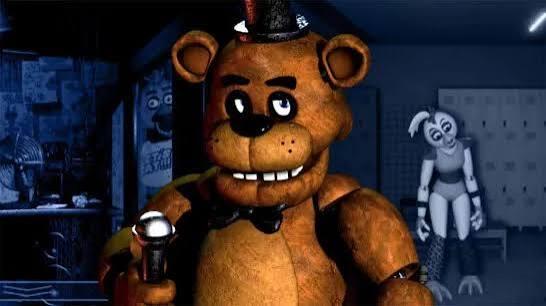
There is a particular kind of bravery that horror games ask from you. Not the kind where you charge into battle with a shotgun and a one-liner — the kind where you sit perfectly still, stare at a flickering monitor, and pray that the thing standing in the hallway does not move any closer. If that sounds ridiculous to you, welcome. You are exactly the person who needs to try it.
Horror games have grown into one of the most creative corners of gaming, and few titles explain why better than Five Nights at Freddy's. Whether you are a longtime fan of the genre or someone who has never touched a jump scare in their life, this game is a surprisingly gentle entry point — gentle in mechanics, not in nerves.
What Makes FNAF Tick
The premise of Fnaf is almost comically simple. You are a night-shift security guard at a family pizzeria. The animatronic performers on stage — Freddy, Bonnie, Chica, and Foxy — have a habit of wandering around after hours, and they are not interested in making friends. Your job is to survive from 12 AM to 6 AM across five increasingly difficult nights. That is it. No weapons, no running, no hiding under a desk. You sit in your office and manage what little control you have.
And that control is thin. You have a tablet that lets you check security cameras around the building. You have two doors with lights and blast shutters. And you have a limited power supply that drains with every light you flip, every door you close, and every camera you check. If the power runs out before 6 AM, the lights go dark, a slow music-box version of the Toreador March plays, and Freddy Fazbear shows up at your door. It is one of the most memorably awful moments in indie gaming, and it never stops being tense no matter how many times you experience it.
The beauty of the design is that every decision carries weight. Checking the cameras costs power. Closing a door costs power. Doing nothing costs you your life because the animatronics will eventually reach your office. You are constantly balancing awareness against survival, and the game gives you just enough information to be anxious but never enough to feel safe.
How to Actually Survive Your First Few Nights
If you are jumping in for the first time, here are some things that took me way too many game-overs to figure out.
Listen before you look. The game communicates a lot through audio. Footsteps, breathing, clanking — each animatronic has a distinct sound profile. Before you pull up the camera feed, pause and listen. If you hear heavy footsteps on your left, you probably do not need to check the right hallway. This habit alone will save you a meaningful amount of power.
Do not over-check the cameras. It is tempting to cycle through every camera every few seconds, especially when your anxiety spikes. Resist it. Each camera check drains power, and constantly switching creates a false sense of control. Pick a routine: check the stage, check the hallways, then put the tablet down. Trust your ears for the moments in between.
Respect Foxy. Foxy the pirate is the animatronic that punishes you for ignoring Pirate Cove. If you never check his camera, he will sprint down the hallway and bang on your door — which costs an enormous amount of power to block. Glance at Pirate Cove occasionally, but do not obsess over it. A quick look every thirty seconds or so keeps him in place.
Stay calm when things go wrong. This is harder than it sounds. When two animatronics are at your doors simultaneously and your power is at twelve percent, panic is the natural response. Panic leads to slamming both doors shut and draining your remaining power in seconds. Instead, take a breath. Check which threat is more immediate, deal with it, then reassess. You will be surprised how often you can scrape through to 6 AM with one or two percent left.
Learn the patterns. Every animatronic follows a set of movement rules. They are not random — they are procedural, which means they feel unpredictable but actually follow logic. Bonnie tends to move left. Chica tends to move right. Freddy moves through a specific camera sequence. Once you internalize these patterns, the game shifts from chaos to something almost meditative — almost.
Why It Is Worth the Scares
What makes Fnaf linger in your memory is not really the jump scares, though they are effective. It is the atmosphere. The grainy camera feeds, the distorted children's laughter echoing through empty halls, the slow dread of watching a power meter tick toward zero while something shuffles closer — all of it builds a kind of tension that most big-budget horror games struggle to replicate. The game was made by a single developer, Scott Cawthon, and its rough edges somehow make it more unsettling, not less.
There is also a surprisingly deep lore hiding beneath the surface. Newspaper clippings, cryptic phone calls, and strange minigames between nights hint at something far darker than animatronics gone rogue. The community has spent years piecing together the story, and it is a rabbit hole worth exploring once you have survived your first playthrough.
Horror games, at their best, strip away the power fantasy that most genres rely on. They make you small, vulnerable, and hyper-aware of every sound. If you have never experienced that kind of gaming — the kind where your heart rate is the real difficulty meter — start here. Pull the lights down, put on headphones, and see how long you can sit still in the dark.
- Managerial Effectiveness!
- Future and Predictions
- Motivatinal / Inspiring
- Fitness and Wellness
- Medical & Health
- Manufacturing
- Education
- Real-Estate
- Food Industry
- Hospitality
- Online Games
- Sports
- Home Services
- Civil Engineering
- Safety and Protection
- Software Products & Services
- Fashion and Jewellery
- Artificial Intelligence
- Entrepreneurship
- Mentoring & Guidance
- Marketing
- Networking
- HR & Recruiting
- Literature
- Shopping
- Career Management & Advancement