

 SkillClick
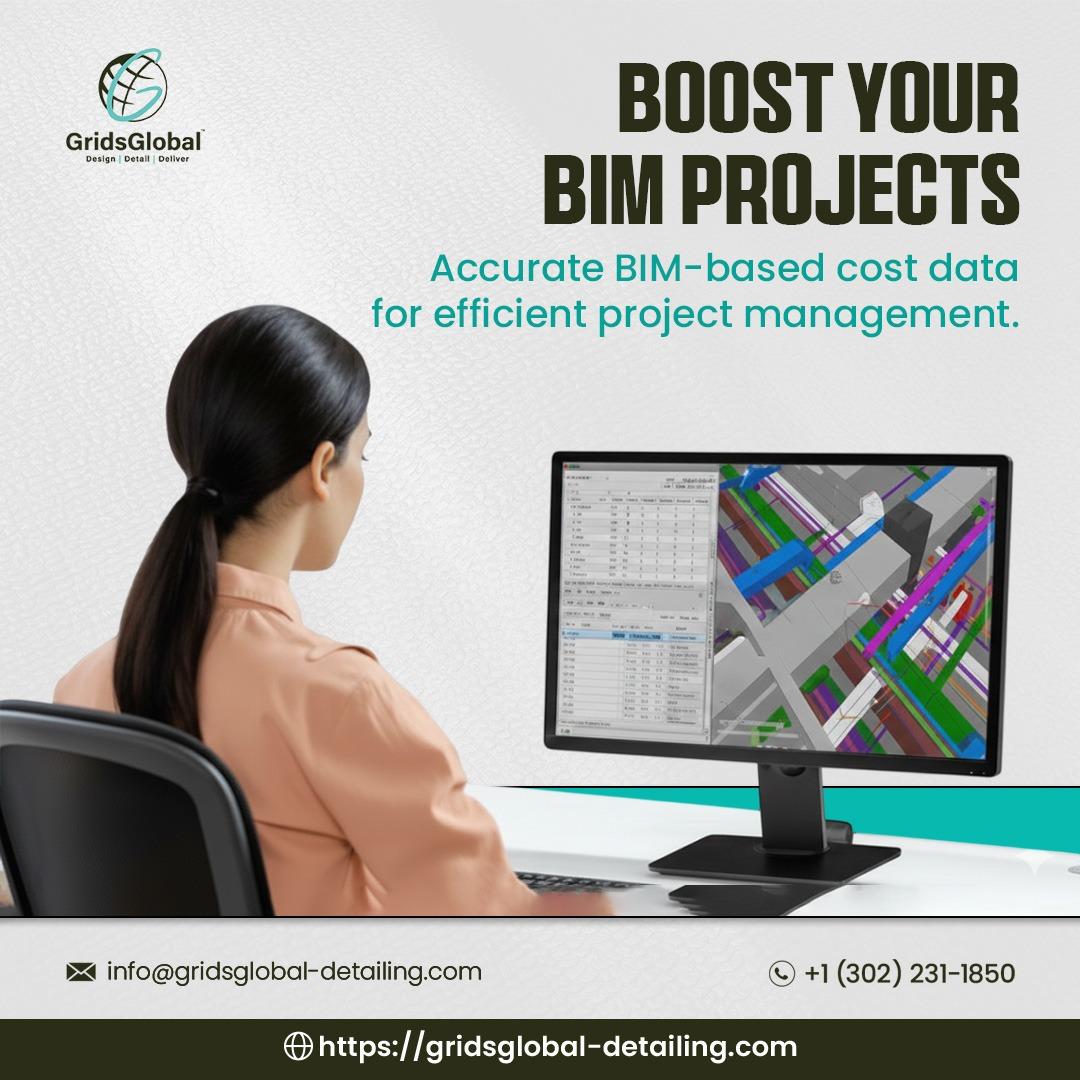
The performance of a steel structure under service conditions is governed by the capacity of its connections to transfer forces reliably between members. Each bolted or welded joint must be evaluated against multiple limit states, including prying action, block shear, web crippling, and low-cycle fatigue, under amplified dead, live, wind, and seismic load combinations. This analytical process, which converts design intent into fully constructible details, is the specialized discipline of Structural Steel Connection Design Services. When a project team engages a dedicated partner such as GridsGlobal Steel Detailing LLC, every load path, bolt clearance, weld access envelope, and tolerance accumulation is resolved within a single, fully coordinated 3D digital model. The outcome is a fabrication and erection package that site crews can install without corrective cutting, drift pins, or schedule-disrupting rework, regardless of the structural configuration or geographic scope.
Digital Prototyping and a Procurement-Ready Bill of Material
Contemporary structural systems frequently incorporate sloped members, asymmetrical bracing layouts, deep transfer trusses, and tightly integrated mechanical, electrical, and plumbing services. These complexities generate a multi-dimensional coordination challenge that conventional two-dimensional shop drawings cannot adequately address. Detailing professionals resolve this by constructing richly detailed 3D BIM models that serve as millimeter-accurate digital replicas of the completed steel frame. Within these coordinated virtual environments, every cope, stiffener, bolt hole, and weld preparation is positioned exactly as it will appear during fabrication. The model becomes the definitive dimensional authority for all project stakeholders.
Once the digital twin is fully assembled, a structured series of constructability audits is performed directly within the model environment. The team verifies that a welding nozzle can physically access the rear face of every stiffener, measures the swing arc of a torque wrench to confirm unobstructed bolt tightening in grouped connections, and analyzes how standard mill and shop tolerances will accumulate. These evaluations confirm that tolerance stacks will assist erection rather than generating concealed fit-up conflicts. Such digital issue identification prevents conditions that would otherwise only surface when a beam is suspended from a crane, consuming schedule float and contingency reserves.
After all clearance and tolerance validations are satisfied, the model geometry drives CNC beam lines, plate processors, and drill stations, producing shop drawings of absolute mathematical precision. Fabrication facilities then cut, drill, and weld thousands of components with such repeatable accuracy that each piece arrives on site tagged, labeled, and ready for immediate bolt-up. Field grinding, hole reaming, and corrective welding are eliminated from the project timeline entirely.
Concurrent with this digital assembly process, the model automatically generates a comprehensive Bill of Material (BOM). This document itemizes every structural shape, plate thickness, high-strength bolt grade, and welding consumable, organized by unique piece mark. The BOM serves as the master procurement instrument, enabling supply chain managers to synchronize mill orders precisely with shop production schedules. Fabricators obtain the exact tonnage of each profile required, accounting for every cut-off, stiffener, and base plate. This granular command eliminates the two most persistent cost overrun sources in steel fabrication: material shortages that idle production bays and surplus inventories that inflate carrying costs while tying up working capital. Across multiple fabrication facilities, the BOM functions as the primary tracking document, ensuring that each truckload arriving on site aligns with the planned erection sequence and that no critical component is ever misplaced within a dispersed international supply chain. Professional Structural Steel Detailing Services maintain this BOM in strict synchronization with the coordinated model and corresponding fabrication drawings, establishing a unified data backbone for the entire project.
Connection Strength Verification and a Reliable Bill of Quantity
A steel beam that seats cleanly against its column flange without field intervention satisfies only the initial fit-up criterion. The far more rigorous evaluation examines whether that same joint can reliably sustain decades of dead loads, live occupancy loads, wind pressures, and seismic events without any component exceeding its factored design capacity. Connections represent the concentrated stress pathways where internal forces change direction, and their performance under combined loading demands an analytical depth that extends well beyond a simple bolt count or a rule-of-thumb estimate.
During the connection design phase, engineers systematically evaluate every potential failure mechanism. They compute prying forces that could lever an end plate away from a column flange, trace block shear rupture paths through beam webs, assess web crippling under concentrated bearing reactions, and examine bolt groups for tension fatigue under cyclic wind or seismic excitation. All computations are carried out within the strict framework of internationally recognized design standards, removing any dependence on approximate methods. Many project teams actively seek specialized Structural Steel Connection Design Services to avoid the recurring deficiencies that emerge when standard details are extrapolated beyond their validated limits. Only after this exhaustive forensic evaluation do engineers finalize the end plate thicknesses, stiffener arrangements, bolt spacings, and fillet weld leg sizes that safely accommodate natural beam end rotation while maintaining lateral drift within permissible thresholds.
This same analytical discipline automatically generates a detailed Bill of Quantity (BOQ) that categorizes each connection type by unit count, estimated labor hours, fastener quantities, and any special welding or nondestructive testing mandates. The BOQ converts what is typically an ambiguous budget line for "connections" into a fully transparent, line-by-line expenditure. Armed with that granular insight, estimators can refine bid accuracy to a competitive edge. Project controllers construct cash flow forecasts grounded in measurable engineering quantities rather than broad percentage allowances that frequently provoke disputes during progress reviews. International stakeholders, from lenders to joint-venture partners, receive financial reports that trace every connection-related cost back to a verifiable design output. For projects situated in high-seismic zones, advanced Structural Steel Connection Design Services go further, embedding ductile detailing strategies that maintain structural serviceability after significant ground motion. This additional engineering rigor is fully captured within the BOQ breakdowns, ensuring that every seismic resilience measure is costed with the same precision as a standard shear connection.
The steel detailing model and the connection design calculations remain tightly integrated. Detailing specialists extract the BOM directly from the coordinated 3D environment, while connection engineers derive the BOQ from the same virtual structure. There is no disconnect between what the engineer analyzed, what procurement ordered, and what the shop floor will fabricate. Every team member, from the connection designer to the erection foreman, operates from a single source of truth, eliminating the data fragmentation that routinely disrupts complex, multi-country projects. Structural Steel Detailing Services provide the cohesive framework that keeps the BOQ, BOM, and fabrication data synchronized throughout the entire project lifecycle.
Capital Protection and Supply Chain Optimization
When project teams relegate spatial coordination and connection analysis to the periphery of the planning phase, they place substantial capital investments at considerable financial risk. Unvalidated load paths or mismatched bolt specifications can embed latent defects that remain dormant until a beam swings into position and refuses to fit. The crane holds the load, the schedule slips, and the cost of rectifying the error in the field frequently escalates by an order of magnitude compared to resolving it within the digital model. Such disruptions erode profit margins, delay turnover dates, and introduce unnecessary safety hazards for ironworker crews operating at elevation.
Adopting a posture of complete structural foresight eliminates that exposure. Flawless digital coordination prevents the familiar cascade of costs associated with field rework, schedule extensions, and liquidated damages. The tightly integrated BOM and BOQ workflows provide an additional, robust layer of budget protection. By minimizing material waste, closing procurement gaps, and enabling just-in-time deliveries that reduce on-site storage footprints, they allow project teams to operate with lean, predictable efficiency. Fabrication shops can batch similar connection types for production economy, and erection supervisors can schedule crane picks and crew rotations with full confidence that every steel assembly will arrive complete, dimensionally accurate, and ready for immediate installation.
Engineering Stewardship for Multi-Generational Infrastructure
Delivering landmark commercial and industrial facilities permits no dependence on rough approximations or unverified spatial assumptions. The combination of exhaustive digital prototyping, rigorous connection validation, and meticulous material quantification creates the strongest possible safeguard against structural underperformance. By maintaining that uncompromising technical standard from the earliest stages of a project, developers and contractors secure the smooth delivery of resilient, future-ready assets engineered to serve their communities safely and reliably for decades.
To begin shaping a tailored constructability strategy for your next major initiative, including full BOM compilation, BOQ structuring, and advanced model coordination, visit our contact us page.
Corporate Contact Information
United States Operations
GRIDSGLOBAL STEEL DETAILING LLC
Address: 1207 Delaware Ave, Unit 2877, Wilmington, DE 19806
Phone: +1 (302) 231-1850
Email: info@gridsglobal-detailing.com
Website: https://gridsglobal-detailing.com/