

 SkillClick
How to Choose the Right Cream Separator Machine?
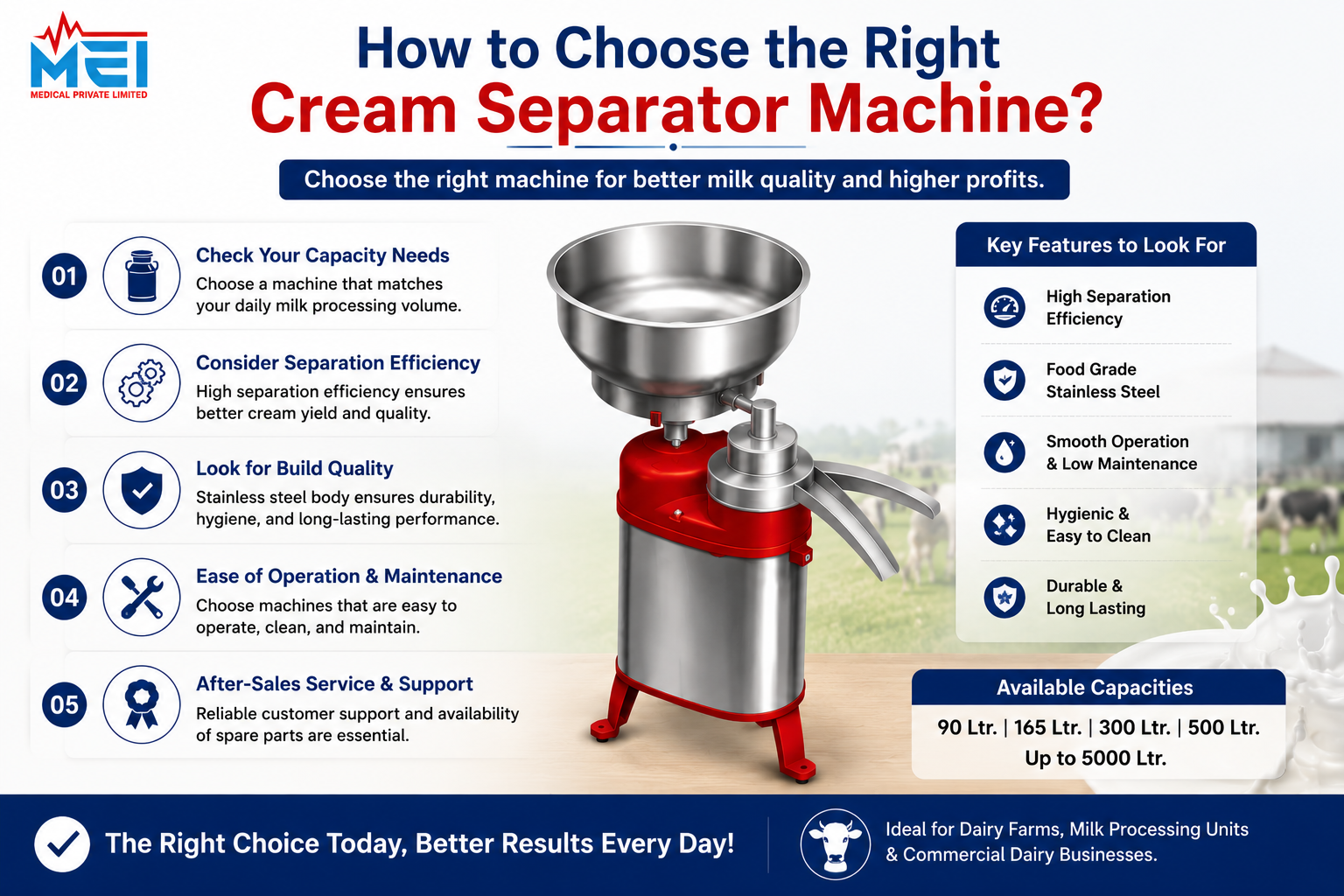
Choosing the right Cream Separator Machine isn’t only about comparing prices. For wholesalers, procurement managers, and brand owners, the decision also involves operating capacity, material specifications, packaging, lead time, and supplier accountability.
A Cream Separator Machine may look suitable in a catalogue but perform differently under actual working conditions. Buyers should verify every technical and commercial detail before issuing the purchase order.
Confirm Your Operating Requirement First
Start with the expected milk volume, daily operating hours, power availability, installation conditions, and cleaning requirements. A machine intended for occasional use may not suit continuous commercial processing.
Share these details before requesting a quotation:
-
Required processing capacity
-
Manual or electric operation
-
Voltage and frequency
-
Required material or finish
-
Order quantity
-
Delivery destination
-
Packaging expectations
Most buyers request prices before confirming specifications. That creates quotations based on different assumptions.
Nobody tells you that many shipment delays begin because specifications remain unclear during sampling. Every late change can affect production planning, costing, component selection, and dispatch.
Which Specifications Need Verification?
The selected machine should match the buyer’s actual workflow. Confirm capacity, construction material, dimensions, electrical requirements, cleaning access, accessories, and operating limitations.
Ask the supplier to include every agreed detail in the quotation and proforma invoice. Verbal discussions help, but production teams generally work from approved documents.
One mistake buyers make is approving a sample without confirming whether the production batch will follow the same configuration. Sample approval should include finish, accessories, labels, controls, and packaging.
An honest limitation is that no machine will perform consistently if it is operated beyond its stated range or cleaned incorrectly.
Evaluate the Supplier Beyond Price
A low quotation doesn’t explain how the supplier controls order accuracy. Ask how specifications move from the sales team to production, how QC inspection is recorded, and how complaints are managed.
Useful questions include:
-
Who checks the purchase order before production?
-
Is sampling approval required?
-
How is the production batch inspected?
-
What is checked before dispatch?
-
How are missing parts handled?
-
Is the ISO certificate currently valid?
-
Who manages freight documentation?
A supplier who cannot explain complaint handling usually doesn’t have a clear system.
Buyers comparing Cream Separator Machine Manufacturers should therefore evaluate process control, communication, and documentation—not only unit price.
How Correct Selection Reduces Problems
Correct selection can reduce stoppages, repeated adjustments, cleaning difficulty, unsuitable stock, and specification disputes.
That’s where technical verification protects the purchase. Once the configuration is approved, the QC team has a clear reference during final inspection.
Practical benefits include:
-
Better matching with daily milk volume
-
Fewer specification disputes
-
Easier operator planning
-
Better inventory decisions
-
Clearer complaint resolution
-
Lower risk of ordering unsuitable equipment
These advantages don’t remove risks caused by voltage fluctuations, wear, poor maintenance, or operator error.
Plan MOQ, Packaging and Freight Early
MOQ can influence unit pricing, production scheduling, packaging, and freight cost. Buyers should confirm whether the quoted price applies to one unit, distributor quantities, or mixed orders.
Even experienced buyers leave freight planning until production is complete. Changes to cartons, pallets, labels, or shipping marks can then delay dispatch.
Packaging problems are seldom found in the factory. They are in general only detected after loading. Vibration, moisture, stacking pressure, and rough handling expose weak internal protection.
Before dispatch, request packed dimensions, gross weight, package count, packing photographs, and a final packing list. Buyers working with Cream Separator Machine Exporters should also confirm who handles freight booking and shipping documents.
Procurement teams comparing Cream Separator Machine Manufacturers in Latin America should review landed cost, spare-part access, response time, and shipment frequency.
What an Experienced Manufacturer Should Clarify
A responsible manufacturer should explain what information is required before production, which specifications can be customised, and where changes may affect performance or lead time.
We’ve seen orders delayed because the commercial team approved one configuration while the buyer expected another. A final order confirmation should list the model, quantity, voltage, accessories, labels, packaging, and destination.
MEI Medical is presented as ISO-certified. Buyers should still request the applicable certificate, verify its validity, and check whether its scope is relevant to the order.
Importers assessing Cream Separator Machine Exporters in Latin America should also review documentation accuracy, communication speed, freight coordination, and the procedure for damaged or missing items.
What to Check Before Releasing the Order
Don’t issue a purchase order based only on a product photo and price message. Request a written quotation covering specifications, MOQ, lead time, payment terms, packing, freight responsibility, and complaint handling.
Which means the purchase order must repeat every critical requirement. Any difference between the quotation, sample approval, and purchase order should be resolved before production.
For larger orders, request pre-dispatch photographs, quantity verification, labels, and packaging confirmation.
Final Buying Decision
The right Cream Separator Machine should match the required milk volume, operating conditions, approved specifications, delivery plan, and after-sales expectations.
Clear requirements at the beginning prevent expensive corrections after dispatch.
Frequently Asked Questions
1. What information should I send for a quotation?
Share capacity, operating method, voltage, quantity, destination, application, and packaging requirements.
2. Should I approve a sample first?
Sampling is useful for custom orders or private labelling. It adds time and cost but reduces bulk-order mismatch.
3. How do I verify an ISO certificate?
Check the company name, certificate number, issuing body, scope, and validity date.
4. What causes specification mismatch?
Common causes include incomplete quotations, verbal changes, unclear sampling approval, and inaccurate purchase orders.
5. How should the machine be packed?
Packaging should restrict movement and protect components from moisture, vibration, and stacking pressure.

- Managerial Effectiveness!
- Future and Predictions
- Motivatinal / Inspiring
- Fitness and Wellness
- Medical & Health
- Manufacturing
- EĞİTİM BİLGİLERİ
- Real-Estate
- Food Industry
- Hospitality
- Online Games
- Sports
- Home Services
- Civil Engineering
- Safety and Protection
- Software Products & Services
- Fashion and Jewellery
- Artificial Intelligence
- Entrepreneurship
- Mentoring & Guidance
- Marketing
- Networking
- HR & Recruiting
- Literature
- Shopping
- Career Management & Advancement