

 SkillClick
Drone Rules in India: A Complete Guide to Legal Compliance, Business Opportunities, and Safe Operations
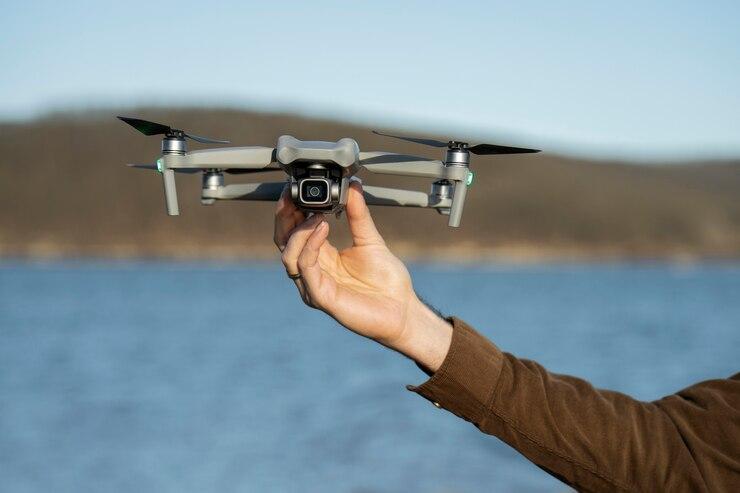
India's drone industry has witnessed remarkable growth over the past few years. From agriculture and infrastructure inspections to filmmaking, logistics, surveying, disaster management, and defense applications, drones are transforming the way businesses and government agencies operate. Affordable technology, supportive government initiatives, and increasing awareness have encouraged startups and enterprises to invest heavily in unmanned aircraft systems.
However, operating a drone is not simply about purchasing one and taking it into the sky. India has established a structured legal framework governing drone ownership, registration, pilot responsibilities, and operational permissions. Anyone using drones for commercial or recreational purposes must understand the applicable laws before conducting flights.
Businesses that fail to comply with legal requirements may face penalties, cancellation of permissions, or even criminal proceedings depending on the circumstances. Therefore, understanding drone rules in India has become essential for entrepreneurs, photographers, surveyors, logistics companies, infrastructure developers, and hobbyists alike.
This guide explains the legal framework governing drones in India, registration requirements, operational restrictions, licensing obligations, compliance standards, and the future of India's drone ecosystem.
The Rise of India's Drone Industry
India's drone market has evolved significantly over the last decade. Earlier, strict regulations and licensing requirements limited widespread adoption. Today, policy reforms have encouraged innovation while maintaining public safety and national security.
Government departments increasingly rely on drones for:
-
Land surveys
-
Crop monitoring
-
Highway inspections
-
Smart city planning
-
Disaster response
-
Border surveillance
-
Mining operations
-
Environmental monitoring
Private businesses have also embraced drones for aerial photography, industrial inspections, warehouse management, delivery pilots, insurance assessments, and construction progress monitoring.
With growing adoption comes the need for a robust regulatory system that balances innovation with safety.
Understanding the Legal Framework
The regulation of drones in India primarily falls under the authority of the Directorate General of Civil Aviation (DGCA), operating under the Ministry of Civil Aviation.
The present framework was substantially modernized through the Drone Rules, 2021, replacing the earlier Unmanned Aircraft System Rules that were widely considered restrictive.
The revised rules simplified approvals, reduced paperwork, encouraged manufacturing, and introduced a more business-friendly compliance structure.
Several government platforms now facilitate digital registration, certification, and operational approvals, making compliance considerably easier than before.
Classification of Drones
Indian regulations classify drones primarily according to their maximum take-off weight.
Nano Drone
Weight up to 250 grams.
These drones are commonly used for recreational purposes and basic photography.
Micro Drone
Weight exceeding 250 grams but not more than 2 kilograms.
Widely used by content creators, photographers, and beginners.
Small Drone
Weight exceeding 2 kilograms but not more than 25 kilograms.
Popular among survey companies, agricultural service providers, and industrial inspection firms.
Medium Drone
Weight exceeding 25 kilograms but not more than 150 kilograms.
Used for specialized industrial and government applications.
Large Drone
Weight exceeding 150 kilograms.
These are subject to additional regulatory oversight due to their size and operational risks.
Understanding the applicable category helps determine licensing obligations, certification requirements, and operational restrictions under drone rules and regulations in India.
Registration Requirements
Before operating many categories of drones, owners must complete the required registration procedures.
Registration generally includes:
-
Drone identification details
-
Manufacturer information
-
Serial numbers
-
Owner information
-
Compliance certification
-
Digital registration through designated government platforms
Each eligible drone receives a Unique Identification Number (UIN), enabling authorities to trace ownership and ensure accountability.
Failure to register where required may result in legal consequences.
Digital Sky Platform
One of India's most important regulatory developments is the Digital Sky platform.
This online portal serves as the primary interface for drone-related approvals and compliance.
Users can:
-
Register drones
-
Apply for certifications
-
Obtain permissions
-
Access operational guidelines
-
Verify compliance requirements
The platform has significantly simplified interactions between drone operators and regulators.
Type Certification
Many drones operating in India require Type Certification before they can legally enter commercial operations.
Type Certification confirms that the drone satisfies technical and safety standards established by regulators.
Manufacturers seeking to market drones in India must comply with prescribed certification procedures before commercial distribution.
This promotes safety while encouraging standardization across the industry.
Remote Pilot Certificate
Commercial drone operations often require trained remote pilots.
Operators handling specified categories of drones must obtain the necessary Remote Pilot Certificate through recognized training organizations.
Training generally includes:
-
Airspace regulations
-
Meteorology
-
Flight planning
-
Drone maintenance
-
Emergency procedures
-
Practical flying exercises
-
Aviation safety
Qualified pilots contribute significantly to reducing accidents and improving operational efficiency.
Airspace Classification
Drone flights are regulated according to designated airspace zones.
Green Zones
Flying is generally permitted subject to applicable regulatory conditions.
These zones encourage routine drone operations while maintaining oversight.
Yellow Zones
Operations may require prior authorization because of increased sensitivity.
Red Zones
Drone flights are generally prohibited unless specifically permitted by competent authorities.
These may include:
-
Military installations
-
International borders
-
Strategic infrastructure
-
Airports
-
Government buildings
-
Sensitive national security locations
Operators should always verify current airspace maps before conducting flights.
Operational Restrictions
Indian regulations impose several operational restrictions designed to ensure public safety.
Common requirements include:
-
Maintaining visual line of sight
-
Avoiding restricted airspace
-
Respecting altitude limitations
-
Preventing interference with manned aircraft
-
Avoiding reckless flying
-
Following approved operational procedures
These restrictions minimize risks to aviation safety while protecting people and property on the ground.
Privacy Considerations
As drones become more capable of collecting high-resolution images and videos, privacy concerns have gained increasing importance.
Drone operators should avoid unauthorized surveillance or recording that infringes upon an individual's reasonable expectation of privacy.
Organizations collecting aerial data should establish transparent data handling practices, secure storage mechanisms, and lawful processing procedures.
Compliance with privacy principles builds public confidence in drone technology.
Commercial Applications
The commercial potential of drones continues expanding across multiple sectors.
Agriculture
Farmers use drones for:
-
Precision spraying
-
Crop health monitoring
-
Fertilizer distribution
-
Irrigation assessment
-
Yield estimation
These technologies improve productivity while reducing operational costs.
Infrastructure
Construction companies employ drones to:
-
Monitor project progress
-
Generate site maps
-
Conduct inspections
-
Improve worker safety
Large infrastructure projects increasingly depend upon aerial data for efficient management.
Mining
Mining operators use drones for:
-
Stockpile measurement
-
Safety inspections
-
Geological surveys
-
Environmental monitoring
The ability to collect accurate aerial information significantly improves operational planning.
Insurance
Insurance companies use drone imagery for:
-
Property assessments
-
Disaster evaluation
-
Claims verification
-
Risk analysis
This accelerates claim settlements while reducing inspection costs.
Logistics
Although still developing, drone delivery represents one of India's most exciting future opportunities.
Medical supplies, emergency equipment, and rural deliveries have already demonstrated the practical value of drone logistics.
Manufacturing Opportunities
Government initiatives promoting domestic manufacturing have encouraged Indian companies to enter the drone production market.
Manufacturers now produce:
-
Drone frames
-
Flight controllers
-
Navigation systems
-
Payload equipment
-
Agricultural drones
-
Surveillance drones
Domestic production supports employment while reducing dependence on imported technology.
Safety Responsibilities
Every drone operator carries significant safety responsibilities.
Before each flight, operators should:
-
Inspect the aircraft
-
Check battery condition
-
Verify GPS functionality
-
Review weather forecasts
-
Confirm airspace permissions
-
Maintain communication with team members
-
Prepare emergency procedures
A disciplined pre-flight checklist substantially reduces operational risks.
Insurance Considerations
Although insurance requirements may vary depending on operational circumstances, commercial drone operators often obtain liability insurance to protect against financial risks.
Insurance may cover:
-
Property damage
-
Third-party liability
-
Equipment damage
-
Business interruption
Organizations operating large drone fleets frequently integrate insurance into their overall risk management strategy.
Penalties for Non-Compliance
Violating applicable drone regulations can lead to serious legal consequences.
Depending upon the nature of the violation, authorities may impose:
-
Monetary penalties
-
Suspension of permissions
-
Confiscation of equipment
-
Cancellation of certifications
-
Criminal prosecution in severe cases
Compliance should therefore remain a priority throughout every stage of drone ownership and operation.
Role of State Authorities
While aviation regulation primarily falls under central authorities, drone operators must also remain aware of local administrative requirements.
Certain operations may involve coordination with:
-
Police authorities
-
Local administration
-
Disaster management agencies
-
Municipal authorities
-
Defense establishments
Large commercial projects often require coordination across multiple government agencies.
Emerging Technologies
Drone technology continues advancing rapidly.
Future developments include:
-
Artificial intelligence-assisted navigation
-
Autonomous inspections
-
Swarm operations
-
Beyond Visual Line of Sight (BVLOS) missions
-
Drone traffic management systems
-
Automated delivery networks
As technology evolves, regulatory frameworks will continue adapting to address new operational challenges.
Best Practices for Businesses
Businesses intending to deploy drones should establish comprehensive compliance programs.
Recommended practices include:
-
Maintaining detailed flight records
-
Conducting periodic pilot training
-
Following maintenance schedules
-
Performing operational risk assessments
-
Updating regulatory knowledge regularly
-
Establishing emergency response procedures
-
Protecting collected data
-
Reviewing insurance coverage
Strong governance improves both legal compliance and operational reliability.
Future of Drone Regulation in India
India's regulatory approach increasingly focuses on encouraging innovation while ensuring public safety.
Policy reforms have substantially reduced administrative burdens compared to earlier regulatory frameworks.
The government continues promoting drone research, indigenous manufacturing, pilot training, and commercial adoption across multiple sectors.
With increasing investments in digital infrastructure, artificial intelligence, and automation, drones are expected to become an integral part of India's economic development strategy.
Businesses entering the sector today are well positioned to benefit from long-term market growth, provided they remain compliant with evolving legal requirements.
Conclusion
India's drone ecosystem is entering a period of sustained expansion. Supportive government policies, technological innovation, rising commercial demand, and increasing investment have created significant opportunities across industries ranging from agriculture and infrastructure to logistics and public administration.
At the same time, responsible drone operations require a thorough understanding of the applicable legal framework. Registration requirements, pilot certification, airspace restrictions, operational safety standards, and privacy obligations all play an important role in ensuring safe and lawful operations.
Whether you are a startup launching aerial services, a corporation integrating drone technology into existing operations, or an individual enthusiast exploring recreational flying, compliance should remain at the center of every flight. Staying informed about drone rules in India helps minimize legal risks while promoting responsible use of emerging technology. Likewise, keeping pace with updates to drone rules and regulations in India allows businesses to adapt confidently as the regulatory landscape continues to evolve.
As innovation accelerates and government support strengthens, drones are likely to become a defining feature of India's digital economy. Organizations that combine technological capability with regulatory compliance will be best positioned to capitalize on the immense opportunities that lie ahead.
- Managerial Effectiveness!
- Future and Predictions
- Motivatinal / Inspiring
- Fitness and Wellness
- Medical & Health
- Manufacturing
- Education
- Real-Estate
- Food Industry
- Hospitality
- Online Games
- Sports
- Home Services
- Civil Engineering
- Safety and Protection
- Software Products & Services
- Fashion and Jewellery
- Artificial Intelligence
- Entrepreneurship
- Mentoring & Guidance
- Marketing
- Networking
- HR & Recruiting
- Literature
- Shopping
- Career Management & Advancement