

 SkillClick
How to Convert Currency API Python With Currency API JavaScript?
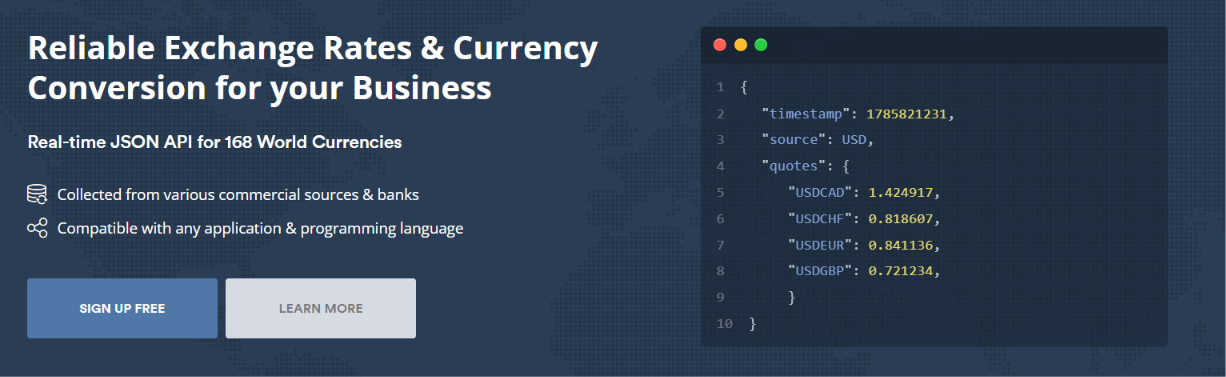
A developer building an international ecommerce application may start with a simple requirement: display product prices in the customer's preferred currency. The first version might handle USD and EUR with a few lines of code. But once customers arrive from several countries, the application needs more currencies, reliable exchange rates, error handling, and a consistent way to update values.
This is where currency conversion becomes a development problem rather than a simple mathematical calculation. Teams need to decide where exchange rate data comes from, how often it should be updated, and how the application should handle unavailable or outdated information.
Developers learning how to convert currency api python can use an API based workflow to retrieve exchange rate information and then perform conversions inside their Python applications. The same underlying approach can also be implemented in JavaScript and other programming languages.
Why Do Applications Need Automated Currency Conversion?
Yes, automated conversion allows software to handle international prices and transactions consistently.
An ecommerce platform may maintain product prices in USD while customers browse in EUR, GBP, CAD, or JPY. A travel application may need to display hotel or flight prices in multiple currencies. Financial dashboards may need to consolidate revenue from several markets.
Without automation, developers might store exchange rates manually or ask users to calculate conversions themselves. Neither approach scales well.
A typical workflow looks like this:
Base amount
    ↓
Currency selected
    ↓
Exchange rate retrieved
    ↓
Conversion performed
    ↓
Localized amount displayed
For example, if a product costs $100 and the current EUR rate is 0.92, the application can calculate approximately €92.
The calculation is simple. The more complicated part is obtaining appropriate exchange rate data and deciding how the application should use it.
What Are the Main Ways to Convert Currency?
Yes, developers can use fixed rates, internal databases, or external currency APIs.
Fixed rates are simple to implement and can work for demonstrations or applications where exchange rates do not need to change. However, they quickly become outdated when used for real world pricing.
An internal database provides greater flexibility. Developers can store rates locally and allow different parts of the application to access them. This can improve performance but requires a process for regularly retrieving and updating the data.
External currency APIs provide another option. Applications request exchange rate information when needed and process the response programmatically.
APIs reduce the need to build and maintain an exchange rate collection system. However, developers need to account for request limits, service availability, authentication, and the provider's data update schedule.
The most appropriate approach depends on how frequently the application needs updated rates and how much control the development team requires.
How Can Python Connect to a Currency API?
Yes, Python can retrieve exchange rate data using standard HTTP requests and process the returned response.
A simplified example using the requests library could look like:
import requests

url = "https://api.example.com/live"
params = {
    "access_key": "YOUR_ACCESS_KEY",
    "currencies": "EUR,GBP"
}

response = requests.get(url, params=params)
data = response.json()

print(data)
Once the application receives the exchange rate, it can perform a calculation.
usd_amount = 100
eur_rate = 0.92

eur_amount = usd_amount * eur_rate

print(eur_amount)
A production application should include error handling and response validation.
For example, developers should check whether the request succeeded before attempting to read exchange rate values.
if response.ok:
    data = response.json()
else:
    print("Currency data unavailable")
Applications should also avoid blindly trusting missing or malformed values. Validation helps prevent incorrect prices from appearing in customer facing interfaces.
Can JavaScript Handle the Same Currency Workflow?
Yes, JavaScript can retrieve and process exchange rate data in both browser based and server side applications.
A basic request can use the Fetch API:
fetch("https://api.example.com/live")
  .then(response => response.json())
  .then(data => {
    console.log(data);
  })
  .catch(error => {
    console.error(error);
  });
The application can then use the returned rate to calculate a localized price.
const priceUSD = 100;
const eurRate = 0.92;

const priceEUR = priceUSD * eurRate;

console.log(priceEUR);
A currency api javascript integration can therefore follow the same basic model as Python: send an HTTP request, receive structured exchange rate data, validate the response, and apply the rate to the required calculation.
The programming language changes, but the underlying API workflow remains similar.
What Should Developers Compare Before Choosing a Currency API?
Yes, developers should evaluate the data and service characteristics before writing production code.
Currency coverage is important because an application may eventually need to support additional markets.
Update frequency should match the application's requirements. A website displaying approximate prices may not need the same frequency as a financial application.
Historical exchange rates can be important for accounting and reporting. Current rates cannot accurately represent the exchange rate applicable to an older transaction.
API request limits should also be evaluated. Applications with thousands of users may generate a large number of requests if rates are retrieved inefficiently.
Documentation matters as well. Developers should look for clear authentication instructions, endpoint descriptions, response examples, and error handling guidance.
Reliability and response speed are also worth testing before deployment.
A small proof of concept can help developers identify integration issues before the API becomes part of a critical application workflow.
How Can Developers Reduce Currency API Requests?
Yes, caching can significantly reduce repeated requests.
Imagine an ecommerce website has 20,000 visitors who all want to view prices in EUR. The application does not necessarily need to retrieve the EUR exchange rate 20,000 times.
Instead, the backend can retrieve the rate periodically and temporarily cache it.
A simplified workflow could be:
Request exchange rate
        ↓
Validate response
        ↓
Store temporarily
        ↓
Reuse for calculations
        ↓
Refresh when needed
Developers can also request multiple currencies together when supported by the API.
For example, instead of making separate requests for EUR, GBP, CAD, and AUD, an application may retrieve the required rates in a single operation.
Monitoring is equally important. Teams should track request volume and investigate unexpected increases.
This can reveal inefficient code, repeated requests, or application errors that might otherwise increase API usage unnecessarily.
How Can Currency Conversion Be Made More Reliable?
Yes, reliable currency conversion requires more than multiplying one number by another.
Applications should define how exchange rates are selected and how rounding is performed.
For example, financial systems may need a consistent number of decimal places. Different parts of an application should not independently round the same amount using different rules.
Error handling should also be planned. If an API becomes temporarily unavailable, the application needs a defined response. Depending on the use case, this might involve displaying the most recently cached value, delaying the calculation, or informing the user that conversion information is temporarily unavailable.
Security is another consideration. API credentials should not be exposed unnecessarily in client side code. Sensitive keys should generally be managed through appropriate backend or environment configuration.
Finally, businesses should distinguish between informational conversion and actual payment settlement. A displayed exchange rate does not necessarily represent the final rate used by a payment provider.
FAQs
1. How can Python convert currency using an API?
Python can send an HTTP request to a currency API, retrieve the exchange rate, validate the response, and multiply the original amount by the appropriate rate.
2. Can JavaScript be used with currency APIs?
Yes. JavaScript can use tools such as Fetch to request exchange rate data and then apply the returned values to currency calculations in web or server side applications.
3. How can developers avoid excessive currency API requests?
Caching exchange rates, grouping multiple currency requests, using sensible refresh intervals, and monitoring API usage can help reduce unnecessary requests while maintaining useful exchange rate information.
- Managerial Effectiveness!
- Future and Predictions
- Motivatinal / Inspiring
- Fitness and Wellness
- Medical & Health
- Manufacturing
- Education
- Real-Estate
- Food Industry
- Hospitality
- Online Games
- Sports
- Home Services
- Civil Engineering
- Safety and Protection
- Software Products & Services
- Fashion and Jewellery
- Artificial Intelligence
- Entrepreneurship
- Mentoring & Guidance
- Marketing
- Networking
- HR & Recruiting
- Literature
- Shopping
- Career Management & Advancement