

 SkillClick
What Does Digitally Anonymised Mean and How Does It Protect Your Online Privacy?
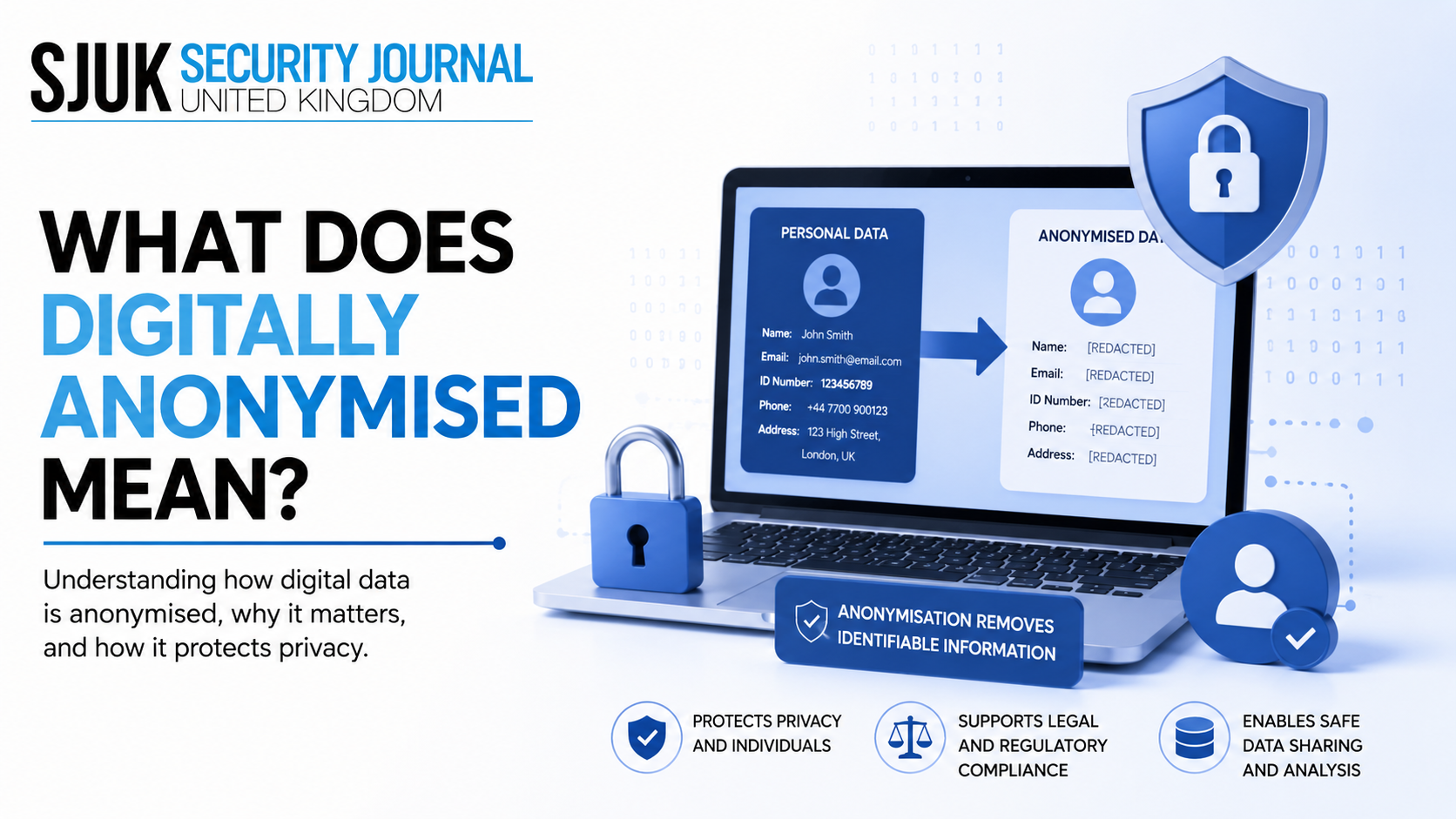
With the increasing amount of personal information shared online, protecting user privacy has become a major concern for individuals and organisations. Every online activity, from browsing websites to using digital services, can generate data that may reveal personal details. Digitally anonymised data helps reduce privacy risks by removing or modifying identifiable information so individuals cannot be easily recognised.
Understanding what does digitally anonymised mean is important for knowing how companies handle personal information while maintaining security, compliance, and user trust.
What Does Digitally Anonymised Mean?
Digitally anonymised refers to the process of transforming personal data in a way that removes identifiable details, making it difficult or impossible to link the information back to a specific individual. This technique is commonly used by organisations to analyse data, improve services, and conduct research while protecting user privacy.
Unlike simple data removal, anonymisation involves modifying information through methods such as removing identifiers, aggregating data, or replacing sensitive details with anonymous values. For example, instead of storing a user's name, address, or email address, an organisation may use a random identifier or grouped data that does not reveal personal identity.
Once data is properly anonymised, it cannot be easily traced back to the original person, helping organisations reduce privacy risks and comply with data protection regulations.
How Does Digital Anonymisation Work?
Digital anonymisation uses different techniques to protect personal information while allowing data to remain useful for analysis and decision-making.
Removing Direct Identifiers
The simplest form of anonymisation involves deleting direct identifiers such as names, phone numbers, email addresses, and account details. This prevents immediate identification of individuals from stored datasets.
Data Masking
Data masking replaces sensitive information with modified or hidden values. For example, a customer account number may be partially hidden or replaced with random characters to prevent exposure.
Data Aggregation
Aggregation combines information from multiple users to create general patterns instead of focusing on individual records. For example, analysing average online shopping behaviour across a region instead of tracking one person's activity.
Pseudonymisation
Pseudonymisation replaces identifying information with artificial identifiers. While this improves privacy protection, the data may still be linked back to individuals if additional information is available.
Why Is Digital Anonymisation Important for Online Privacy?
As businesses collect more user data, privacy concerns have increased significantly. Cybercriminals often target databases containing personal information for identity theft, fraud, and other malicious activities.
Digital anonymisation helps reduce these risks by limiting the amount of identifiable information stored and processed. Even if anonymised datasets are exposed, attackers have fewer opportunities to connect the information to specific individuals.
It also allows organisations to use data for important purposes such as improving customer experiences, developing technologies, and analysing security threats without compromising personal privacy.
Benefits of Digitally Anonymised Data
Digitally anonymised data offers significant advantages by protecting user privacy while allowing organisations to securely analyse, share, and manage information. These benefits make anonymisation an essential practice for modern data security and regulatory compliance.
Protects Personal Information
The primary benefit of anonymised data is stronger privacy protection. By removing identifiable details, organisations can minimise the chances of personal information being misused.
Reduces Data Breach Risks
If cybercriminals gain access to anonymised datasets, the information is less valuable because it does not directly reveal individual identities.
Supports Data Analysis
Organisations can continue analysing trends and patterns without needing access to sensitive personal details. This helps businesses make informed decisions while maintaining user privacy.
Helps Meet Privacy Regulations
Data protection laws require organisations to handle personal information responsibly. Anonymisation supports compliance by reducing the collection and storage of unnecessary personal data.
Difference Between Anonymised Data and Encrypted Data
Although anonymisation and encryption both improve data security, they work differently.
Encryption converts readable information into an unreadable format that can be restored using a decryption key. The original data remains available if the correct key is used.
Anonymisation removes or changes identifying information so the data cannot be connected to a specific person. Unlike encryption, properly anonymised data is not designed to be reversed.
Organisations often use both techniques together to create stronger privacy and security protection.
Common Uses of Digital Anonymisation
Digital anonymisation is widely used across industries to protect sensitive information while enabling organisations to securely analyse data, improve services, and support innovation.
Healthcare Data Protection
Healthcare organisations use anonymised patient data for medical research and analysis while protecting sensitive health information.
Financial Services
Banks and financial institutions anonymise customer information to study trends, improve fraud detection, and enhance services without exposing personal details.
Artificial Intelligence and Machine Learning
AI systems require large datasets for training and improvement. Anonymisation allows developers to use data while reducing privacy concerns.
Cybersecurity Research
Security teams analyse anonymised threat data to identify attack patterns and develop stronger defence strategies without revealing user identities.
Marketing Analytics
Businesses use anonymised customer behaviour data to understand market trends and improve services without tracking specific individuals.
Challenges of Digital Anonymisation
Although anonymisation provides significant privacy benefits, it also has limitations.
Risk of Re-identification
Advanced data analysis techniques can sometimes reconnect anonymised information with individuals, especially when combined with other available datasets.
Balancing Privacy and Data Use
Removing too much information can make data less valuable for analysis, while keeping too much information may create privacy risks.
Maintaining Strong Security Practices
Anonymisation should be combined with other cybersecurity measures, including access controls, encryption, and monitoring systems, to provide complete protection.
Future of Digital Anonymisation and Online Privacy
As digital services continue to expand, organisations will need stronger methods to protect personal information. Advances in privacy-enhancing technologies, artificial intelligence, and cybersecurity frameworks will improve how data is anonymised and managed.
Future privacy strategies will focus on creating a balance between data usability and individual protection. As regulations become stricter, digitally anonymised data will remain an important tool for responsible data management.
Conclusion
Digitally anonymised data plays a crucial role in protecting online privacy by reducing the connection between information and individual identities. It enables organisations to use valuable data for research, analytics, and service improvements while minimising privacy risks.
As cyber threats continue to evolve, adopting effective anonymisation practices alongside other security measures will become increasingly important. Industry discussions and insights from Security Journal United Kingdom highlight the need for stronger privacy protection strategies to help organisations secure digital information and maintain user trust.
FAQs
1. What does digitally anonymised mean?
Digitally anonymised means modifying personal information so it cannot be easily linked back to a specific individual. It helps protect privacy while allowing organisations to use data safely.
2. Is anonymised data completely private?
Properly anonymised data provides strong privacy protection, but advanced techniques may sometimes create risks of re-identification if combined with other datasets.
3. What is the difference between anonymisation and pseudonymisation?
Anonymisation removes identifying information permanently, while pseudonymisation replaces identifiers with artificial values that may still be connected back to individuals under certain conditions.
4. How does anonymisation protect online privacy?
Anonymisation reduces exposure of personal details by removing direct identifiers, limiting misuse risks, and helping organisations process data without revealing individual identities.
- Managerial Effectiveness!
- Future and Predictions
- Motivatinal / Inspiring
- Fitness and Wellness
- Medical & Health
- Manufacturing
- Education
- Real-Estate
- Food Industry
- Hospitality
- Online Games
- Sports
- Home Services
- Civil Engineering
- Safety and Protection
- Software Products & Services
- Fashion and Jewellery
- Artificial Intelligence
- Entrepreneurship
- Mentoring & Guidance
- Marketing
- Networking
- HR & Recruiting
- Literature
- Shopping
- Career Management & Advancement