

 SkillClick
How to Identify Emerging Medical Billing Automation Companies
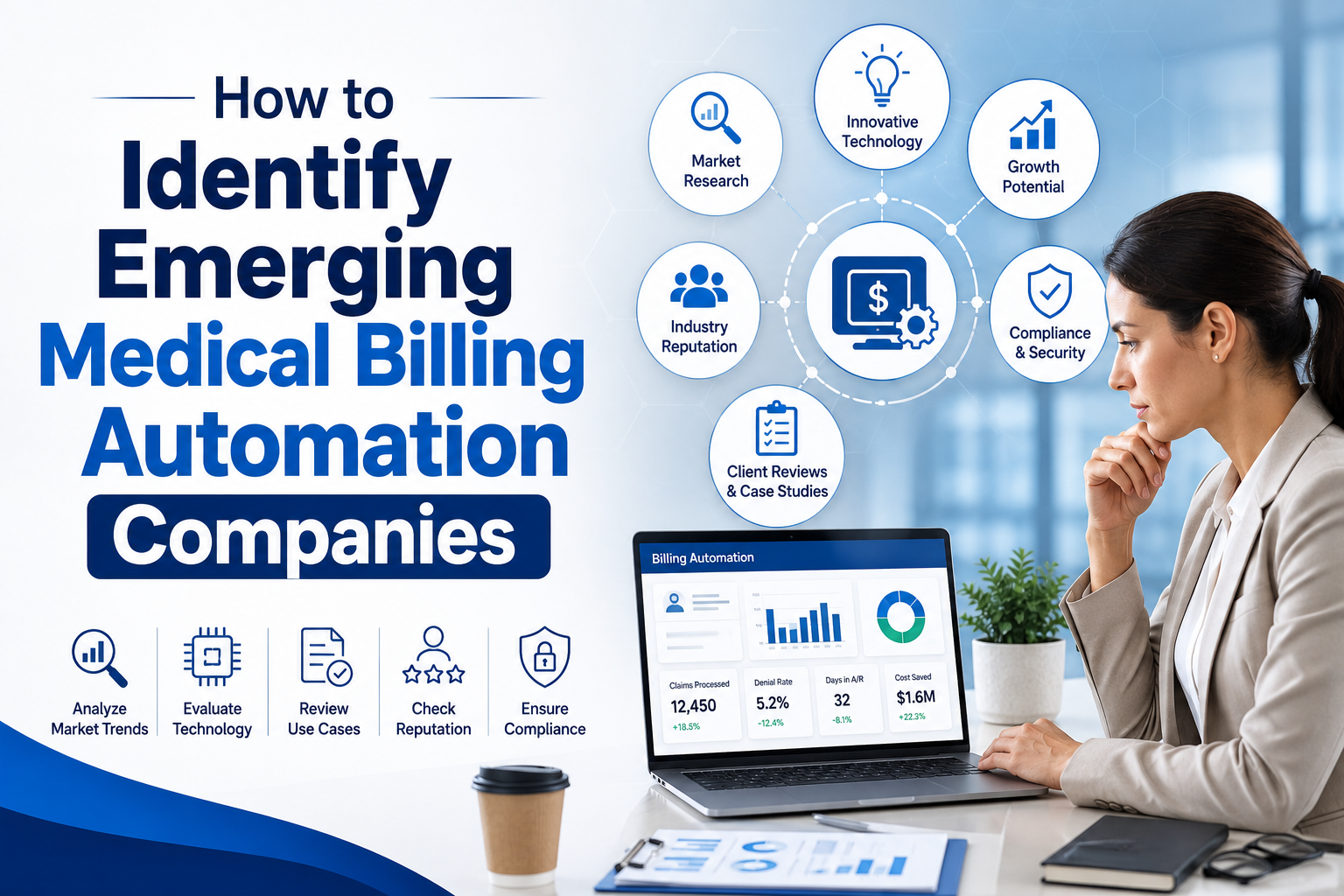
Medical billing automation is moving fast, and the companies leading it today are not always the names hospital finance teams already recognize. New vendors keep entering the space with claims scrubbing engines, AI-driven denial prediction, and automated eligibility checks that promise to cut days off the revenue cycle. The challenge for a hospital or health system is separating a genuinely emerging company worth watching from a vendor riding a marketing trend. A few practical signals help make that distinction.
Look Beyond the Homepage Buzzwords
Almost every billing vendor now markets itself as "AI-powered" or "automation-first." That language alone says little about what actually happens behind the interface. A more useful approach is to look at what specific part of the workflow is automated. Companies making real progress usually name the exact process, such as automated CPT and ICD-10 code validation, real-time eligibility verification, or claims status tracking, rather than describing automation in vague terms. If a vendor cannot explain which manual task their tool removes, the automation claim is worth questioning.
Check Who Is Actually Funding and Building the Company
Funding rounds, leadership backgrounds, and hiring patterns tell a more honest story than a product page. A company founded by people with a background in revenue cycle operations, coding, or hospital finance tends to build tools that solve problems practitioners actually face. Recent funding from healthcare-focused venture firms, rather than generalist tech investors, is often a sign the company understands the regulatory and payer complexity involved in medical billing rather than treating it as a generic fintech problem.
Read Case Studies With Real Numbers, Not Testimonials
Generic praise from an unnamed client is easy to write and hard to verify. Emerging companies worth taking seriously usually publish case studies with specific, checkable metrics, such as a stated reduction in denial rate, days in accounts receivable, or clean claim rate over a defined time period, ideally tied to a named or identifiable health system. If a vendor only offers vague success stories without numbers, that is a sign the automation may still be more concept than proven product.
Watch for Integration Depth, Not Just Integration Claims
Almost every billing automation vendor claims to integrate with major EHR and practice management systems. What matters more is the depth of that integration. A company that only pulls basic patient demographics is very different from one that can push and pull claims data, coding updates, and remittance information in real time. Asking a vendor to walk through a live integration, rather than a slide describing one, is usually the fastest way to tell the difference between a mature product and an early-stage one still building out its connections.
Track Their Presence in Industry Conversations
Companies genuinely shaping the future of medical billing automation tend to show up consistently in HFMA discussions, revenue cycle podcasts, and healthcare finance publications, not just in their own paid advertising. A pattern of unprompted mentions, analyst commentary, or peer discussion on platforms like LinkedIn is a reasonably reliable signal that a company's tools are actually being used and discussed by people working in the field, rather than only by its own marketing team.
Compare Against Established Outsourced RCM Partners
It is also worth weighing a standalone automation tool against outsourcing the function entirely to a partner already running revenue cycle management at scale. Established RCM partners often adopt emerging automation internally well before it reaches individual hospital IT budgets, which means a hospital gets the benefit of the technology without having to vet an early-stage vendor directly. This is particularly relevant for functions like medical coding, where accuracy and compliance matter as much as speed, and where an experienced partner can apply new automation carefully rather than rushing it into production.
The Bottom Line
Identifying a genuinely emerging medical billing automation company takes more than reading a product page. Specific workflow claims, credible funding and leadership, verifiable case studies, real integration depth, and organic industry presence are all stronger signals than marketing language alone. For hospitals not ready to bet on an unproven vendor, working with an experienced revenue cycle partner that already evaluates and adopts this technology can be a lower-risk way to benefit from automation as it matures.
- Managerial Effectiveness!
- Future and Predictions
- Motivatinal / Inspiring
- Fitness and Wellness
- Medical & Health
- Manufacturing
- Education
- Real-Estate
- Food Industry
- Hospitality
- Online Games
- Sports
- Home Services
- Civil Engineering
- Safety and Protection
- Software Products & Services
- Fashion and Jewellery
- Artificial Intelligence
- Entrepreneurship
- Mentoring & Guidance
- Marketing
- Networking
- HR & Recruiting
- Literature
- Shopping
- Career Management & Advancement