

 SkillClick
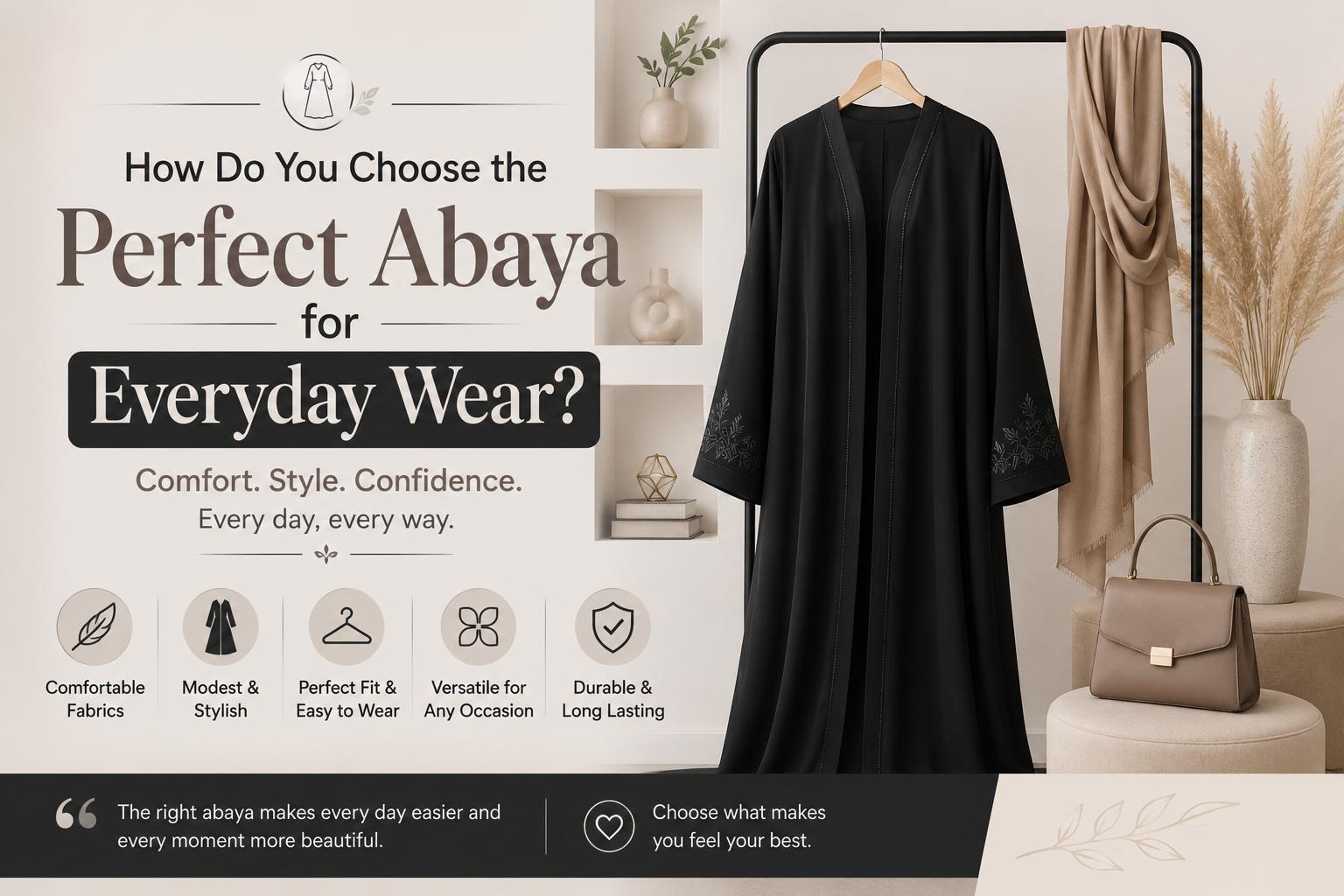
The abaya has evolved far beyond a simple black cloak. Today it's a wardrobe staple that blends modesty with personal style, available in countless fabrics, cuts, and colors to suit everything from daily errands to formal occasions. But with so many options on the market, choosing the right abaya can feel more complicated than it should be.
This guide walks through the fabrics, styles, and fit considerations that matter most, so you can build a modest wardrobe that feels as good as it looks.
What Makes a Good Abaya?
At its core, an abaya should offer full coverage, comfortable movement, and a silhouette that suits your body type and lifestyle. Beyond that baseline, quality comes down to three things: the fabric used, the stitching and finishing, and how well the cut flows on the body. A well-made abaya drapes naturally rather than clinging or bunching, and it holds its shape wash after wash.
Popular Abaya Styles to Know
Open Abaya
An open-front abaya is worn like a long coat over your regular clothing, closed with a belt or left open. It's versatile, layers easily over different outfits, and works well for both casual outings and semi-formal settings.
Closed Abaya
A closed abaya slips on like a dress, with the front fully sewn together. This style is popular for everyday wear and prayer, offering a cleaner, more streamlined look with minimal fuss.
Kimono-Style Abaya
Inspired by kimono silhouettes, this style features wide sleeves and a relaxed, flowing cut. It's a favorite for those who want a modern, elegant look without sacrificing modesty.
Butterfly Abaya
Characterized by wide, dramatic sleeves that taper at the wrist, the butterfly abaya adds movement and visual interest, making it a popular choice for festive or special occasions.
Choosing the Right Fabric
Fabric is often the single biggest factor in how an abaya feels and performs day to day.
- Nida — a matte, lightweight fabric that doesn't cling to the body, widely favored for its breathability and elegant fall.
- Crepe — slightly heavier with a subtle texture, known for its structured drape and resistance to wrinkling.
- Chiffon — light and flowy, often used for layered or occasion-wear abayas, though it typically requires an underslip for full coverage.
- Linen blend — breathable and ideal for hot climates, though it wrinkles more easily than synthetic blends.
If you're buying for daily wear in Pakistan's climate, nida and crepe are generally the most practical choices — breathable enough for warmer months while still holding a clean, structured shape.
Matching Your Abaya with the Right Hijab
An abaya rarely stands alone — the right hijab completes the overall look and can make a simple abaya feel far more polished. Chiffon and jersey hijabs are popular for everyday wear thanks to their easy draping and breathability, while silk and georgette options are often reserved for more formal or festive occasions. Matching or complementary tones between the abaya and hijab create a cohesive, put-together appearance, while contrasting colors can be used deliberately to make a statement.
Building a Versatile Modest Wardrobe
Rather than buying abayas one at a time based on trends, it helps to think of your wardrobe holistically. A well-rounded modest wear collection typically includes a few foundational pieces:
- One or two solid-colored, everyday abayas in breathable fabric for regular use.
- A slightly more detailed piece — with embroidery, lace, or a distinct cut — for gatherings and semi-formal events.
- At least one neutral-toned abaya that pairs easily with multiple hijab colors.
- A few complementary hijabs in different fabrics suited to different seasons and occasions.
This approach means you're rarely stuck without an appropriate outfit, regardless of the occasion.
Fit and Sizing Tips
1. Check the Length Carefully
An abaya that's too long can drag and collect dirt, while one that's too short defeats the purpose of full coverage. Always check the brand's size chart against your height rather than assuming standard sizing will fit.
2. Consider Sleeve Style
Wide sleeves look elegant but can be impractical for daily tasks like cooking or driving. If you need something functional for daily errands, opt for slightly fitted or elasticated cuffs.
3. Pay Attention to Shoulder Fit
The shoulder seam should sit naturally at your shoulder point — an ill-fitting shoulder line is one of the most common reasons an otherwise good abaya looks off.
Caring for Your Abaya
Proper care extends the life of your abaya significantly. Hand-washing or using a gentle machine cycle with mild detergent helps preserve color and fabric texture, especially for crepe and nida fabrics. Always check the care label before ironing, as some fabrics require lower heat settings or steaming instead of direct ironing to avoid shine marks or damage.
Frequently Asked Questions (FAQs)
1. What is the most comfortable fabric for daily abaya wear? Nida and crepe are generally the most comfortable choices for daily wear, as they are breathable, hold their shape well, and don't require excessive ironing.
2. How do I choose the right abaya size? Always measure your height and shoulder width against the brand's specific size chart rather than assuming standard small, medium, or large sizing will fit correctly, since cuts and lengths can vary between styles.
3. Can I wear a chiffon abaya for everyday use? Chiffon abayas are typically lighter and more suited to occasion wear, as the sheer fabric often requires an underslip. For daily wear, sturdier fabrics like nida or crepe are more practical.
4. Should my hijab always match my abaya color? Not necessarily. Matching tones create a cohesive, streamlined look, while a contrasting hijab can add personality and visual interest. Both approaches work well depending on the occasion.
5. How should I store my abayas to keep them in good condition? Hanging abayas on padded or wide hangers helps maintain their shape and prevents shoulder creasing, while folding is best reserved for lighter, more delicate fabrics like chiffon.
Final Verdict
The perfect abaya isn't about following the latest trend — it's about finding the fabric, cut, and fit that suit your daily life while still making you feel confident and put together. For most people, a breathable nida or crepe abaya in a versatile color is the most practical everyday choice, while chiffon and detailed styles are better saved for special occasions. Pair it thoughtfully with the right hijab, and you have an outfit that works for nearly any setting.
Build your modest wardrobe around a few reliable, well-fitted staples rather than one-off purchases, and you'll always have the right abaya ready for whatever the day brings.