

 SkillClick
Why Structural Steel Detailing Services Are the Lofting Floor That Shapes a Steel Frame Before It Meets the Sky
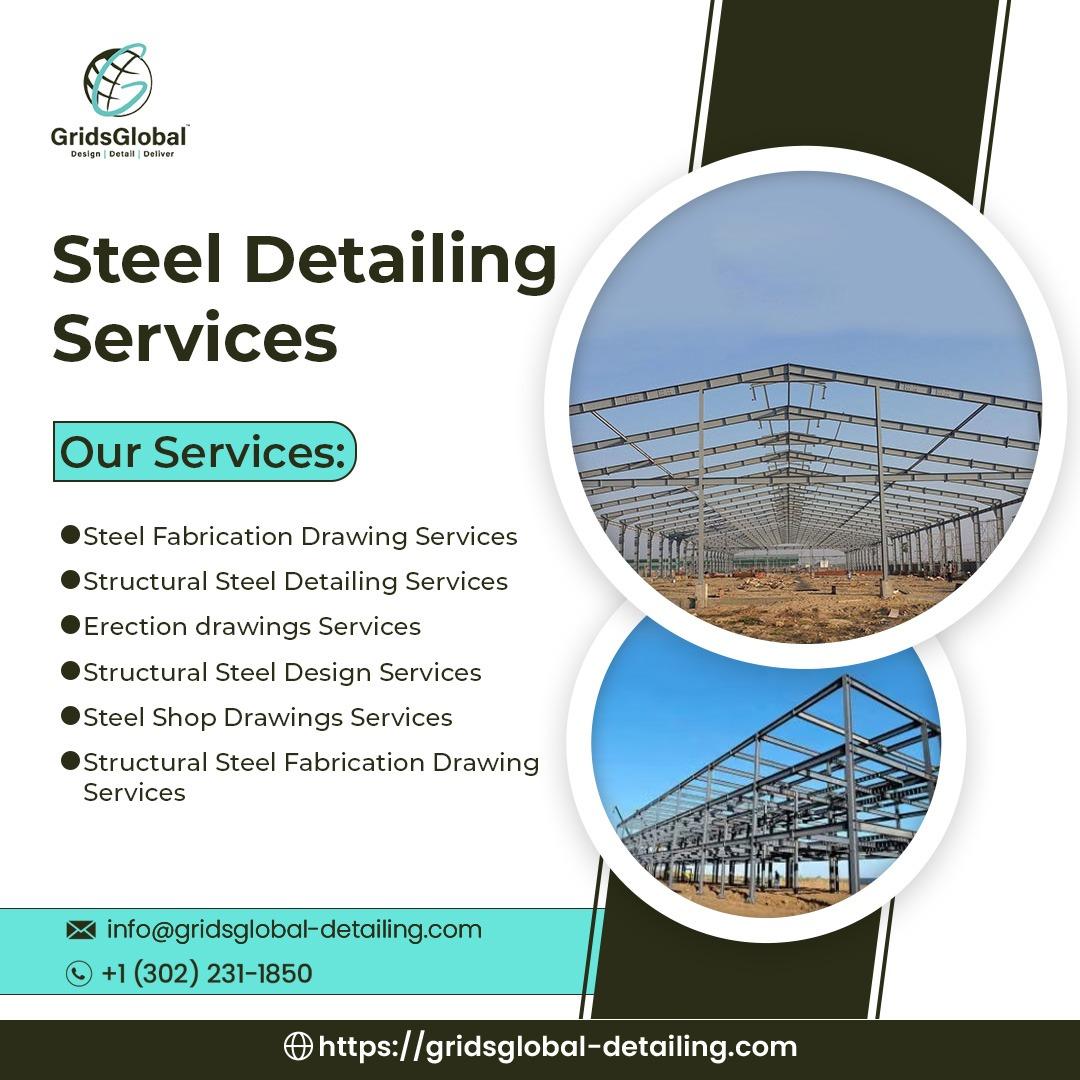
In a wooden shipyard that has been building trawlers for four generations, the most important tool is not a saw or a plane. It is the scarred pine floor of the lofting shed, where the master shipwright chalks out every frame, every plank, and every scarf joint at full scale before a single timber is sawn. He walks those chalk lines for days, sighting along the curves and adjusting the fairing until the hull is as smooth as a fish. Only when the lofting is flawless does he send the measurements to the sawyers. A steel frame that climbs above a city street follows that same ancient law of full-scale proofing, but the lofting floor is a digital model built by Structural Steel Detailing Services. When a project owner partners with a specialist firm like GridsGlobal Steel Detailing LLC, they lock in that chalk-line certainty inside a fully coordinated 3D prototype. The result is a steel frame that assembles without cutting torches, drift pins, or costly field rework, regardless of structural ambition or geographic distance.
Building the Digital Lofting and a Fully Itemized Bill of Material
Modern steel structures rarely stay inside simple, rectangular lines. Sloping columns, irregular bracing arrangements, deep transfer trusses, and tightly packed mechanical, electrical, and plumbing services create a spatial puzzle that flat 2D shop drawings cannot solve. Detailing specialists address this by constructing richly detailed 3D BIM models that serve as exact digital twins of the finished frame. Inside these coordinated virtual environments, every cope, stiffener, bolt hole, and weld preparation is positioned precisely as it will appear during fabrication, down to the millimeter. The model becomes the single source of dimensional truth for the entire project team.
Once the digital twin is fully assembled, the team runs a rigorous battery of constructability checks directly within the model. They confirm that a welding gun can physically access the back face of each stiffener. They measure the swing arc of a torque wrench to guarantee that every bolt in a group can be tightened without obstruction. They verify that the natural accumulation of mill and fabrication tolerances will actually help the ironworker during erection rather than create hidden fit-up conflicts. These virtual checks intercept problems that would otherwise surface only when a beam hangs motionless from a crane hook, burning through schedule and contingency budgets.
After all checks pass, the validated model data flows directly into CNC beam lines, plate processors, and drill stations, producing shop drawings of absolute mathematical precision. Fabrication shops then cut, drill, and weld thousands of components with such repeatable accuracy that each piece arrives on site tagged and ready for immediate bolt-up. Field grinding, hole reaming, and corrective welding are entirely eliminated from the schedule.
Running alongside this digital assembly, the model automatically extracts a comprehensive Bill of Material (BOM). This document itemizes every structural shape, plate thickness, high-strength bolt grade, and welding consumable, organized by unique piece mark. The BOM becomes the master procurement engine, enabling supply chain managers to synchronize mill orders perfectly with shop production sequences. Fabricators know the exact tonnage of each profile required, accounting for every cut-off, stiffener, and base plate. This granular control eliminates material shortages that idle production bays and surplus stockpiles that inflate carrying costs. Across multiple fabrication facilities, the BOM serves as the master tracking document, ensuring each truckload aligns with the planned erection sequence. For a deeper understanding of how this precise digital environment is constructed, professional Structural Steel Detailing Services provide the foundational workflows that make such accuracy achievable.
Integrating Connection Design for Complete Structural Integrity
While accurate detailing guarantees that steel members fit together without physical clashes, the completed frame must also safely absorb decades of dead loads, live loads, wind pressures, and seismic events without any joint exceeding its factored design capacity. Connections are the concentrated stress points where forces change direction, and their behavior under combined loading demands rigorous analysis. This is where specialized Structural Steel Connection Design Services become essential. Connection engineers methodically investigate failure mechanisms such as prying action, block shear rupture, web crippling, and bolt tension fatigue. Following international design codes, they define the exact end plate dimensions, stiffener configurations, bolt spacings, and fillet weld leg sizes that safely permit natural beam end rotation while holding lateral drift within permissible limits.
This same analytical process yields a detailed Bill of Quantity (BOQ) that categorizes each connection type by unit count, estimated labor hours, fastener tally, and any special welding or nondestructive testing requirements. The BOQ transforms connection costing from a vague budget allowance into a fully transparent, line-by-line expense. With that data, estimators sharpen their bids, and project controllers build cash flow forecasts grounded in measurable engineering outputs. International stakeholders receive financial reports that trace every connection dollar back to a verifiable design output. Furthermore, Structural Steel Connection Design Services help project teams avoid the pitfalls that frequently compromise beam-to-column interfaces, while Structural Steel Connection Design Services that incorporate custom seismic detailing provide an extra layer of resilience for structures in active earthquake zones.
Capital Safeguards and a Streamlined Material Supply Chain
When detailing and connection analysis are pushed to the background, projects face significant financial exposure. Unverified dimensions or mismatched bolt specifications can embed latent defects that only surface when field corrections become unavoidable and expensive. Such shocks drain profit margins and introduce unnecessary safety hazards for ironworker crews. Choosing a path of total structural foresight removes that risk entirely. Flawless digital coordination prevents the cascade of costs tied to field rework, schedule extensions, and liquidated damages. The tightly integrated BOM and BOQ workflows further strengthen budget stewardship by slashing material waste, closing procurement gaps, and enabling just-in-time deliveries that keep on-site storage footprints small.
Engineering Stewardship for Generational Infrastructure
Delivering landmark commercial and industrial facilities leaves no room for rough approximations or unchecked spatial assumptions. The combination of exhaustive digital prototyping, rigorous detailing, and meticulous material quantification creates the strongest possible defense against structural underperformance. By upholding that uncompromising technical standard from the earliest stages of a project, developers and contractors secure the smooth delivery of resilient, future-ready assets designed to serve their communities safely for decades.
To begin shaping a tailored constructability strategy for your next major initiative, including full BOM compilation, BOQ structuring, and advanced model coordination, visit our contact us page.
Corporate Contact Information
United States Operations
GRIDSGLOBAL STEEL DETAILING LLC
Address: 1207 Delaware Ave, Unit 2877, Wilmington, DE 19806
Phone: +1 (302) 231-1850
Email: info@gridsglobal-detailing.com
Website: https://gridsglobal-detailing.com/
- Managerial Effectiveness!
- Future and Predictions
- Motivatinal / Inspiring
- Fitness and Wellness
- Medical & Health
- Manufacturing
- Education
- Real-Estate
- Food Industry
- Hospitality
- Online Games
- Sports
- Home Services
- Civil Engineering
- Safety and Protection
- Software Products & Services
- Fashion and Jewellery
- Artificial Intelligence
- Entrepreneurship
- Mentoring & Guidance
- Marketing
- Networking
- HR & Recruiting
- Literature
- Shopping
- Career Management & Advancement