

 SkillClick
Snake vs Match Play: Key Differences Explained
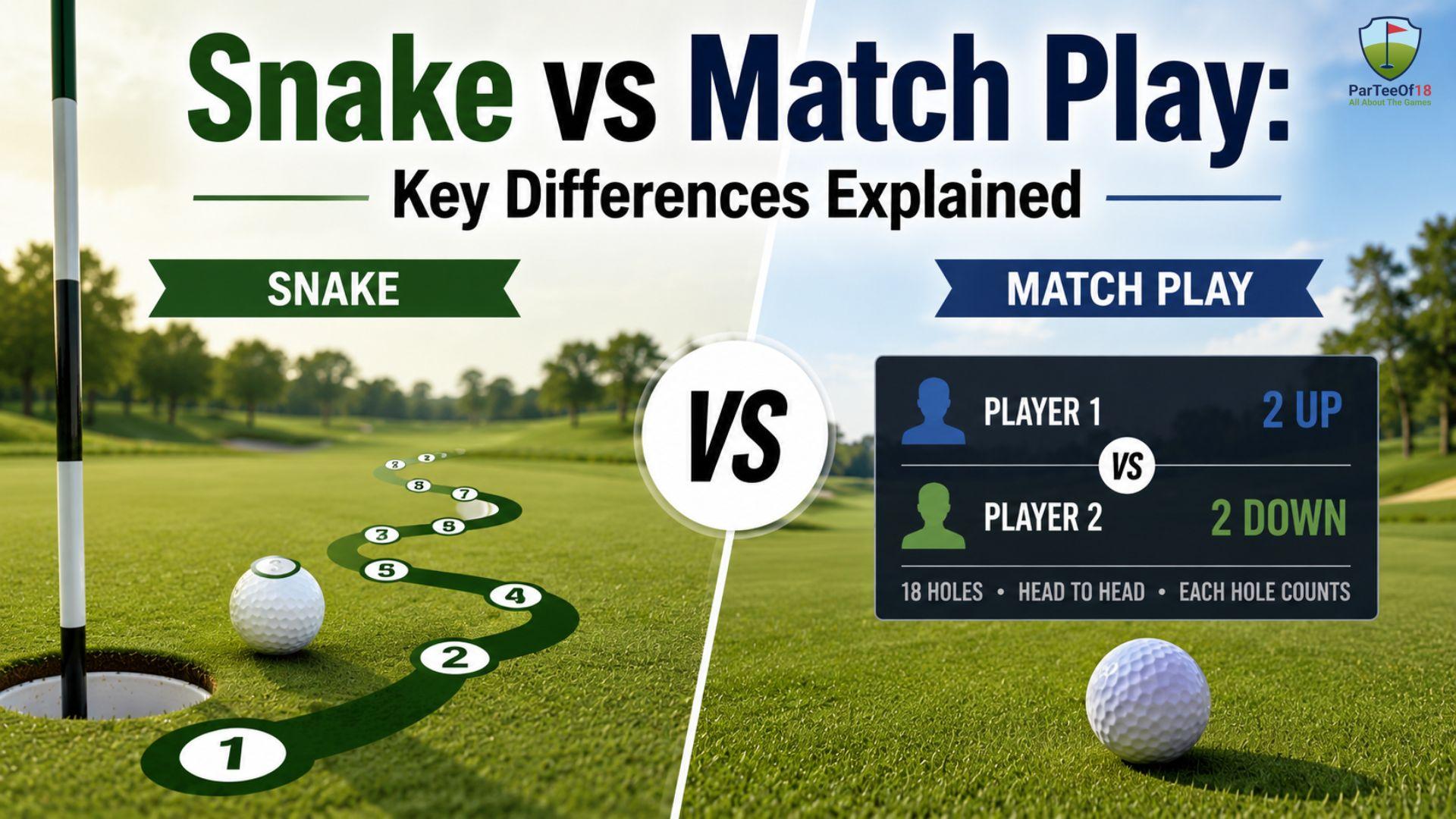
If you have ever stood on a green with your buddies shouting "you've got the snake," you already know golf has more going on than just counting strokes. Between casual side bets and serious competitive formats, the game offers dozens of ways to keep things interesting. Two terms that often get mixed up by newer golfers are Snake and Match Play.
They sound like they might belong to the same family of golf games, but honestly, they could not be more different. One is a lighthearted, often chaotic side bet that punishes bad putting. The other is a respected, tournament-level format that has decided major championships for over a century.
In this article, we will break down exactly what separates Snake from Match Play, how each one works on the course, and when you might want to bring either into your next round.
What Is Snake in Golf?
Snake is a casual side game most golfers play among friends, usually for a small wager or just bragging rights. The rules are simple. Whoever three putts, or misses a short putt at the wrong moment, gets stuck holding the "snake" until someone else does the same thing.
How the Snake Game Works?
The snake gets passed around the group throughout the round. If you three putt on hole four, you are holding it. If your buddy three putts on hole nine, the snake moves to them. Whoever is holding it at the end of the round pays up or takes the ribbing.
Common Snake Game Variations
Some groups only count three putts, while others include missed short putts inside two feet. There are also "double snake" variations where the penalty doubles each time it changes hands late in the round. It really depends on what your regular foursome agrees on before teeing off.
What Is Match Play in Golf?
Match Play golf is a completely different animal. Instead of tallying total strokes across eighteen holes, players compete hole by hole. Win a hole, you go one up. Lose it, you go one down. Tie it, and the match stays even. Whoever leads by more holes than remain wins the match outright.
The Basic Scoring System in Match Play
Say you shoot a five on a hole and your opponent shoots a four. You lose that hole, plain and simple, even if your overall score for the round is better. It does not matter if you win by one stroke or five strokes on a hole. A win is a win.
Why Match Play Feels Different From Stroke Play?
Because only the hole result matters, one disastrous hole will not sink your entire round the way it can in stroke play. A golfer can take an eight on a par four, shrug it off, and still win the next hole to tie the match right back up.
Key Differences Between Snake and Match Play
At their core, Snake is a side bet built around penalizing sloppy putting, while Match Play is a legitimate competitive format built around winning individual holes. One lives on the fringes of a casual round. The other headlines events like the Ryder Cup.
Purpose and Intent
Snake exists purely for entertainment and light stakes among friends. Match Play exists to determine a genuine winner in organized competition, from club championships to professional tour events, where strategy and mental toughness matter just as much as ball striking.
Scoring Methods Compared
Snake tracks a single ongoing penalty passed between players based on putting mistakes. Match Play tracks a running tally of holes won, lost, or halved. There is no shared token being passed around. Each hole simply gets recorded as a win, loss, or tie.
Number of Players Involved
Snake typically works best in a group of three or four golfers, since the penalty needs somewhere to travel. Match Play is traditionally a head to head format between two players, though team versions like four ball and foursomes are also widely used in events like the Ryder Cup.
Skill Level Required
Snake requires almost no strategic thinking. It is reactive. You either three putt or you do not. Match Play demands real course management, risk assessment, and mental composure, since every shot decision can directly swing the outcome of that specific hole.
Real Life Example: Snake on a Friday Round
Picture four buddies playing their usual Friday round. On hole six, Mike three putts from twenty feet and gets stuck holding the snake. He is safe for a few holes until Dave misses a four footer on hole eleven. By eighteen, whoever holds it buys the first round at the clubhouse.
Real Life Example: Match Play in a Club Championship
Now imagine a club championship semifinal. Sarah is two down after nine holes but claws back by winning three holes in a row on the back nine. She closes the match one up on the seventeenth hole, ending it early since her opponent cannot mathematically catch up.
When Should You Play Snake vs Match Play?
Choose Snake when you want a low pressure, funny addition to a casual weekend round with friends who already know each other's putting habits. Choose Match Play when you want genuine competition, whether that is a club event, a serious money match, or tournament qualifying rounds.
Best Situations for Snake
Snake works great for weekly group outings, member guest events with a relaxed vibe, or any round where the goal is laughs over leaderboard position. It adds tension to otherwise routine putts without requiring anyone to track detailed scorecards.
Best Situations for Match Play
Match Play shines in head to head rivalries, league play, and tournament brackets. It is also a smart choice when playing with golfers of different skill levels, since handicaps can be applied hole by hole to keep things competitive and fair.
Scoring Format Comparison Table
|
Feature |
Snake |
Match Play |
|
Purpose |
Casual side bet |
Competitive format |
|
Scoring unit |
Putting mistakes |
Holes won or lost |
|
Typical players |
3 to 4 |
2 (or teams) |
|
Skill demand |
Low |
Moderate to high |
|
Common setting |
Friendly rounds |
Tournaments, club events |
Conclusion
Snake and Match Play might both get thrown around in golf conversations, but they serve completely different purposes on the course. Snake is the fun, low stakes side game that punishes a bad putting stretch and gives your group something to chirp about at the nineteenth hole. Match Play is the real deal, a scoring format built for genuine competition where every single hole matters on its own.
Understanding the difference does more than clear up confusion. It helps you pick the right format for the right round, whether you are chasing laughs with your regular foursome or gunning for a club championship trophy. Next time someone suggests either one, you will know exactly what you are signing up for.
Frequently Asked Questions
1. What does holding the snake mean in golf?
Holding the snake means you were the last player in your group to three putt or miss a designated short putt. You keep holding it, and often owe a small penalty or drink, until another player makes the same mistake and takes it from you.
2. Is Match Play harder than stroke play?
Match Play is not necessarily harder in terms of skill, but it demands a different mindset. Since only the hole result matters, players often take more aggressive risks, which can lead to bigger swings in momentum compared to the steady grind of stroke play.
3. Can Snake and Match Play be played in the same round?
Yes, many golfers layer Snake on top of a Match Play or stroke play round as a fun side bet. It does not interfere with the main format since it runs entirely on putting mistakes rather than overall scoring.
4. How many holes does a Match Play round usually last?
Standard Match Play is played over eighteen holes, but a match can end early if one player leads by more holes than remain. For example, being four up with only three holes left ends the match immediately.
5. Do you need a handicap to play Match Play?
You do not need one, but handicaps are commonly used in Match Play to level the playing field between golfers of different skill levels. Strokes are typically given on specific holes based on the handicap difference between players.
- Managerial Effectiveness!
- Future and Predictions
- Motivatinal / Inspiring
- Fitness and Wellness
- Medical & Health
- Manufacturing
- Education
- Real-Estate
- Food Industry
- Hospitality
- Online Games
- Sports
- Home Services
- Civil Engineering
- Safety and Protection
- Software Products & Services
- Fashion and Jewellery
- Artificial Intelligence
- Entrepreneurship
- Mentoring & Guidance
- Marketing
- Networking
- HR & Recruiting
- Literature
- Shopping
- Career Management & Advancement