

 SkillClick
Which Aluminium Milk Can Is Best for Dairy Farms?
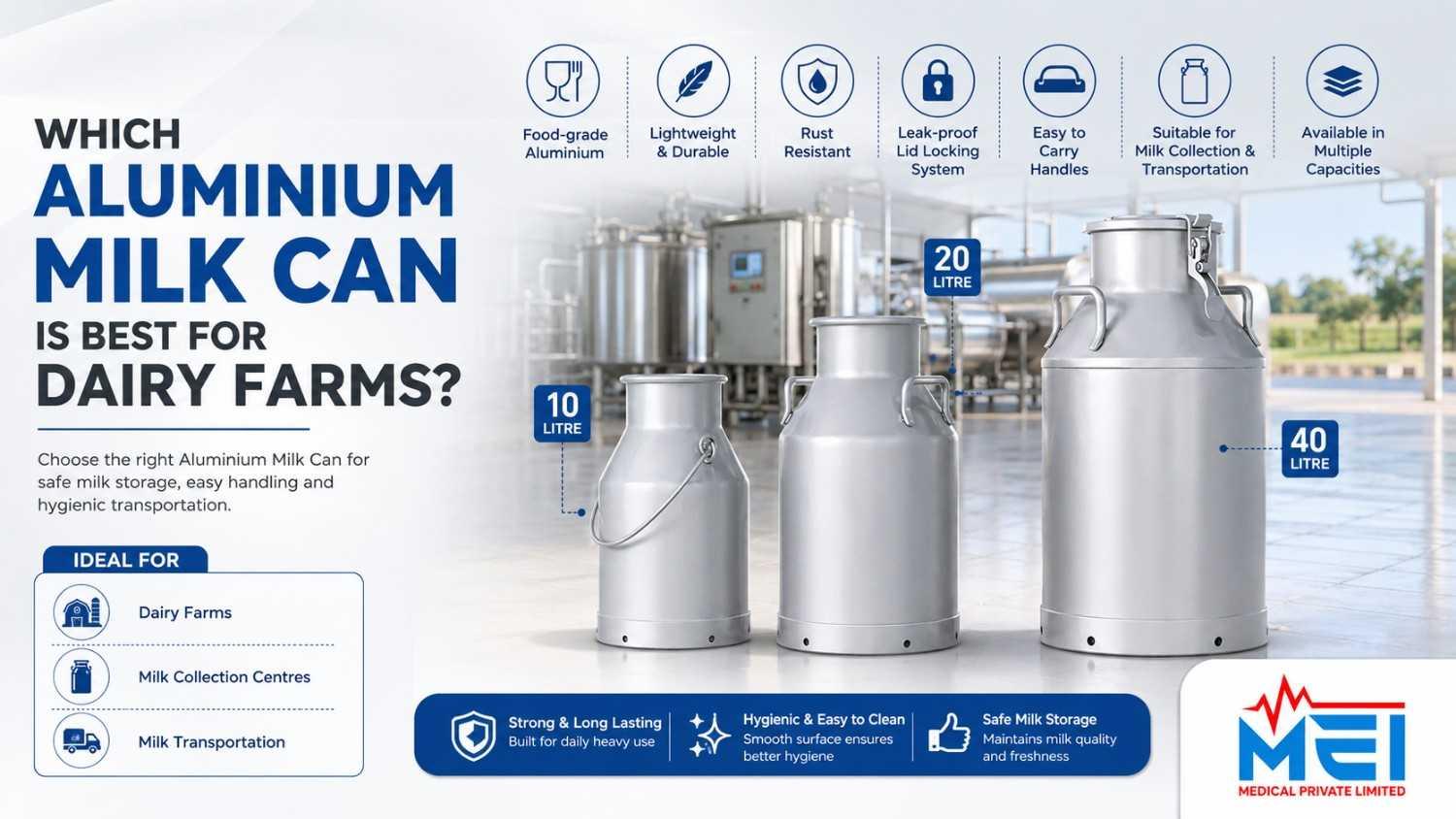
For dairy farms, the best Aluminium Milk Can isn’t the one with the brightest finish or the lowest quotation. It is the can that matches the required capacity, closes properly, withstands regular handling, arrives without transit damage, and can be reordered with the same approved specification.
An Aluminium Milk Can should be selected as a working container, not simply as a catalogue product. Procurement teams need to examine its dimensions, lid fit, handle construction, base stability, surface condition, packaging method, MOQ, and delivery schedule before approving the purchase.
The practical requirements of a dairy farm can vary. A container that works well for short-distance collection may not be the right option for frequent loading, vehicle transport, repeated washing, or movement between collection points. That’s where specification clarity becomes more valuable than a general product description.
Which Aluminium Milk Can Specifications Matter Most?
Capacity is normally the first requirement mentioned in an enquiry, but it should not be the only one. Buyers should also confirm the overall dimensions, mouth opening, lid design, handle position, base construction, surface finish, empty weight, and intended method of handling.
Most buyers focus heavily on nominal capacity and pay less attention to how the can will be lifted, stacked, cleaned, loaded, and unloaded. These operational points often decide whether the product remains convenient after daily use.
A sample should be inspected for:
- Consistency between the requested and supplied dimensions
- Proper lid seating and ease of opening
- Stable placement on a level floor
- Securely fitted handles
- Smooth edges around the opening
- Visible dents, scratches, or irregular finishing
- Ease of internal cleaning
- Suitability of the proposed packaging
One mistake procurement teams make is approving a sample verbally. The final approval should be documented through email, a signed specification sheet, or an approved purchase order reference. Otherwise, the supplier and buyer may have different interpretations of what was accepted.
The purchase order should clearly state the quantity, agreed specification, packaging requirement, delivery location, inspection condition, and dispatch date. Purchase order accuracy reduces the risk of specification mismatch during bulk production.
Most shipment delays begin because specifications remain unclear during sampling. By the time the issue is noticed, material may already have been planned or the production batch may already be scheduled.
How to Evaluate the Supplier Before Approving a Batch
Comparing quotations from Aluminium Milk Can Manufacturers should involve more than checking the unit rate. Buyers should evaluate how clearly each supplier responds to technical questions and whether the commercial terms match the actual requirement.
Ask the supplier to explain:
- How the sample will be approved
- Whether an MOQ applies
- How bulk specifications are verified
- What lead time begins after approval
- How the cans will be packed
- Which dispatch documents will be provided
- How complaints or damaged goods will be handled
Nobody tells you that a vague quotation usually creates more work after the order is placed. If packaging, transport responsibility, taxes, inspection, or delivery terms are not written clearly, the final landed cost can differ from the initial comparison.
Certificate validity may also be an objection for institutional or organised buyers. If certification is part of the vendor evaluation, ask for the applicable document and check its current validity, scope, and issuing details. A certificate should support supplier assessment, but it does not replace product-level inspection.
A supplier who cannot explain complaint handling usually doesn’t have a defined complaint-handling process. Buyers should know whom to contact, which evidence will be required, and whether the issue will be resolved through replacement, repair, credit adjustment, or another mutually agreed action.
Why Practical Handling Matters More Than Appearance
A clean finish creates a good first impression, but dairy farms need cans that remain practical during repeated lifting, loading, unloading, washing, and storage.
Aluminium is commonly considered where manageable container weight and routine manual handling are important. The actual benefit still depends on the can’s size, construction, handle position, and the way workers move it during daily operations.
A poorly positioned handle can make a correctly sized can uncomfortable to lift. An unstable base can create problems on loading platforms. A loose-fitting lid may become inconvenient during transport even if the main body looks acceptable during inspection.
We've seen buyers approve a visually polished sample without conducting a basic handling trial. The problem appears later when workers begin using the product under actual farm conditions.
There is also an honest limitation. Aluminium cans can develop dents if they are dropped, compressed during loading, or transported without suitable protection. Material selection alone cannot prevent rough handling.
Packaging problems rarely appear in the factory—they appear after loading. A pack may look secure on the dispatch floor but still fail when cartons shift, cans rub against each other, or goods are handled multiple times during transit.
For this reason, packaging approval should consider the full freight route, not only the appearance of the packed goods before dispatch.
Why Availability Must Be Planned Before Stock Runs Low
Availability depends on more than whether a supplier has manufactured the item before. It can be affected by the requested quantity, approved design, current production schedule, packaging requirement, delivery location, and the supplier’s MOQ policy.
Buyers evaluating Aluminium Milk Can Suppliers should ask whether the quotation is based on ready stock, standard production, or a fresh made-to-order batch. Each option can have a different dispatch timeline.
For recurring requirements, the procurement team should share an estimated ordering pattern. This helps both sides plan sampling, production, packing material, vehicle space, and dispatch documentation more accurately.
Even experienced buyers sometimes treat lead time as a fixed number. In practice, the stated period may begin only after commercial confirmation, advance payment, artwork approval, sample clearance, or final specification approval.
Sampling delays also affect bulk availability. If several people must approve the sample, assign one person to collect feedback and send a consolidated response. Conflicting comments from procurement, operations, and management can hold up production.
When comparing Aluminium Milk Can Suppliers in India, buyers should also consider the freight route from the dispatch location. A slightly lower unit rate may not remain economical after packaging, loading, transport, unloading, and damage risk are included.
What an Experienced Manufacturer Should Clarify Before Production
A responsible manufacturer should convert the buyer’s requirement into a clear order specification before planning the batch. This includes confirming the required quantity, design, dimensions, finish, packing method, delivery location, and agreed timeline.
MEI Medical is located in North East, New Delhi, Delhi, India, and is presented as an ISO-certified company. Include certification in the vendor assessment to select Aluminium Milk Can Manufacturers in India and review the order specific controls.
ISO certification should be viewed not as an automatic assurance that that all commercial detail will be correct. The buyer still has to check the sample approved, order, quantity, packing instructions, delivery commitment etc.
The supplier has to verify the packed qty against the purchase order and check the parcel‘s outward condition before sending out. Dispatch marks, name of consignee, number of packages and transport instructions should be examined.
Which means the final QC check should cover more than the product itself. A correctly manufactured can can still reach the wrong destination, arrive in incomplete quantity, or suffer damage because of incorrect packing instructions.
What Buyers Should Send Before Requesting a Quote
A detailed enquiry produces a more dependable quotation. It also makes comparison between suppliers easier because each vendor is quoting against the same requirement.
The enquiry should include:
- Required quantity
- Intended capacity
- Preferred dimensions, if fixed
- Lid and handle requirements
- Expected surface condition or finish
- Branding or identification requirements
- Individual or bulk packaging preference
- Delivery location
- Sample requirement
- Target delivery date
- Inspection or documentation expectations
Most buyers should also ask the supplier to separate the product price, taxes, packaging, freight, and any sample-related charge. This avoids confusion when quotations from different vendors use different commercial formats.
If the order is urgent, state the required delivery date instead of asking only for the “fastest possible dispatch.” The supplier can then confirm whether the date is realistic.
An unrealistic delivery promise is not helpful. It is better to receive an honest lead time than to face repeated dispatch postponements after the purchase order has been released.
Final Selection Should Balance Use, Risk, and Supply
The best Aluminium Milk Can for a dairy farm is the one that matches the actual handling process, approved dimensions, cleaning routine, order volume, packaging requirement, and supply schedule.
Do not select only on appearance or price. Compare sample accuracy, lid fit, handle comfort, MOQ, production lead time, freight planning, packaging, inspection, and complaint support.
A good procurement decision does not remove every operational risk. It makes those risks visible before the order enters production.
Clear specifications, written sampling approval, an accurate purchase order, and a documented dispatch plan give both the buyer and supplier a practical basis for completing the order correctly.
Frequently Asked Questions
1. What should I consider when selecting the appropriate Aluminium Milk Can for a dairy farm?
Begin by determining the required capacity and daily handling procedure. Next check the parameters, lid size, handles, stability at the base, access for cleaning, packaging, MOQ, and delivery time.
2. Should I approve a sample before placing a bulk order?
Yes, but especially for a new supply or customised order. Knock-up an approval in writing and note down the dimensions, finish, lid, handles and packaging expectations you accept.
3. Is the lowest-priced quotation usually the most economical?
Not necessarily. A lower unit rate may mean that the cost of packaging, delivery, freight, inspection, etc. is not included. Compare this total landed cost with the risk of reject or damage en route.
4. What should I check when the shipment arrives?
The number of cartons, packed number and number should be checked whether the mark is visible and proper, how the lid fit the box, whether the handles, concave, and scratches are okay, and on whether the spec is consistent. Check to remember the damage before the removing or throwing.
5.Can aluminium cans become dented during transport?
Yes. Aluminium dents quite easily if damaged or pressed in. While good packaging can protect against this as much as possible, it can never really prevent goods being dropped, unloaded hard or stacked incorrectly.
- Managerial Effectiveness!
- Future and Predictions
- Motivatinal / Inspiring
- Fitness and Wellness
- Medical & Health
- Manufacturing
- Education
- Real-Estate
- Food Industry
- Hospitality
- Online Games
- Sports
- Home Services
- Civil Engineering
- Safety and Protection
- Software Products & Services
- Fashion and Jewellery
- Artificial Intelligence
- Entrepreneurship
- Mentoring & Guidance
- Marketing
- Networking
- HR & Recruiting
- Literature
- Shopping
- Career Management & Advancement