

 SkillClick
Media Monitoring Without the Manual Work: A Developer's Guide
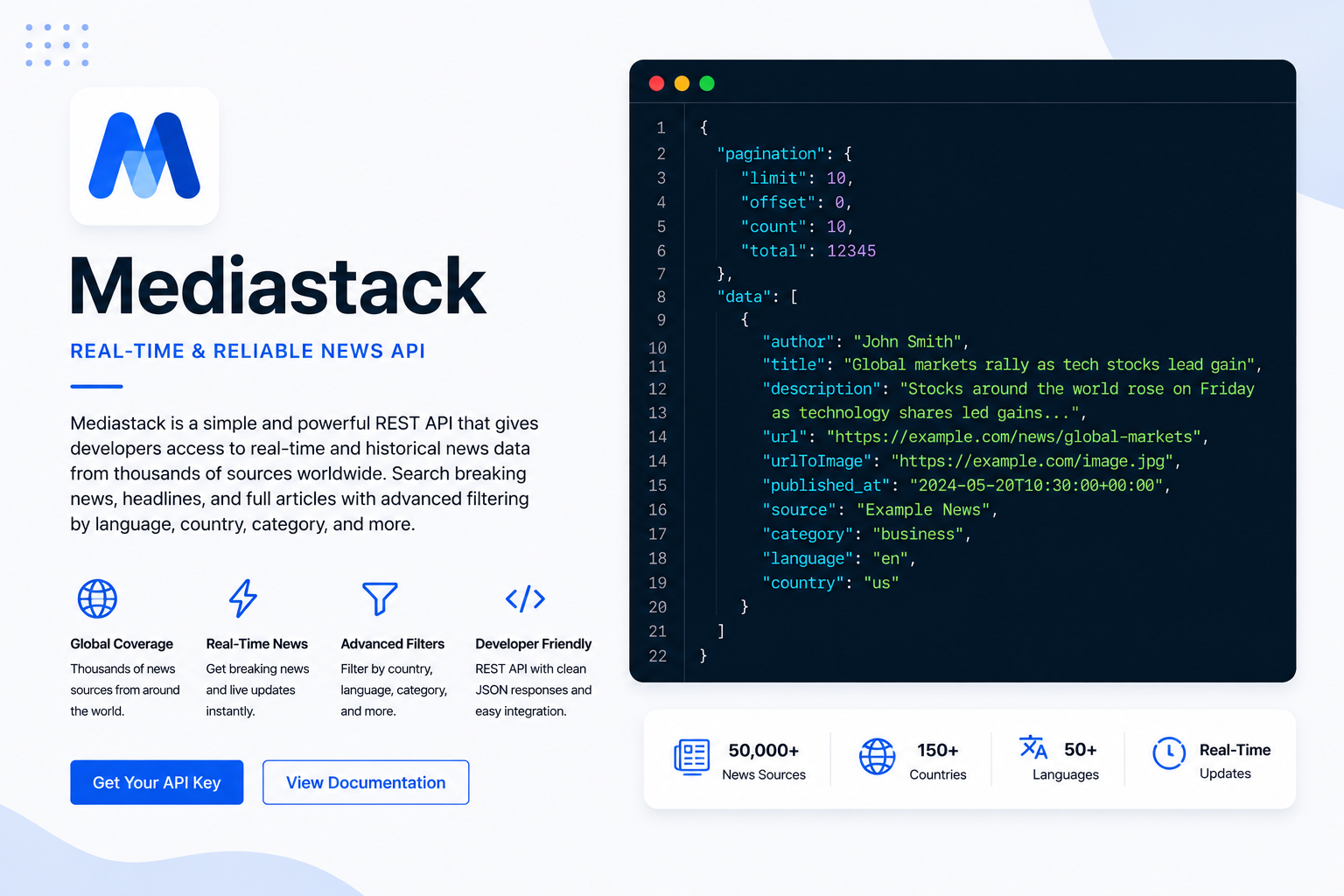
Tracking what is being said about a brand, competitor, or industry used to mean manually checking a handful of news sites and hoping nothing important slipped through. A proper media monitoring API replaces that manual process with a queryable feed that watches thousands of sources continuously, so nothing depends on someone remembering to check.
What Media Monitoring Actually Requires
Effective monitoring needs more than a keyword search. A useful news data API supports filtering by keyword, source, category, language, and country, so you can build a feed narrow enough to be useful rather than a firehose of loosely related mentions. Historical access matters too, since understanding whether a mention is part of a larger trend requires looking backward, not just watching what happens next.
Building a Monitoring Pipeline
A typical setup queries the API on a schedule, matching keywords relevant to the brand or topic being tracked. Results feed into deduplication logic, since a major story often appears across dozens of outlets with nearly identical headlines within the same hour. From there, matched articles can trigger alerts, feed a dashboard, or route into a sentiment analysis pipeline for deeper trend tracking over time.
A Simple Example
curl "http://api.mediastack.com/v1/news?access_key=YOUR_ACCESS_KEY&keywords=data privacy&languages=en"{"data": [{"title": "New Data Privacy Rules Take Effect", "source": "PolicyWire", "published_at": "2026-07-24T09:00:00+00:00"}]}Filtered, structured results ready to feed directly into a monitoring dashboard.
Common Use Cases
PR and communications teams tracking brand mentions across thousands of outlets in real time. Competitive intelligence teams watching how competitors are covered in the press. Investment research tools scanning news for signals relevant to specific companies or sectors. Crisis monitoring systems that need to catch a developing story early rather than after it has already spread.
What to Evaluate Before Committing
Source breadth across many countries and languages, not a narrow English-language slice that misses regional coverage. Update frequency that matches how quickly you actually need to know about a new mention. Consistent response structure across every source, since normalizing inconsistent metadata yourself adds real engineering overhead. Historical depth if trend analysis is part of the plan.
mediastack aggregates a large global source base with keyword, category, language, and country filtering built in, along with historical article access for trend and pattern analysis.
Final Thoughts
Manual media monitoring does not scale past a handful of sources, and it always misses something eventually. Automating the watch with a proper monitoring feed means your team finds out about a relevant mention when it happens, not days later after someone happens to stumble across it.
Automate your media monitoring today
Track thousands of sources by keyword, category, or region.
Try mediastack now → https://apilayer.com/products/mediastack/
- Managerial Effectiveness!
- Future and Predictions
- Motivatinal / Inspiring
- Fitness and Wellness
- Medical & Health
- Manufacturing
- Education
- Real-Estate
- Food Industry
- Hospitality
- Online Games
- Sports
- Home Services
- Civil Engineering
- Safety and Protection
- Software Products & Services
- Fashion and Jewellery
- Artificial Intelligence
- Entrepreneurship
- Mentoring & Guidance
- Marketing
- Networking
- HR & Recruiting
- Literature
- Shopping
- Career Management & Advancement