

 SkillClick
Medical Case Chronology: Cornerstone of Effective Legal and Medical Collaboration
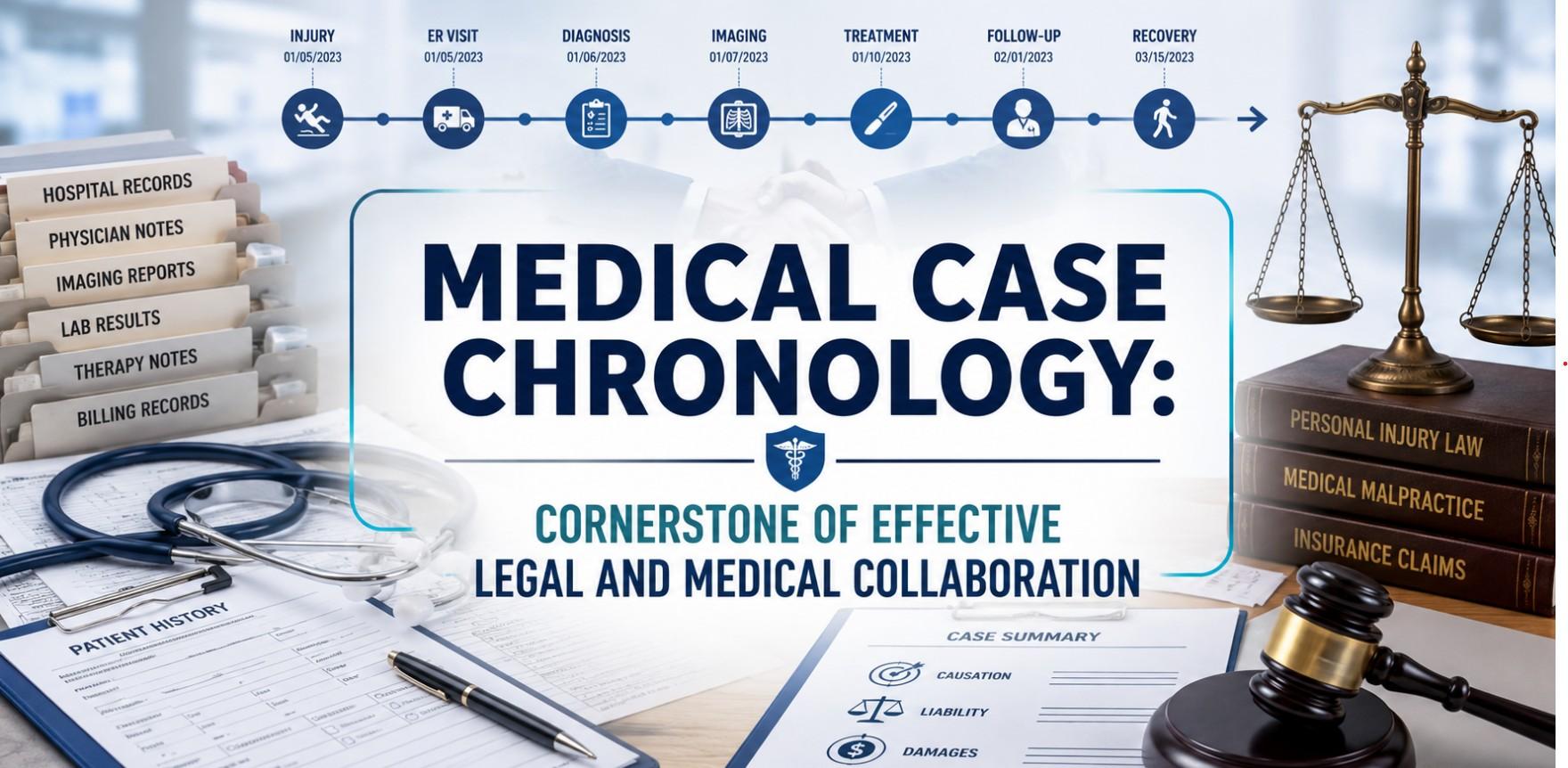
In the realm of personal injury, malpractice, and insurance disputes, few documents carry as much weight as the medical case chronology. This meticulous record traces a patient’s clinical journey in a logical sequence, offering a clear perspective for legal professionals, clinicians, and insurance adjusters. While medical records on their own are complex and layered, medical chronologies condense volumes of information into a comprehensible, actionable format.
What Is a Medical Case Chronology?
A medical case chronology is a structured, time-ordered summary of a patient’s medical events, assessments, interventions, and outcomes. Unlike a standard narrative summary, a chronology breaks down the medical record into dated entries, distilling key facts and clinical decision points. The resulting timeline transforms intricate medical data into a document that is both accessible and reliable for non-medical stakeholders.
Why Is Medical Case Chronology Important?
Legal cases involving medical issues demand clarity and precision. Whether you are an attorney preparing for trial, a physician reviewing a history, or an insurance professional assessing a claim, the ability to reconstruct the timeline is vital. A well-prepared chronology does not merely support an argument, it illuminates it.
Chronologies contribute in several key ways:
-
Support Legal Arguments: They help attorneys identify causation, liability, and damages by mapping out injuries, treatments, and outcomes.
-
Reduce Errors: By bringing clarity, they help prevent mistakes that may arise from misinterpretation of disjointed medical records.
-
Save Time: A concise chronology means faster review by experts, courts, and insurance teams.
-
Aid in Medical Review: Clinicians and expert witnesses can use the timeline to formulate opinions or flag inconsistencies.
How Is a Medical Case Chronology Created?
Creating a reliable chronology begins with a thorough collection of all relevant medical records, including hospitalizations, office visits, laboratory results, imaging studies, and therapy notes. The next step is systematic review and extraction of information by a medically trained professional, often a nurse, physician, or legal nurse consultant.
The process typically follows these steps:
-
Collection and Organization
Every medical document is indexed and sorted by date of service, not date of receipt. This ensures an accurate sequence. -
Review and Extraction
Careful reading of all records allows selection of significant events: injuries, complaints, diagnoses, surgeries, consultations, and outcomes. -
Summarization
The entries are condensed into brief, factual summaries. Each is assigned a date and source citation. -
Cross-Referencing and Clarification
Any ambiguities are flagged for follow-up. In complex cases, consultation with clinicians may be needed to interpret findings correctly. -
Final Formatting
The finished chronology is presented as a logical narrative, often in table format, summarizing events in a manner that is easy for all parties to understand.
Common Challenges in Medical Chronology Preparation
Despite its value, preparing a high-quality chronology is not without obstacles. Incomplete or missing medical records can make the timeline unreliable. Variations in documentation style across providers add complexity. Interpreting specialized notes, deciphering handwriting, or understanding obscure abbreviations may require both medical expertise and investigative persistence.
Another frequent challenge lies in identifying relevant information amid a sea of data. Not every lab value or prescription refill impacts the case. The preparer must exercise sound judgment about which details to emphasize.
Practical Applications of Medical Chronology
Medical case chronologies have a wide range of practical uses:
-
Litigation Support: They help attorneys frame arguments, prepare for depositions, and brief expert witnesses.
-
Claims Management: Insurance professionals use chronologies to validate or dispute claims and to assess the progression or resolution of injuries.
-
Quality Assurance: Hospitals or administrators may utilize chronologies during audits or internal investigations.
-
Patient Advocacy: When families or advocates seek second opinions, a chronology clarifies the medical journey for new care teams.
Frequently Asked Questions
Q1: Who typically prepares a medical case chronology?
A1: Medical case chronologies are often prepared by legal nurse consultants, paralegals with medical experience, or physicians acting as expert witnesses. Their clinical knowledge ensures that medical terminology is interpreted accurately.
Q2: Can an automated tool create an accurate chronology?
A2: Technology can assist in sorting and extracting data, but human expertise remains essential for interpreting complex information and providing clinical insight, particularly in nuanced cases.
Q3: What makes a chronology “high quality”?
A3: Accuracy, objectivity, and clarity are hallmarks of an effective chronology. Every entry should be traced back to its source, and the narrative must remain unbiased.
Q4: How long should a medical case chronology be?
A4: The length varies depending on case complexity. A simple slip-and-fall may require a single page, while multi-year malpractice cases might result in a detailed, multi-page document.
Conclusion
Medical case chronologies are invaluable in bridging the gap between complex clinical data and the needs of the legal system. When prepared skillfully, a chronology stands as both a shield and a sword, shielding against error and bias, while also clarifying and cutting through confusion. It is not an optional extra; it is an essential tool for justice and fairness in any case involving medical care.
- Managerial Effectiveness!
- Future and Predictions
- Motivatinal / Inspiring
- Fitness and Wellness
- Medical & Health
- Manufacturing
- Education
- Real-Estate
- Food Industry
- Hospitality
- Online Games
- Sports
- Home Services
- Civil Engineering
- Safety and Protection
- Software Products & Services
- Fashion and Jewellery
- Artificial Intelligence
- Entrepreneurship
- Mentoring & Guidance
- Marketing
- Networking
- HR & Recruiting
- Literature
- Shopping
- Career Management & Advancement