

 SkillClick
What Happens to a Generative AI Team a Year After Launch
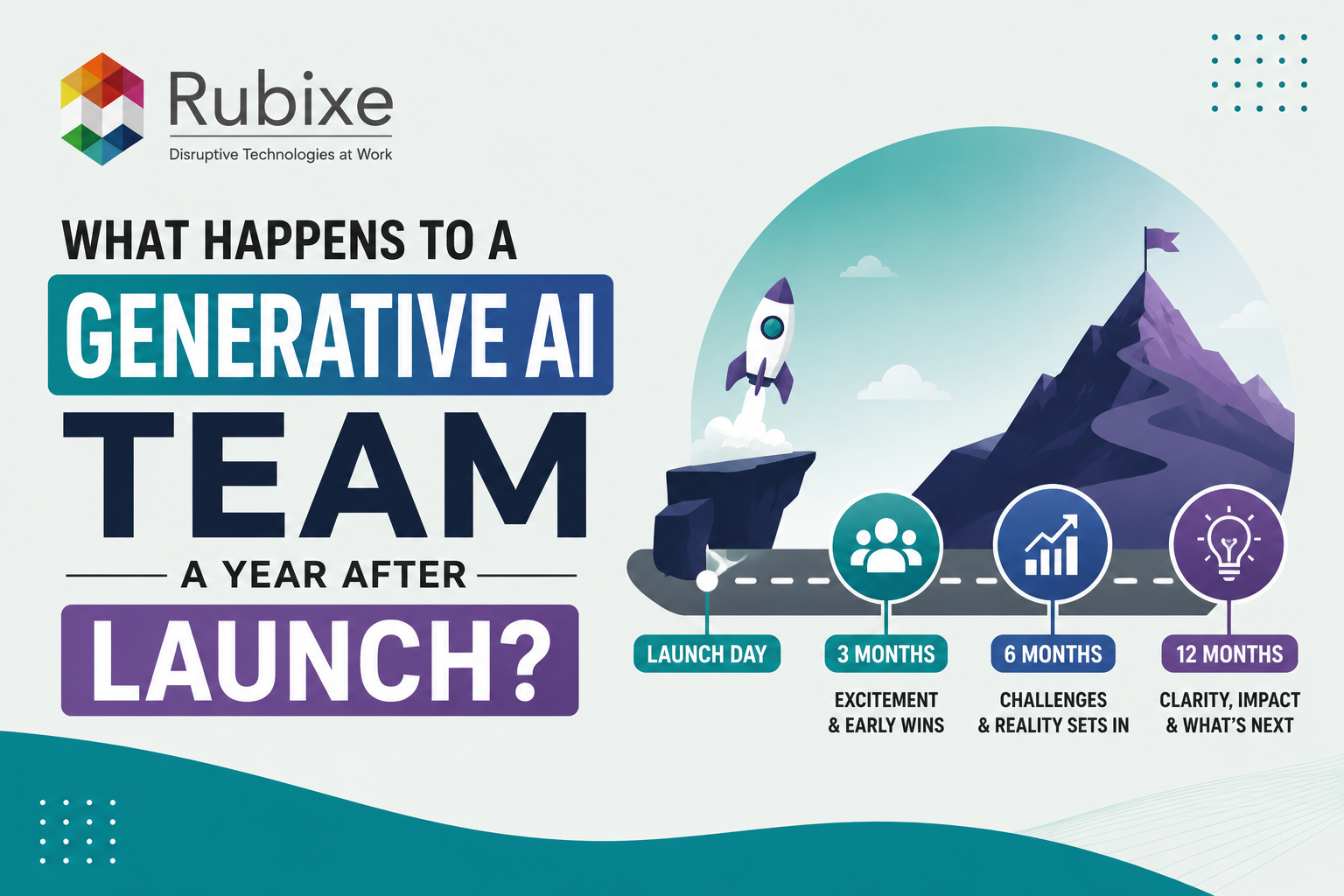
Many organizations begin their AI journey with ambitious goals. Leadership approves budgets, teams experiment with new models, and pilot projects generate excitement across departments. The first few months often focus on building prototypes and proving technical capabilities. The real test begins after that initial excitement fades.
A year after launch, successful AI teams look very different from how they started. Their priorities shift from experimentation to business value, governance, scalability, and measurable outcomes. Businesses working with an ai consulting company in bangalore often discover that long-term success depends less on building AI models and more on managing people, processes, and continuous improvement.
Understanding what happens during the first year helps organizations prepare realistic expectations and build stronger AI programs.
Why the First Year Is the Most Important
Launching an AI initiative is only the beginning.
The first twelve months reveal whether the organization can:
-
Deliver measurable business outcomes
-
Integrate AI into existing workflows
-
Gain employee adoption
-
Maintain governance
-
Improve model performance
-
Scale successful projects
Many companies complete pilot projects successfully but struggle to expand them across multiple business functions.
The Journey During the First Twelve Months
An AI team rarely follows a straight path. Priorities evolve as new business requirements emerge.
|
Time Period |
Primary Focus |
Common Outcome |
|
Months 1–3 |
Pilot projects and proof of concept |
Initial business feedback |
|
Months 4–6 |
Workflow integration |
Process improvements identified |
|
Months 7–9 |
Governance and optimization |
Better operational stability |
|
Months 10–12 |
Scaling successful solutions |
Broader organizational adoption |
Each phase introduces different technical and operational challenges.
The Excitement of Early Success
The first few months usually generate positive momentum.
Teams often complete:
-
Internal AI demonstrations
-
Small automation projects
-
Knowledge assistants
-
Document processing pilots
-
Customer support experiments
-
Productivity improvements
These achievements build confidence across the organization.
Leadership often begins requesting additional AI use cases once early projects produce visible results.
Reality Begins After the Pilot Phase
Pilot projects operate under controlled conditions.
Production environments introduce additional challenges such as:
-
Larger data volumes
-
Multiple user groups
-
System integrations
-
Compliance requirements
-
Performance monitoring
-
Operational support
Many organizations realize that moving from demonstration to production requires much more planning than expected.
Business Goals Become More Important Than Technical Features
Technical success alone does not justify long-term investment.
Business leaders begin asking questions such as:
-
How much time has AI saved?
-
Which departments benefit most?
-
What financial value has been created?
-
How reliable are the AI systems?
-
Can additional teams use these solutions?
These discussions gradually replace conversations about model accuracy and technical specifications.
Employee Adoption Determines Long-Term Success
Building AI solutions is only part of the challenge.
Employees must understand:
-
When to use AI
-
Which tasks remain manual
-
How to verify AI-generated outputs
-
Company usage policies
-
Data privacy requirements
Organizations that invest in employee education usually experience higher adoption rates and fewer implementation issues.
Common Challenges During the First Year
Many organizations encounter similar obstacles after launch.
These include:
Limited Business Adoption
Employees may hesitate to change familiar workflows.
Data Quality Problems
Incomplete or inconsistent data affects AI performance.
Integration Complexity
Connecting AI with existing software often requires additional development.
Resource Planning
Growing demand may exceed available technical resources.
Measuring Business Impact
Teams sometimes struggle to define meaningful performance indicators.
Recognizing these challenges early allows organizations to respond more effectively.
Signs That an AI Team Is Maturing
A successful AI program gradually shifts its focus from experimentation to operational excellence.
Indicators of maturity include:
-
Standardized development practices
-
Documented governance policies
-
Cross-functional collaboration
-
Business-driven project selection
-
Performance monitoring
-
Regular model reviews
-
Defined ownership for AI systems
These characteristics support sustainable long-term growth.
Measuring Success Beyond Technology
Organizations should evaluate AI using measurable business outcomes.
Useful performance indicators include:
|
Business Metric |
Why It Matters |
|
Time saved |
Measures operational efficiency |
|
Process accuracy |
Evaluates output quality |
|
User adoption |
Reflects employee acceptance |
|
Customer satisfaction |
Indicates business impact |
|
Operational costs |
Measures financial performance |
|
Productivity improvements |
Demonstrates organizational value |
These metrics provide a clearer picture than technical benchmarks alone.
Building Strong Collaboration Across Departments
AI projects rarely succeed in isolation.
Business units contribute valuable operational knowledge that technical teams may not possess.
Successful collaboration often involves:
-
Regular stakeholder meetings
-
Shared project objectives
-
User feedback sessions
-
Business requirement reviews
-
Continuous improvement planning
Organizations supported by an ai consulting company in bangalore frequently establish structured collaboration models that keep technical development aligned with business priorities.
Scaling Requires Better Planning
After early success, business leaders often request AI support across multiple departments.
Scaling introduces new requirements such as:
-
Infrastructure expansion
-
Security reviews
-
Resource allocation
-
Standard development practices
-
Monitoring dashboards
-
Support processes
Without structured planning, rapid expansion can create operational challenges that affect performance and user confidence.
Moving from Projects to Business Operations
The biggest change after the first year is that AI is no longer viewed as a standalone initiative. It becomes part of everyday business operations.
Organizations begin integrating AI into:
-
Customer support
-
Sales operations
-
Document management
-
Internal knowledge systems
-
Marketing workflows
-
Business reporting
Each new implementation requires careful planning, user training, and continuous monitoring.
Businesses often work with ai consulting services during this stage to establish deployment standards, operational procedures, and long-term maintenance plans across multiple departments.
Governance Becomes an Ongoing Process
Governance is not a one-time activity completed during deployment.
As AI adoption grows, organizations regularly review:
-
Data usage policies
-
User permissions
-
Model performance
-
Security controls
-
Regulatory compliance
-
Version management
Regular reviews help teams maintain consistency while reducing operational risks.
Clear governance also builds confidence among leadership, employees, and customers.
Measuring Return on Investment
Leadership expects measurable business value after the initial rollout.
Useful performance indicators include:
|
KPI |
Business Value |
|
Time saved per employee |
Productivity improvement |
|
Process completion time |
Operational efficiency |
|
User adoption rate |
Internal acceptance |
|
Customer response time |
Better service delivery |
|
Cost savings |
Financial impact |
|
Error reduction |
Improved process quality |
These metrics provide practical evidence that AI investments are supporting business objectives.
Why Cross-Functional Collaboration Matters
As AI becomes part of multiple business functions, collaboration grows more important.
Departments commonly involved include:
-
Operations
-
Human Resources
-
Finance
-
Marketing
-
Customer Support
-
Information Technology
-
Legal and Compliance
Regular communication helps identify new use cases while keeping projects aligned with organizational priorities.
Security and Responsible AI Cannot Be Overlooked
Organizations become more aware of security responsibilities after expanding AI usage.
Key focus areas include:
-
Data privacy
-
User authentication
-
Access management
-
Model monitoring
-
Audit logging
-
Regulatory compliance
Security reviews should occur throughout the year rather than only before compliance assessments.
Responsible AI practices help businesses build trust while reducing operational risks.
Avoiding Common Second-Year Challenges
Many organizations experience similar challenges after expanding AI initiatives.
Examples include:
Expanding Too Quickly
Rolling out multiple projects simultaneously may stretch available resources.
Ignoring User Feedback
Employees often identify practical improvements that technical teams may overlook.
Measuring Technical Metrics Alone
Business outcomes provide a clearer picture than model performance alone.
Delaying Governance Updates
Policies should evolve alongside new AI capabilities.
Underestimating Maintenance
AI systems require continuous monitoring, updates, and operational support.
Recognizing these challenges early supports smoother long-term growth.
Choosing the Right Long-Term AI Partner
Technology is only one part of building a successful AI program.
Organizations often evaluate partners based on:
-
Industry experience
-
Business understanding
-
Technical expertise
-
Governance knowledge
-
Integration capabilities
-
Ongoing support
Many businesses work with generative ai consulting services to build structured AI roadmaps, improve operational readiness, and scale successful initiatives responsibly.
Companies such as Rubixe support organizations by helping them align AI programs with measurable business goals while maintaining governance and operational consistency.
What a Successful AI Team Looks Like After One Year
An AI team that has completed its first year successfully often demonstrates several characteristics:
-
Business goals drive project selection.
-
AI solutions are integrated into daily workflows.
-
Governance processes are documented and regularly reviewed.
-
Departments collaborate on AI initiatives.
-
Performance is measured using business outcomes.
-
Employees understand when and how to use AI responsibly.
-
Continuous improvement is part of normal operations.
These indicators reflect a mature AI program that continues delivering value beyond the initial launch phase.
Frequently Asked Questions (FAQs)
1. What happens during the first year after launching a Generative AI team?
The first year typically focuses on moving from pilot projects to production deployments, improving governance, increasing user adoption, integrating AI into business workflows, and measuring business outcomes.
2. Why do businesses choose an AI consulting company in Bangalore for long-term AI initiatives?
An ai consulting company in bangalore often provides expertise in AI strategy, implementation planning, governance, integration, and ongoing optimization, helping organizations scale AI initiatives effectively.
3. How do generative AI consulting services support growing organizations?
Generative ai consulting services assist businesses with AI strategy, governance frameworks, deployment planning, model management, risk assessment, and identifying practical use cases that align with business objectives.
4. Why are AI consulting services important after AI deployment?
AI consulting services help organizations monitor performance, improve AI adoption, maintain governance, manage integrations, and identify opportunities for continuous improvement after deployment.
5. What role do AI consultants play after an AI project goes live?
AI consultants guide organizations through operational improvements, governance reviews, performance monitoring, user adoption strategies, and long-term planning to help AI initiatives continue delivering measurable business value.
The first year after launching a Generative AI team is often where the most valuable lessons emerge. Early excitement gradually gives way to structured planning, governance, employee adoption, and measurable business outcomes. Organizations that treat AI as an ongoing business capability rather than a short-term project are better positioned to achieve sustainable results.
Working with an ai consulting company in bangalore helps businesses build AI programs that continue growing after the initial launch. Combined with experienced ai consultants, structured governance, and continuous improvement, organizations can expand AI initiatives with greater confidence while keeping them aligned with changing business priorities.
- Managerial Effectiveness!
- Future and Predictions
- Motivatinal / Inspiring
- Fitness and Wellness
- Medical & Health
- Manufacturing
- Education
- Real-Estate
- Food Industry
- Hospitality
- Online Games
- Sports
- Home Services
- Civil Engineering
- Safety and Protection
- Software Products & Services
- Fashion and Jewellery
- Artificial Intelligence
- Entrepreneurship
- Mentoring & Guidance
- Marketing
- Networking
- HR & Recruiting
- Literature
- Shopping
- Career Management & Advancement