

 SkillClick
How Carbon Farming Supports Climate-Smart Agriculture
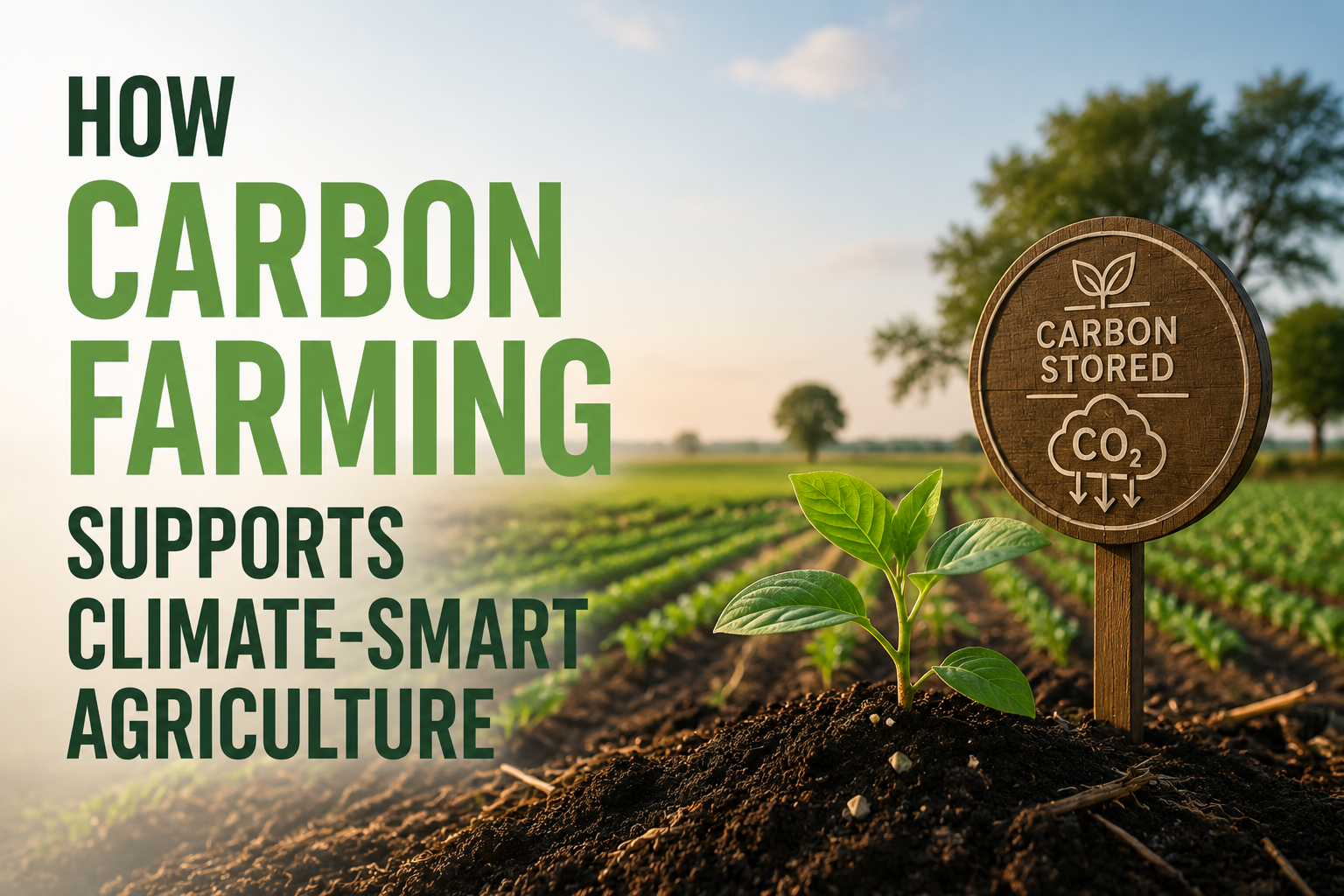
Carbon farming is becoming an important approach for improving agricultural sustainability while supporting climate-related land management goals. It focuses on farming practices that store carbon in soil, vegetation, and biomass while reducing greenhouse gas emissions from agricultural activity. These practices can include cover cropping, reduced tillage, crop rotation, agroforestry, compost application, improved grazing, biochar use, and better soil management across farms and landscapes.
A recent study by MarkNtel Advisors highlights that the global carbon farming sector was valued at USD 0.62 billion in 2025. It is projected to grow from USD 0.70 billion in 2026 to USD 1.5 billion by 2032, exhibiting a CAGR of 13.54% during 2026–2032. North America holds the largest share of about 34%, supported by climate-smart agriculture programs, carbon credit activity, and wider soil health initiatives.
Soil Health Drives Adoption
Soil health is central to carbon farming because healthy soils can store organic matter, support crop roots, improve nutrient cycling, and retain water more effectively. The FAO explains that soil organic carbon is an important component of soil productivity and climate regulation, making sustainable soil management relevant for farms, policymakers, and environmental programs.
Farmers use practices such as cover crops, compost, residue retention, crop rotation, and reduced soil disturbance to support soil structure and carbon retention. These methods can also help reduce erosion, improve moisture availability, and strengthen long-term land productivity. For many producers, the value of carbon farming is not limited to climate benefits; it also connects with better farm resilience and resource efficiency.
Climate-Smart Practices Gain Importance
Carbon farming overlaps with climate-smart agriculture because both focus on productivity, resilience, and emission reduction. The USDA notes that soil health principles include minimizing disturbance, maximizing soil cover, increasing biodiversity, maintaining living roots, and integrating livestock where suitable. These practices help farms manage soil conditions while supporting carbon storage and better biological activity.
The practical appeal of carbon farming depends on local conditions. A farm growing grains may focus on no-till, cover crops, and crop rotation, while a livestock operation may use improved grazing and pasture management. Orchards, vineyards, and mixed farms may use agroforestry, composting, or permanent ground cover. This flexibility allows carbon farming to be applied across different production systems.
Carbon Credits Create New Incentives
Carbon farming is also linked with voluntary and compliance-based carbon credit systems. Farmers may receive payments for adopting practices that generate measurable carbon removal or emission reduction outcomes. These systems require clear standards, monitoring, reporting, and verification because buyers need confidence that carbon benefits are real, additional, and durable.
However, carbon credit participation can be complex for farmers. Measurement costs, baseline calculations, contract terms, long project timelines, and uncertainty around carbon prices can affect adoption. Smaller farms may need technical assistance, aggregators, or cooperative models to participate effectively. As carbon programs mature, transparent rules and farmer-friendly systems will be important for building trust.
North America Leads Current Share
North America’s leading share is supported by stronger climate-smart farming initiatives, corporate sustainability commitments, digital agriculture tools, and active carbon credit platforms. The region also has established research networks, farm advisory systems, conservation programs, and large-scale agricultural operations that can test and implement carbon farming practices. These factors help create an environment where soil carbon projects and sustainable land management can expand.
Technology is also improving carbon farming measurement. Remote sensing, soil testing, farm management software, satellite imagery, and digital monitoring tools help estimate changes in land use and soil conditions. While measurement still has limitations, better tools can reduce uncertainty and make carbon farming programs easier to manage across large farming areas.
Verification Remains a Key Challenge
Reliable verification is one of the most important issues in carbon farming. Soil carbon changes can vary by climate, soil type, crop system, rainfall, management history, and sampling method. This makes it difficult to measure outcomes consistently. Programs must avoid overclaiming results and ensure that credited practices create meaningful and lasting benefits.
The future of carbon farming will depend on stronger science, clearer carbon accounting rules, farmer participation, policy support, and practical economic returns. As agriculture faces pressure to reduce emissions and protect natural resources, carbon farming can support soil restoration, climate resilience, and new income pathways. Its long-term success will depend on balancing environmental goals with the real operating needs of farmers.
- Managerial Effectiveness!
- Future and Predictions
- Motivatinal / Inspiring
- Fitness and Wellness
- Medical & Health
- Manufacturing
- Education
- Real-Estate
- Food Industry
- Hospitality
- Online Games
- Sports
- Home Services
- Civil Engineering
- Safety and Protection
- Software Products & Services
- Fashion and Jewellery
- Artificial Intelligence
- Entrepreneurship
- Mentoring & Guidance
- Marketing
- Networking
- HR & Recruiting
- Literature
- Shopping
- Career Management & Advancement