

 SkillClick
High-Resolution vs. Low-Light Performance: Which Camera Sensor Wins?
Every photographer has faced the dilemma. You are standing in a dimly lit cathedral, a quiet street at twilight, or a concert hall with moody lighting. You look at your camera settings and know you have to make a choice: Do you want sharp, detailed images that fall apart in the dark? Or do you want clean, noise-free images that lack the resolution to print big?
This is the eternal battle of the modern sensor: high resolution vs. low-light performance.
For years, the industry has treated these two features as opposing forces. You could have a high-resolution camera (like a 61MP Sony or a 100MP medium format) that demands perfect light, or you could have a low-light champion (like a 12MP Sony A7S series) that sees in the dark but lacks detail for cropping.
But is this trade-off still true in 2024? And which one should you actually choose? To answer this, we need to look at the physics of the sensor, the reality of pixel size, and the advancements in computational photography.
The Physics: Why Big Pixels “See” Better
To understand the conflict, we must go back to basics.
A camera sensor is a grid of millions of tiny light wells (photodiodes). Each well represents a pixel. The amount of light a well can capture is directly related to its physical size.
- High Resolution Camera: A 48MP sensor on a standard Micro Four Thirds or APS-C sensor has very small pixels. They are packed tightly together. While they capture incredible detail in bright light, each individual pixel receives very little light. This leads to higher noise and lower dynamic range in dark conditions.
- Low-Light Champion: A 12MP sensor on a full-frame camera has huge pixels. Because the sensor is the same size (full-frame) but has fewer pixels, each pixel is a “light bucket.” It collects more photons, resulting in a cleaner, brighter image with less noise at high ISOs.
The “Trade-Off” Myth: For a long time, the rule was simple: If you shoot in a studio, get a high-resolution camera. If you shoot at night, get a low-resolution one.
The Modern Reality: Technology is Leveling the Playing Field
The above logic is still technically true at the pixel level. However, sensor technology has advanced so rapidly that the gap is narrowing.
1. The “Binning” Revolution
Many modern high resolution cameras now feature a technology called “pixel binning.” This is where the camera groups four small pixels together to act as one large pixel.
- Example: A 48MP sensor using pixel binning can shoot a 12MP image that is effectively as clean as a native 12MP sensor.
- The Winner: You get the best of both worlds. You can shoot in 48MP mode for bright daylight landscapes, and switch to 12MP binning mode for low-light events. This makes the argument for a high-resolution camera much stronger.
2. Advanced Noise Reduction Algorithms
The processing power inside modern cameras (and post-processing software like Lightroom and Topaz) is phenomenal. A 61MP image from a Sony A7R V, when processed through modern AI noise reduction, will look cleaner than a 12MP image from a 2015 camera. The sheer amount of data available in a high-resolution file gives the software more information to work with, often resulting in a final image that looks better than a low-resolution image with “natural” noise.
3. The “Downsampling” Advantage
This is a crucial point that many photographers miss. If you take a 61MP image and reduce it to 24MP for sharing or printing, you are effectively averaging out the noise. The resulting 24MP image will often look cleaner than a native 24MP image taken at the same ISO. The high resolution camera gives you a “clean slate” after downsampling.
The Verdict: Which Wins for Different Users?
To determine the winner, we must look at the specific use case.
Scenario 1: The Landscape Photographer (Winner: High Resolution)
If you shoot landscapes, you rarely shoot above ISO 100-400. You use a tripod. You have perfect control over light. You want to crop into distant mountains and print massive images.
- Why High Resolution Wins: You need the detail. A 12MP sensor will look soft when printed at 40 inches. A 61MP sensor will look like a window. Low-light performance is irrelevant because you are shooting in the “golden hour” or using long exposures.
- Recommendation: Invest in a high-resolution camera without hesitation.
Scenario 2: The Wedding Photographer (Winner: Tie)
Weddings are a nightmare. You have bright sunny outdoor ceremonies, followed by a pitch-black dance floor. You need resolution for the group shots (where you need to see every face) and low-light performance for the first dance.
- Why it’s a Tie: You cannot bring two cameras with different sensors. Modern cameras like the Sony A7 IV (33MP) or the Nikon Z6 III (24MP) offer a perfect balance. They have enough resolution for professional prints but still excellent low-light capabilities.
- The Trend: High-resolution sensors are winning here because of the “crop factor.” Being able to grab a tight shot of a guest’s face from a wide group photo is a lifesaver for a wedding photographer.
Scenario 3: The Action / Sports / Night Videographer (Winner: Low-Light)
If you are shooting in a stadium, a dark club, or a night street, the priority is “getting the shot” over “getting the perfect shot.”
- Why Low-Light Wins: A 12MP sensor with massive pixels can shoot at ISO 12800 with minimal noise. A 61MP camera at ISO 12800 will look like a noisy mess, even with denoising. For video, low-light performance is even more critical because you cannot use long exposures.
- The Exception: If the camera has excellent pixel binning, the high resolution camera can still compete, but native low-light sensors still hold the crown for pure visibility.
The Surprising Third Option: The Action Camera
Most people view action cameras as “low resolution” toys. They are small, cheap, and usually terrible in low light. However, the market has shifted.
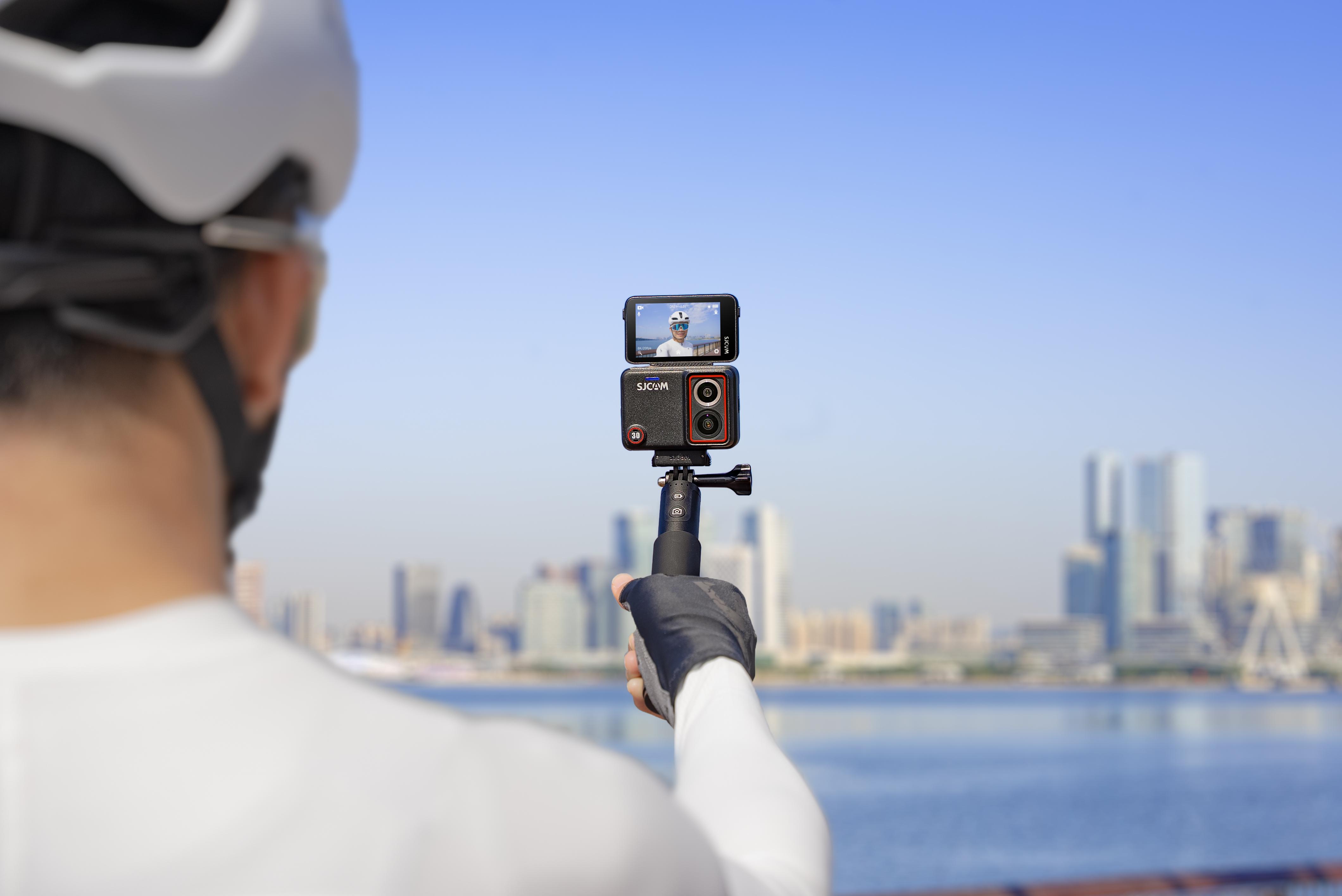
The SJCAM SJ30 is a perfect example of a modern camera that attempts to bridge this gap. While it is designed for action, it offers a high resolution sensor that allows for excellent daytime footage and stills.
Why the SJCAM SJ30 is a Great Compromise:
The SJCAM SJ30 is an action camera that focuses on high-resolution capture. It utilizes a newer sensor architecture that handles noise better than previous generations of action cams.
- High Resolution for Daytime: In bright daylight (which is where most action cameras live—on the ski slopes, at the beach, on a bike trail), the SJ30 captures stunning 4K 60fps video and high-megapixel stills. This allows you to print your best action shots for wall art.
- Improved Low-Light: While no action camera will beat a full-frame Sony, the SJ30 incorporates advanced algorithms to reduce noise in low-light conditions. For a camera this compact, it performs admirably in dusk or indoor settings.
- The “Best of Both Worlds” for Adventure: The beauty of the SJ30 is that it is the camera you will actually have with you. You can mount it on your helmet for a sunrise hike (high resolution, great light) and then use it to capture the campfire at night (decent low-light). It gives you the high-resolution data you need for large prints, without completely failing when the sun goes down.
Conclusion: There is No “Winner,” Only the Right Tool
The battle between High Resolution vs. Low-Light Performance is a false dichotomy. It is not about which is “better.” It is about understanding your needs.
If you are a professional studio or landscape photographer, a high resolution camera is the only logical choice. The detail is irreplaceable.
If you are a photojournalist or a nightclub shooter, a low-light champion is your best friend.
But for the vast majority of users—the travelers, the vloggers, the adventurers, the hybrid shooters—the best camera is one that gives you enough resolution to print big and enough low-light ability to shoot after dark.
The SJCAM SJ30 represents this new generation of versatile cameras. It packs a high resolution sensor into a durable, compact body, ensuring that you can capture the detail of the day and the mood of the night. It proves that you don’t have to choose between sharpness and visibility. You can have both.
- Managerial Effectiveness!
- Future and Predictions
- Motivatinal / Inspiring
- Fitness and Wellness
- Medical & Health
- Manufacturing
- Formazione
- Real-Estate
- Food Industry
- Hospitality
- Online Games
- Sports
- Home Services
- Civil Engineering
- Safety and Protection
- Software Products & Services
- Fashion and Jewellery
- Artificial Intelligence
- Entrepreneurship
- Mentoring & Guidance
- Marketing
- Networking
- HR & Recruiting
- Literature
- Shopping
- Career Management & Advancement