

 SkillClick
Why Business Leaders Are Paying Closer Attention to AI Security
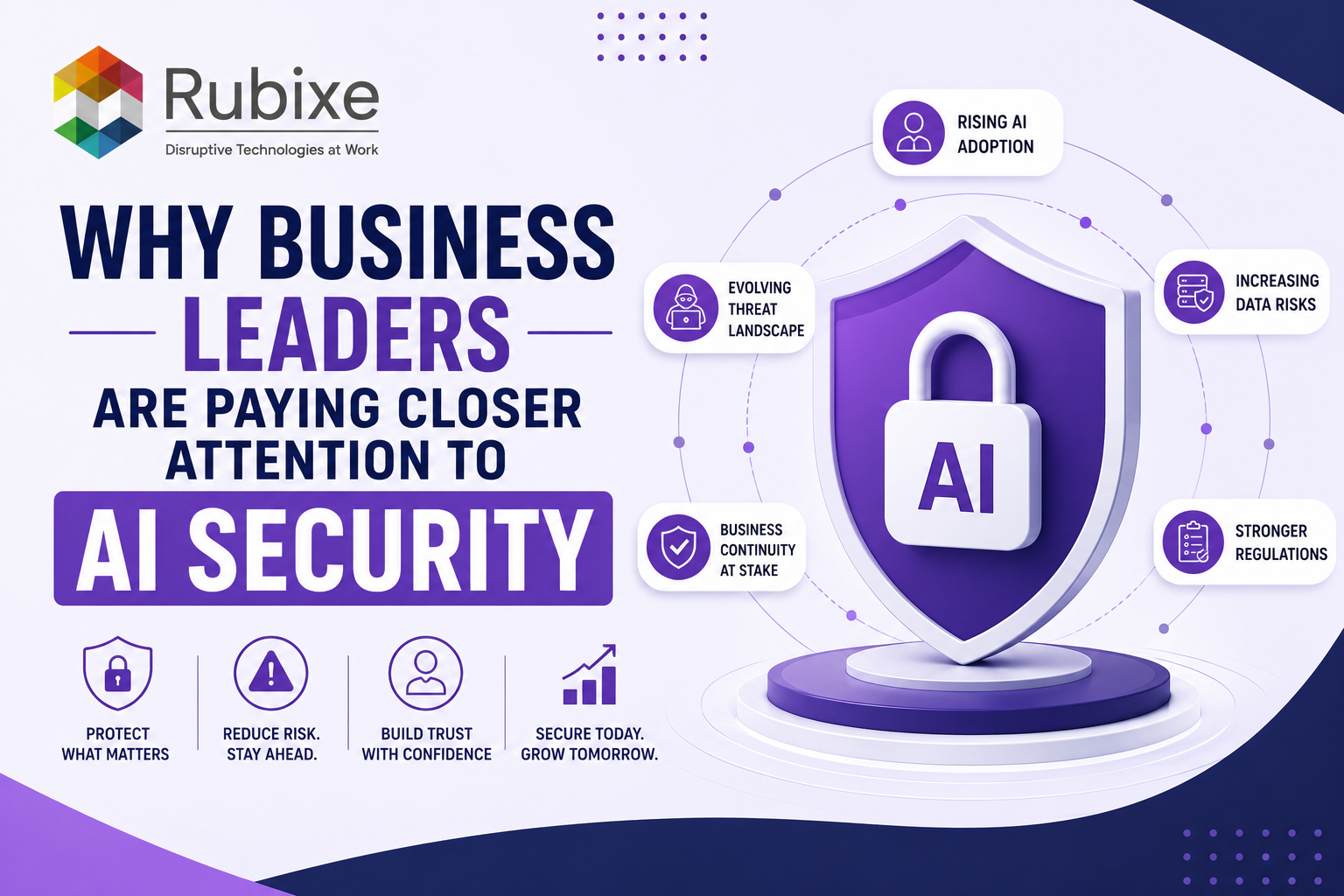
A few years ago, this topic barely made it onto a board agenda. It sat quietly inside IT's broader responsibilities, treated as a technical detail rather than something executives needed to personally understand. That's changed noticeably. Boards now ask direct questions about how AI systems are governed, investors factor AI risk into due diligence, and regulators in multiple industries have started issuing specific guidance on AI-related exposure. AI security has moved from a back-office IT concern to something business leaders are expected to have a genuine point of view on, not just delegate entirely and hope for the best.
This shift didn't happen because leaders suddenly became more technical. It happened because the business consequences of getting this wrong have become impossible to ignore — reputational damage, regulatory exposure, and real financial risk that traces directly back to how AI systems are deployed and secured.
Why This Has Become a Leadership Concern, Not Just an IT One
A few specific developments explain why this topic has climbed the priority list for executives:
-
High-profile incidents have made the risks concrete, rather than theoretical, giving leaders real examples of what can go wrong
-
Regulatory attention has increased significantly, with several industries now facing specific compliance expectations around AI system governance
-
Customer and investor scrutiny has grown, with due diligence processes increasingly including questions about AI risk management
-
The financial exposure has become clearer, as incidents involving AI systems have led to measurable costs — legal, reputational, and operational
-
AI adoption has outpaced internal governance structures, leaving many companies exposed simply because oversight didn't keep pace with usage
What's Actually Driving Board-Level Interest
Boards aren't asking about this out of general curiosity. A few specific pressures tend to drive the conversation:
-
Fiduciary responsibility, since directors increasingly recognize AI-related risk as a material business risk requiring oversight
-
Insurance and liability considerations, as cyber insurance policies begin factoring in AI-specific risk exposure during underwriting
-
Competitive positioning, since companies with visibly strong AI governance increasingly use it as a trust signal with customers and partners
-
Precedent set by peer companies, where a competitor's publicized AI-related incident tends to prompt immediate internal review elsewhere in the industry
Executive Level Concerns vs Technical Level Concerns
|
Level |
Primary Focus |
Typical Questions Asked |
|
Board and executive |
Business risk, reputation, compliance |
"What's our exposure if this goes wrong publicly?" |
|
Technical and security teams |
Implementation, monitoring, technical controls |
"Are we detecting anomalous model behavior in real time?" |
|
Legal and compliance |
Regulatory obligations, liability |
"What are our disclosure obligations if a system is compromised?" |
|
Investors and customers |
Trust, due diligence |
"Can this company demonstrate responsible AI governance?" |
Effective programs need to answer questions at every one of these levels, not just the technical one, which is part of why this has become a genuinely cross-functional priority rather than something IT can address alone.
What Business Leaders Should Actually Understand
Leaders don't need deep technical expertise, but a working understanding of a few core concepts helps them ask better questions and make better decisions:
-
AI systems introduce risks traditional IT security doesn't fully cover, including manipulation of model behavior and data leakage through generated outputs
-
Third-party AI dependencies extend the company's risk surface, since data often leaves internal infrastructure entirely when using external AI providers
-
Governance needs clear ownership, since AI risk doesn't cleanly belong to any single existing department without deliberate assignment
-
Incident response plans need AI-specific components, since a generic data breach plan often doesn't map cleanly onto AI-related incidents
Building Genuine AI Cyber Security Oversight
Establishing real oversight, rather than symbolic attention, typically requires a few concrete structural changes:
-
Assigning clear executive-level accountability for AI cyber security, rather than leaving it as an informal extension of general IT security
-
Including AI-specific risk reporting in regular board or leadership updates, not just an annual mention
-
Requiring vendor and partner due diligence to specifically address how AI systems handle and protect data
-
Setting a defined cadence for reviewing AI-related policies, since both the technology and associated risks continue evolving quickly
Evaluating AI Cyber Security Solutions From a Leadership Perspective
When leadership does get involved in evaluating specific tools, the questions asked tend to differ from a purely technical review. Business-focused due diligence on AI cyber security solutions typically includes:
-
Does this solution meaningfully reduce the company's actual liability exposure, not just technical risk?
-
How does the vendor's own security posture reflect on our reputation if something goes wrong on their end?
-
What's the total cost of ownership, including ongoing monitoring and staff training, not just the initial licensing cost?
-
Can this be clearly explained to a board or regulator if questions arise after an incident?
Rubixe is one example of a firm that helps translate this kind of executive-level concern into practical, implementable oversight structures, bridging the gap between board-level risk discussions and the technical work actually required to address them.
Practical Steps for Leadership Teams
For executives looking to move from awareness to genuine oversight, a few concrete starting points help:
-
Request a current inventory of AI systems in use across the company, including third-party tools adopted informally
-
Assign clear ownership for AI-related risk, even if it's a shared responsibility across existing roles initially
-
Ask specifically how incident response plans account for AI-specific scenarios, not just general data breaches
-
Include AI governance questions in vendor and partner due diligence processes going forward
-
Schedule regular reporting on this topic at the leadership level, rather than treating it as a one-time briefing
The Cost of Waiting Too Long to Engage
Companies that delay building genuine leadership-level oversight tend to face a familiar pattern once an incident does occur. A few common consequences of reacting only after the fact:
-
Crisis-mode decision-making, where leadership scrambles to understand technical details during an active incident rather than having already established clear response protocols
-
Reputational damage compounded by a slow, confused response, since stakeholders judge companies partly on how competently they handle an incident, not just whether one occurred
-
Regulatory scrutiny that could have been mitigated, since demonstrating proactive governance often factors favorably into how regulators assess a company's response
-
Internal finger-pointing over unclear ownership, since a crisis tends to expose exactly where accountability was never properly assigned in the first place
Companies that build oversight structures proactively, before any incident forces the issue, consistently handle real events with far less disruption and reputational cost than those caught addressing the topic for the first time under pressure.
How This Connects to Broader Enterprise Risk Management
Forward-thinking leadership teams increasingly fold this topic into existing enterprise risk management frameworks rather than treating it as an entirely separate initiative. This integration typically involves:
-
Adding AI-specific risk categories to existing risk registers, alongside more established categories like financial or operational risk
-
Including this topic in existing audit and compliance review cycles, rather than creating a parallel, disconnected process
-
Aligning reporting formats with how other enterprise risks are already communicated to the board, making it easier for directors to evaluate alongside familiar risk categories
-
Ensuring this doesn't become siloed within a single department, since the risk genuinely spans technical, legal, financial, and reputational dimensions simultaneously
This kind of integration tends to produce more durable, sustained attention than a standalone initiative that risks losing priority once initial enthusiasm fades.
Frequently Asked Questions
Q: Do business leaders need deep technical knowledge to oversee this effectively?
No. Leaders need a working understanding of the risk categories and the right questions to ask, while technical teams handle implementation details and day-to-day monitoring.
Q: Why has this become a board-level topic rather than staying purely within IT?
The financial, reputational, and regulatory consequences of AI-related incidents have become significant enough that boards now treat this as material business risk requiring direct oversight, similar to other forms of enterprise risk.
Q: How often should leadership receive updates on this posture?
Many companies have moved toward quarterly reporting at minimum, with more frequent updates during periods of significant AI system changes or after notable industry incidents.
Q: What's the biggest mistake leadership teams make regarding this topic?
Assuming it's fully covered by existing general cybersecurity oversight, without recognizing the AI-specific risks — like model manipulation and data leakage through outputs — that traditional frameworks don't fully address.
Q: Does increased regulatory attention vary significantly by industry?
Yes. Regulated industries like finance and healthcare face more specific and immediate compliance expectations, though attention is increasing broadly across most sectors adopting AI at scale.
AI security has climbed onto the leadership agenda because the consequences of ignoring it have become too significant to leave entirely to a technical team without executive oversight. Business leaders who build genuine understanding, assign clear accountability, and ask the right questions during vendor evaluation and incident planning are positioning their companies to handle this risk proactively rather than reactively. The businesses still treating this as purely an IT concern are the ones most likely to be caught unprepared when a real incident eventually tests how seriously the issue was actually taken.
- Managerial Effectiveness!
- Future and Predictions
- Motivatinal / Inspiring
- Fitness and Wellness
- Medical & Health
- Manufacturing
- Education
- Real-Estate
- Food Industry
- Hospitality
- Online Games
- Sports
- Home Services
- Civil Engineering
- Safety and Protection
- Software Products & Services
- Fashion and Jewellery
- Artificial Intelligence
- Entrepreneurship
- Mentoring & Guidance
- Marketing
- Networking
- HR & Recruiting
- Literature
- Shopping
- Career Management & Advancement