

 SkillClick
What is EVA in Solar Panel? Explained Simply
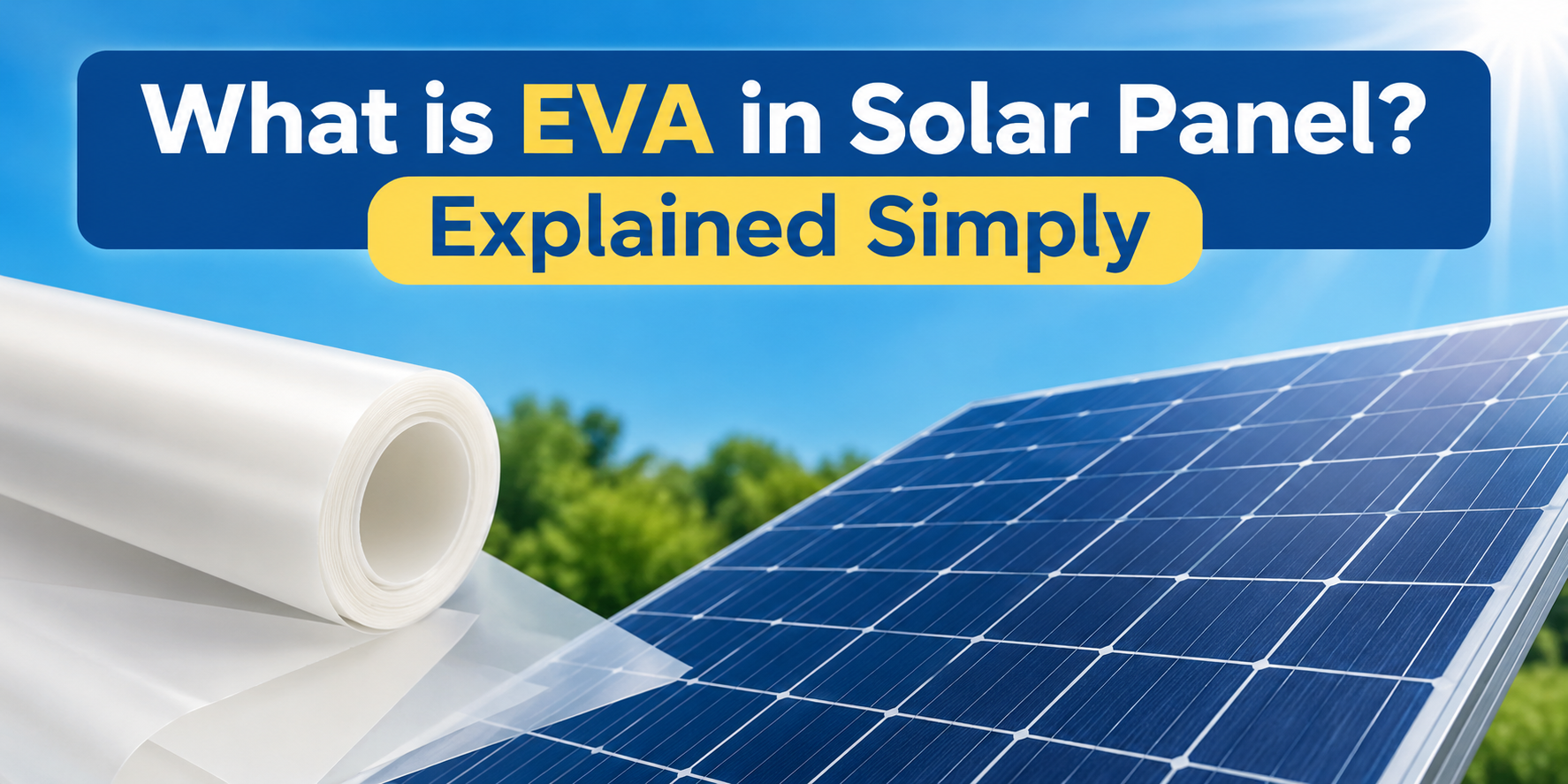
When you look at a solar panel on a roof, you mostly see the blue or black cells and the shiny glass on top. However, there is a hidden hero inside that most people never talk about. Without this secret layer, the panel would fall apart and stop working in just a few months. This material is called EVA.
If you have ever wondered how a solar panel survives heavy rain, freezing snow, and boiling heat for twenty-five years, the answer lies in the padding between the layers. Understanding the role of EVA in solar panel construction helps you see why some panels are much better than others. Let’s look at what this material is and why it matters so much for your green energy.
What Is EVA in a Solar Panel?
EVA stands for Ethylene Vinyl Acetate. In the world of renewable energy, we call it an encapsulant. Think of it as a specialized type of plastic film that acts like both a cushion and a glue. When a solar panel is built, the delicate solar cells are placed between two sheets of this material.
Initially, EVA looks like a thin, flexible sheet of rubbery plastic. It is not sticky at first. However, during the manufacturing process, it is heated up to a very high temperature. When it melts, it turns into a clear, gel-like substance that wraps around the solar cells. This process seals the cells perfectly, keeping them safe from the outside world. Using a high-quality solar encapsulant material is the only way to make sure the panel stays clear and functional for decades.
What Does EVA Do in a Solar Panel?
To put it simply, EVA acts as a protective shield and a structural glue. While the glass protects the panel from big things like falling branches, the EVA protects the cells on a microscopic level. It fills every tiny gap between the glass, the cells, and the backsheet.
Without this layer, the solar cells would be loose. They would shake around and eventually break. The EVA ensures that every part of the panel stays exactly where it belongs, even when the wind is howling or the sun is beating down. It is the "glue" that makes the whole system work as one solid unit.
Protects Solar Cells
Solar cells are incredibly thin and brittle. They are almost as fragile as a thin piece of glass. If dust, moisture, or dirt gets inside the panel, it can cause the metal parts to rust or the cells to short out. Moisture is the biggest enemy of solar technology because it leads to corrosion.
By using EVA in solar panel setups, manufacturers create an airtight seal. This seal blocks humidity from reaching the sensitive electrical parts. Because the EVA wraps completely around the cells, it blocks out contaminants that would otherwise destroy the panel's ability to create electricity. This is why an EVA solar panel is the industry standard for durability.
Absorbs Mechanical Stress
Nature can be tough on solar panels. Throughout the day, the sun heats the panel up, causing the materials to expand. At night, they cool down and shrink. This constant "breathing" can put a lot of pressure on the cells. Also, things like heavy wind or vibrations from nearby traffic can cause stress.
EVA acts like a shock absorber. It is soft enough to flex when the glass expands but strong enough to hold the cells steady. By absorbing this mechanical stress, it prevents tiny cracks, called micro-cracks, from forming in the silicon cells. This flexibility is one of the most important jobs that EVA in solar systems performs every single day.
Improves Light Transmission
It might seem strange to put a layer of plastic on top of the solar cells, but it actually helps with light. High-quality EVA is extremely clear. It is designed to let as much sunlight as possible pass through to the cells.
If the encapsulant was cloudy or turned yellow over time, it would block the sun and lower the amount of power the panel produces. Good EVA has the same refractive index as the glass above it. This means the light doesn't bounce away; it travels straight through the glass and the EVA to hit the solar cell, helping the panel work at its best efficiency.
Provides Strong Bonding
A solar panel is basically a "sandwich" made of glass, EVA, solar cells, another layer of EVA, and a plastic backsheet. For the panel to stay together, these layers must be bonded very tightly.
When the EVA is heated during the laminating process, it creates a chemical bond with the glass and the backsheet. This bond is so strong that you cannot peel it apart once it has cooled. This structural integrity ensures that the panel doesn't delaminate, which is when the layers start to separate. Keeping the layers stuck together is a primary role of EVA in solar panel manufacturing.
Increases Solar Panel Lifespan
Most solar panels come with a 25-year warranty. The only reason they can last that long is because of the protection provided by the encapsulant. It keeps the internal parts safe from UV rays and weathering.
By preventing moisture from entering and keeping the cells from cracking, EVA ensures the panel performs reliably for 25+ years. If the EVA is low-quality, it might turn brown or bubble up after a few years, which ruins the panel. Choosing the right material ensures your investment in solar energy pays off for a long time.
How EVA Works During Solar Panel Manufacturing
During the assembly of a panel, the layers are stacked together in a clean room. The stack goes into a machine called a laminator. This machine does two things: it removes all the air (creating a vacuum) and it applies heat.
As the temperature rises, the EVA melts and flows around the solar cells. It fills every tiny nook and cranny. This is called the curing process. Once the EVA cools down, it changes from a liquid back into a solid, but now it is permanently bonded to everything it touched. This precise manufacturing step is what makes the EVA in solar panel units so effective at sealing out the environment.
Key Benefits of EVA in Solar Panels
- High transparency: It allows almost 100% of sunlight to reach the cells without reflecting it away.
- Excellent adhesion: It sticks to glass and backsheets better than almost any other material.
- UV resistance: It is treated with special chemicals so it won't break down or turn yellow under the harsh sun.
- Weather resistance: It handles extreme cold and extreme heat without cracking or losing its grip.
- Electrical insulation: It prevents electricity from leaking out of the cells and into the metal frame of the panel.
- Cost-effective solution: It provides high-end protection at a price that keeps solar energy affordable for everyone.
- Long service life: It is designed to stay stable and clear for several decades.
How to Choose a High-Quality EVA Encapsulant
Not all EVA is created equal. When manufacturers look for materials, they check for the "cross-linking" degree. This tells them how well the plastic has cured. A high cross-linking degree means the EVA is stronger and more resistant to heat.
Another thing to look for is the resistance to "discoloration." In the past, some cheap EVA would turn brown after a few years in the sun. Modern, high-quality brands use better additives to make sure the film stays crystal clear for the entire life of the panel. Buyers should always check that the EVA used in solar panel production meets international quality standards.
Why Solar Manufacturers Trust Raynex Solar
Raynex Solar is known for providing high-grade materials that meet the toughest industry tests. Because the encapsulant is so important, manufacturers need a partner who understands the science behind the film.
Raynex Solar focuses on providing EVA that has high thermal stability and excellent clarity. By using trusted materials, solar companies can guarantee that their panels will survive the elements and keep producing clean energy for homeowners and businesses alike. Quality materials are the foundation of a sustainable future.
Conclusion
While the solar cells do the work of making electricity, the EVA in solar panel systems is what keeps those cells alive. It protects them from moisture, cushions them from bumps, and keeps the whole panel stuck together. By choosing the right EVA, manufacturers ensure that solar panels are a reliable and long-lasting choice for the planet. Next time you see a solar panel, remember the clear, strong layer inside that is working hard to keep the lights on.
Frequently Asked Questions
What is the full form of EVA in solar panels?
EVA stands for Ethylene Vinyl Acetate. It is a copolymer resin used as an encapsulating film to protect and bond the layers of a solar panel together.
Why is EVA used in solar panels?
It is used because it provides excellent protection against moisture and dirt, acts as a shock absorber for the fragile cells, and ensures the panel layers stay securely bonded for many years.
How long does EVA last inside a solar panel?
High-quality EVA is designed to last for the entire lifespan of a solar panel, which is typically 25 to 30 years, without losing its clarity or bonding strength.
Can EVA improve solar panel efficiency?
Yes, indirectly. By having high transparency and a refractive index similar to glass, it allows maximum sunlight to reach the cells while protecting them from damage that would reduce power output.
What is the difference between EVA and POE encapsulants?
While both protect cells, POE (Polyolefin Elastomer) has better resistance to potential induced degradation (PID) and lower water vapor transmission, but EVA is more common because it is easier to process and more cost-effective.
Which type of solar panels use EVA encapsulant?
Most standard crystalline silicon solar panels (both monocrystalline and polycrystalline) used on residential and commercial roofs utilize EVA as their primary encapsulant material.
- Managerial Effectiveness!
- Future and Predictions
- Motivatinal / Inspiring
- Fitness and Wellness
- Medical & Health
- Manufacturing
- التعليم
- Real-Estate
- Food Industry
- Hospitality
- Online Games
- Sports
- Home Services
- Civil Engineering
- Safety and Protection
- Software Products & Services
- Fashion and Jewellery
- Artificial Intelligence
- Entrepreneurship
- Mentoring & Guidance
- Marketing
- Networking
- HR & Recruiting
- Literature
- Shopping
- Career Management & Advancement