

 SkillClick
How to Choose the Right Environment Test Chamber | TASO Metrology
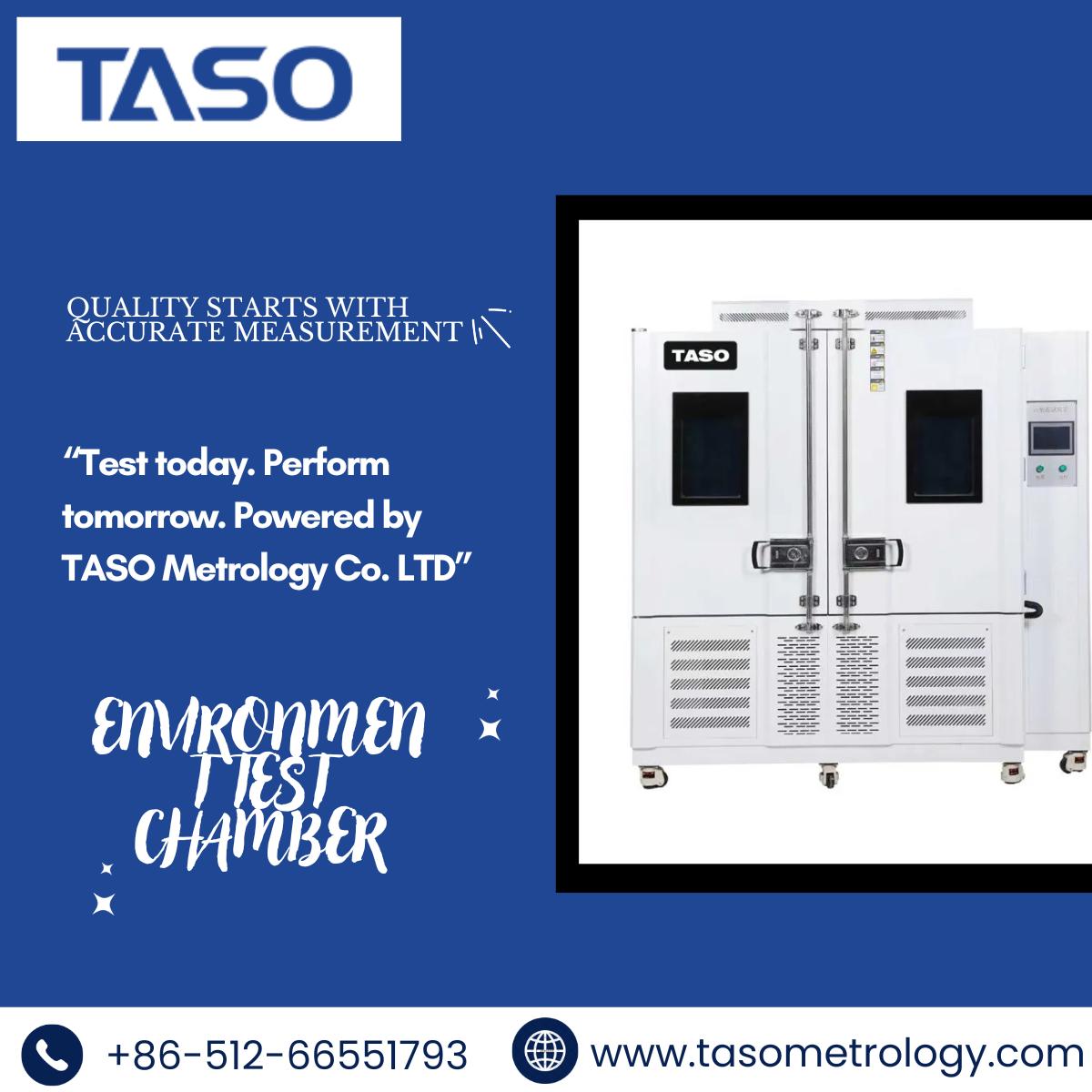
Product quality, safety, and reliability have become essential requirements across industries such as automotive, aerospace, electronics, medical devices, defense, and renewable energy. Before products reach customers, manufacturers must ensure they can withstand extreme environmental conditions without compromising performance.
This is where an environment test chamber becomes an essential investment. Whether you are validating new product designs, performing compliance testing, or conducting reliability analysis, selecting the right chamber directly impacts testing accuracy, operational efficiency, and long-term costs.
With numerous models, sizes, temperature ranges, and humidity control options available, choosing the right equipment can be challenging. This guide explains everything you need to know before purchasing an environment test chamber, helping you make an informed decision while understanding how a modern climate test chamber can improve your testing capabilities.
What Is an Environment Test Chamber?
An environment test chamber is specialized laboratory equipment designed to simulate controlled environmental conditions for product testing. These chambers recreate temperature, humidity, altitude, thermal cycling, and other environmental factors that products may encounter throughout their lifecycle.
Manufacturers use these chambers to:
-
Verify product durability
-
Detect design weaknesses
-
Meet industry standards
-
Accelerate product development
-
Improve quality assurance
-
Reduce warranty claims
By exposing products to controlled environmental stress, companies can identify failures before products reach the market.
Why Choosing the Right Chamber Matters
Not every laboratory has identical testing requirements. Purchasing the wrong chamber can lead to:
-
Limited testing capabilities
-
Increased maintenance costs
-
Inaccurate test results
-
Lower productivity
-
Future equipment replacement
Selecting the correct environment test chamber ensures your investment supports both current testing needs and future expansion.
Key Factors to Consider Before Buying an Environment Test Chamber
1. Understand Your Testing Requirements
The first step is defining what you intend to test.
Ask yourself:
-
What products will be tested?
-
What environmental conditions are required?
-
Will testing involve temperature only or temperature and humidity?
-
What standards must be followed?
Different industries require different testing profiles.
For example:
-
Automotive components
-
Printed circuit boards
-
Batteries
-
Medical devices
-
Aerospace electronics
-
Plastic materials
Understanding these requirements helps determine the ideal chamber configuration.
2. Temperature Range
Temperature capability is often the most important consideration.
Typical testing ranges include:
-
-20°C to +150°C
-
-40°C to +180°C
-
-70°C to +180°C
Lower temperatures are ideal for:
-
Automotive testing
-
Aerospace applications
-
Military equipment
Higher temperatures are commonly required for:
-
Electronics
-
Plastic materials
-
Industrial components
Choose a chamber that exceeds your current testing requirements rather than meeting only today's needs.
3. Humidity Control
Many products are affected by moisture.
A high-quality climate test chamber allows precise humidity control, enabling realistic environmental simulations.
Humidity testing is commonly used for:
-
Electronic assemblies
-
Packaging materials
-
Consumer electronics
-
Medical products
-
Pharmaceutical packaging
Stable humidity control produces more reliable and repeatable test results.
4. Chamber Size
Selecting the correct internal workspace is equally important.
Consider:
-
Product dimensions
-
Number of samples
-
Air circulation requirements
-
Future testing needs
Buying a chamber that is too small may restrict testing flexibility, while purchasing an oversized chamber can increase operating costs.
5. Temperature Uniformity
Uniform temperature distribution ensures every test sample experiences identical conditions.
Poor airflow or uneven temperature can result in inconsistent testing outcomes.
Look for equipment offering:
-
Excellent air circulation
-
Stable temperature distribution
-
Accurate sensor placement
-
Minimal temperature deviation
This is especially critical when testing multiple samples simultaneously.
6. Heating and Cooling Performance
Fast heating and cooling rates reduce testing time.
Applications requiring thermal cycling benefit significantly from rapid temperature transitions.
Evaluate:
-
Heating rate
-
Cooling rate
-
Recovery time after door opening
-
Compressor efficiency
Efficient systems increase laboratory productivity.
7. Controller Features
Modern chambers include intelligent touchscreen controllers.
Useful features include:
-
Programmable test cycles
-
Data logging
-
Remote monitoring
-
USB data export
-
Ethernet connectivity
-
Alarm notifications
Advanced controllers simplify operation while improving data traceability.
8. Compliance With Industry Standards
Different industries require compliance with recognized testing standards.
Examples include:
-
IEC standards
-
MIL-STD testing
-
ASTM standards
-
ISO testing requirements
-
JEDEC electronics testing
Selecting equipment capable of supporting these standards helps laboratories meet certification requirements more efficiently.
9. Energy Efficiency
Laboratories often operate environmental chambers continuously.
Energy-efficient equipment helps reduce:
-
Electricity costs
-
Operating expenses
-
Environmental impact
Modern insulation, efficient refrigeration systems, and optimized airflow significantly improve overall efficiency.
10. Maintenance and Reliability
Downtime delays production and testing schedules.
Choose a manufacturer that provides:
-
Durable construction
-
Reliable refrigeration systems
-
Easy maintenance access
-
Long service life
-
Available replacement parts
Reliable equipment lowers total ownership costs over time.
Environment Test Chamber vs. Climate Test Chamber
Although many people use these terms interchangeably, there is a slight distinction.
An environment test chamber refers broadly to equipment capable of simulating various environmental conditions, including temperature, humidity, vibration, altitude, or corrosion.
A climate test chamber specifically focuses on controlling temperature and humidity to replicate real-world climate conditions.
Many modern systems combine both capabilities, making them suitable for a wide range of testing applications.
Industries That Benefit From Environmental Testing
Environmental testing supports nearly every manufacturing industry.
Common applications include:
Automotive
-
Electronic control units
-
Sensors
-
Lighting systems
-
Battery components
Aerospace
-
Aircraft electronics
-
Navigation systems
-
Structural components
Electronics
-
Circuit boards
-
Semiconductors
-
Consumer electronics
-
Communication devices
Medical Devices
-
Diagnostic equipment
-
Monitoring devices
-
Medical electronics
Renewable Energy
-
Solar panels
-
Battery systems
-
Power electronics
Why Choose TASO Metrology?
Choosing the right testing equipment is only part of the decision. Partnering with an experienced manufacturer ensures long-term reliability and technical support.
TASO Metrology provides advanced environmental testing solutions designed for laboratories, manufacturers, and quality assurance facilities worldwide.
Key advantages include:
-
High-precision temperature and humidity control
-
Stable and repeatable testing performance
-
User-friendly touchscreen controllers
-
Robust construction for continuous operation
-
Customizable chamber configurations
-
Reliable technical support and after-sales service
Whether your application requires routine quality control or advanced product reliability testing, TASO Metrology delivers solutions tailored to demanding industrial environments.
Final Thoughts
Selecting the right environment test chamber is an important investment that directly affects product quality, compliance, and testing efficiency. Rather than focusing solely on price, manufacturers should evaluate performance, accuracy, chamber size, temperature range, humidity capability, controller functionality, and long-term reliability.
A high-quality climate test chamber not only helps ensure products meet regulatory standards but also reduces failures, accelerates product development, and strengthens customer confidence.
If your organization is looking for dependable environmental testing equipment, TASO Metrology offers precision-engineered solutions designed to support modern testing laboratories across a wide range of industries.
Frequently Asked Questions (FAQs)
1. What is an environment test chamber used for?
An environment test chamber is used to simulate controlled temperature, humidity, and other environmental conditions to evaluate the reliability and durability of products before they reach the market.
2. What is the difference between an environment test chamber and a climate test chamber?
An environment test chamber can simulate various environmental factors, while a climate test chamber primarily focuses on temperature and humidity testing.
3. Which industries commonly use environmental test chambers?
Industries such as automotive, aerospace, electronics, medical devices, renewable energy, defense, and manufacturing frequently use environmental testing equipment.
4. How do I choose the right chamber size?
Consider the dimensions of your test samples, required airflow, future testing needs, and available laboratory space when selecting the chamber size.
5. Why is temperature uniformity important?
Uniform temperature ensures every sample experiences identical testing conditions, resulting in accurate, repeatable, and reliable test results.
- Managerial Effectiveness!
- Future and Predictions
- Motivatinal / Inspiring
- Fitness and Wellness
- Medical & Health
- Manufacturing
- Education
- Real-Estate
- Food Industry
- Hospitality
- Online Games
- Sports
- Home Services
- Civil Engineering
- Safety and Protection
- Software Products & Services
- Fashion and Jewellery
- Artificial Intelligence
- Entrepreneurship
- Mentoring & Guidance
- Marketing
- Networking
- HR & Recruiting
- Literature
- Shopping
- Career Management & Advancement