

 SkillClick
Signs Your Patio Heater Thermocouple Needs Replacement
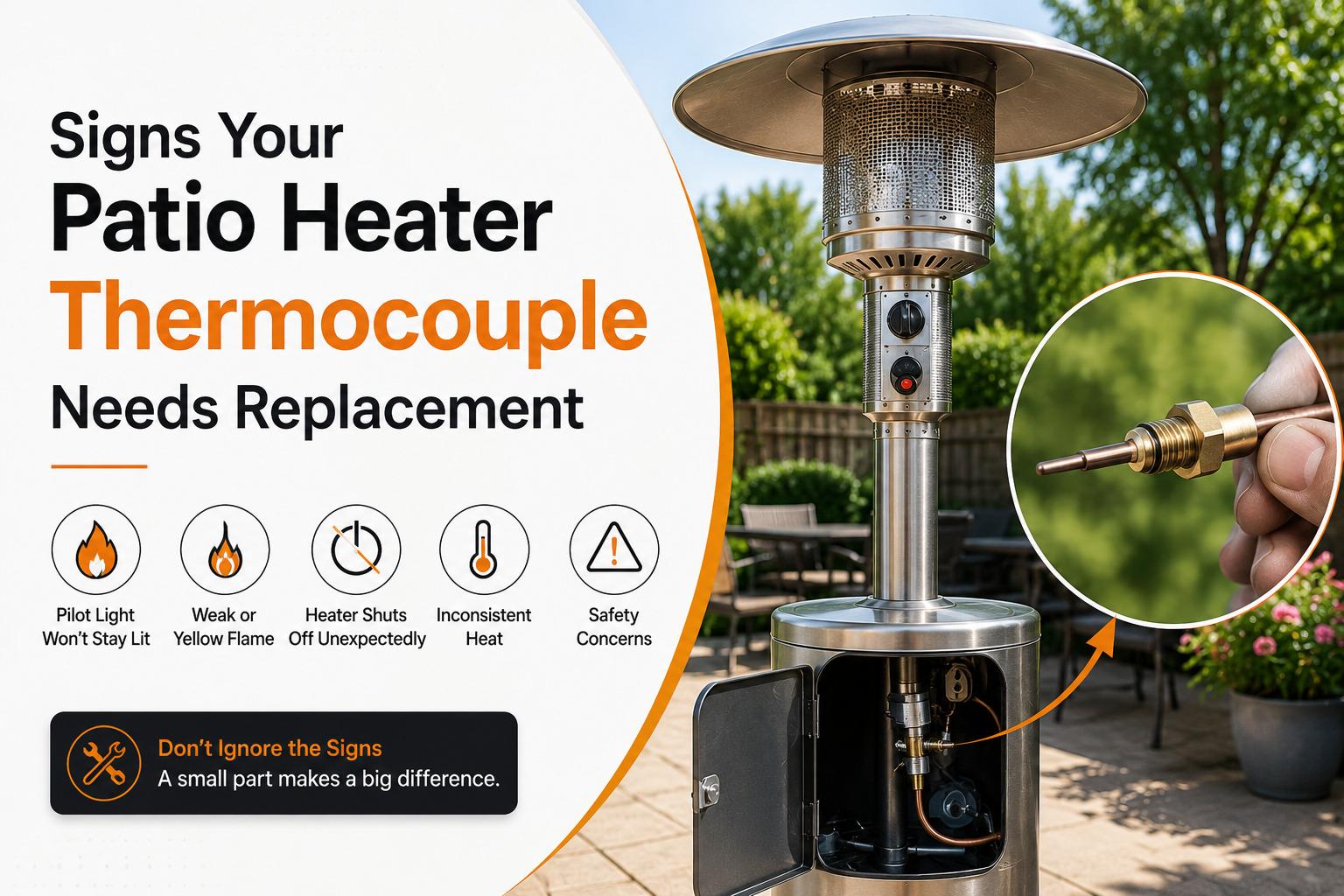
Gas patio heaters help Dutch restaurants, cafés, hotels and homeowners keep terraces, verandas and covered patios comfortable during cooler weather. These heaters depend on several safety components, including the thermocouple.
A thermocouple monitors whether the pilot flame is burning. When it detects heat, it allows the gas valve to remain open. If the flame goes out, the component helps close the gas supply so unburned gas does not continue escaping.
When a thermocouple becomes worn, damaged or incorrectly positioned, the heater may become difficult to start or shut down unexpectedly. Recognising the warning signs early can reduce downtime and prevent unnecessary replacement of the complete heater.
What Does a Patio Heater Thermocouple Do?
A patio heater thermocouple is a heat-sensitive safety device positioned close to the pilot flame. Once heated, it produces a small electrical signal that keeps the gas valve open. When the flame disappears and the sensor cools, the signal stops and the valve closes.
Terrasheater.nl offers model-specific thermocouples for lounge heaters, flame heaters, patio heaters and selected Enders products, along with universal versions in different lengths. The replacement must match the heater, fitting and dimensions.
Why Thermocouple Problems Matter in the Netherlands
Dutch outdoor heaters are often exposed to humidity, condensation, wind-driven rain and changing temperatures. Even beneath a canopy, moisture and dirt can reach the burner area.
Hospitality heaters may also operate for many hours. If one fails during a busy evening, outdoor tables can quickly become uncomfortable.
1. The Pilot Flame Will Not Stay Lit
The most common sign of a failing thermocouple is a pilot flame that goes out when the control knob is released.
During ignition, the knob is held down temporarily so gas reaches the pilot while the thermocouple heats. Once the sensor reaches the required temperature, it should keep the gas valve open.
If the pilot goes out immediately, the thermocouple may not be producing a strong enough signal. Dirt around the pilot, weak flame contact or incorrect sensor positioning can create the same symptom, so these issues should be checked first.
2. The Heater Shuts Down Unexpectedly
A heater that starts normally but stops after several minutes may have an unstable thermocouple signal.
The cause could be a worn sensor, loose connection or a pilot flame disturbed by wind. On open Dutch terraces, draughts can create symptoms that resemble component failure.
Check whether the problem occurs only in windy conditions. If the heater repeatedly shuts down in calm weather, the thermocouple or another safety component needs inspection.
A compatible replacement thermocouple for a patio heater may restore reliable operation when the existing sensor can no longer hold the gas valve open.
3. Ignition Takes Longer Than Before
A healthy gas heater should follow a consistent ignition process. If the control knob must be held down much longer than usual, the thermocouple may be responding slowly.
Slow response can result from soot, corrosion, poor alignment or normal wear. A weak pilot flame may cause the same problem, so cleaning and inspection should take place before replacement.
4. The Thermocouple Looks Damaged
A visual inspection may reveal corrosion, cracks, a bent sensor tip, damaged insulation or a loose connection. The tip should sit correctly within the pilot flame and should not be heavily covered in soot.
Moisture can accelerate corrosion, particularly when heaters remain outside throughout the year.
If damage is visible, review the available gas patio heater thermocouples and compare the specifications with the existing part.
5. Cleaning Does Not Restore Operation
Light dirt can sometimes prevent the sensor from heating correctly. After the heater is switched off, cooled and isolated from the gas supply, accessible residue may be removed according to the manufacturer’s instructions.
Do not use aggressive chemicals or force, as this can damage the sensor or alter its position.
If careful cleaning and realignment do not restore reliable operation, replacement may be required. Repeated temporary fixes are not suitable for a component that controls the gas supply.
6. The Gas Valve Closes Despite a Stable Flame
When the pilot flame is strong and correctly positioned but the gas supply still closes, the thermocouple may no longer generate enough voltage.
A loose connection between the thermocouple and gas valve can also interrupt the signal. Connections should be checked for corrosion and correct fit without overtightening.
Sometimes the magnet coil is faulty rather than the sensor. Accurate diagnosis is important before ordering.
Choosing the Correct Replacement Thermocouple
Thermocouples are not automatically interchangeable. Heaters may use different lengths, fittings and sensor designs.
Identify the Heater Model
Check the brand, model name and product number on the rating plate or original documentation.
Measure the Existing Component
If the model is unclear, measure the existing thermocouple only when it can be removed safely. Compare its length, threaded connection and sensor tip with the replacement specifications.
The category includes dedicated parts and universal 30 cm and 50 cm thermocouples. “Universal” does not mean suitable for every heater, so the measurements and connections must still match.
Inspect Related Components
Check the pilot assembly, gas valve, tip-over protection and magnet coil. A new thermocouple will not solve a fault elsewhere in the safety system.
When uncertain, request guidance before choosing a compatible patio heater thermocouple.
Should You Replace It Yourself?
Experienced technicians may be able to replace a thermocouple by following the manufacturer’s instructions. However, gas appliances require careful handling.
The gas supply must be closed, connections must remain leak-free, and every safety system must operate correctly after repair. A heater should never be modified to bypass the thermocouple or keep the gas valve open manually.
Restaurants, hotels and commercial terrace operators should use a qualified service technician. DIY homeowners should also seek professional support whenever the heater design, connection or diagnosis is unclear.
Preventing Early Thermocouple Failure
Routine care can improve heater reliability. Keep the burner and pilot area clean, store portable heaters in a dry place during long inactive periods and use a suitable cover where recommended.
Before autumn, hospitality businesses should test every unit and record ignition or shutdown problems.
Keeping the correct spare thermocouple for a gas heater may reduce downtime, provided compatibility has been confirmed.
Restore Reliable Patio Heating
Pilot flames that will not stay lit, unexpected shutdowns, slow ignition and visible corrosion can all indicate a thermocouple problem.
Replacing a confirmed faulty part can restore dependable operation without the expense of replacing the complete heater. The new component must match the heater model, dimensions and fittings, and gas repairs must be carried out safely.
Explore the available patio heater replacement thermocouples or contact a specialist for help identifying the correct component.
Frequently Asked Questions
What is the main sign of a faulty thermocouple?
The pilot flame often goes out when the control knob is released. Dirt, weak flame contact and incorrect positioning should also be checked.
Can a patio heater thermocouple be cleaned?
Light soot may sometimes be removed carefully. A cracked, corroded or worn component should be replaced.
Are patio heater thermocouples universal?
Some universal versions exist, but their length, fittings and compatibility must still match the heater.
Why does my heater go out in windy weather?
Wind may move the pilot flame away from the thermocouple or extinguish it. Review heater positioning before assuming the sensor is defective.
Is it safe to bypass a thermocouple?
No. It is a gas safety device and must never be bypassed or disabled.
- Managerial Effectiveness!
- Future and Predictions
- Motivatinal / Inspiring
- Fitness and Wellness
- Medical & Health
- Manufacturing
- Education
- Real-Estate
- Food Industry
- Hospitality
- Online Games
- Sports
- Home Services
- Civil Engineering
- Safety and Protection
- Software Products & Services
- Fashion and Jewellery
- Artificial Intelligence
- Entrepreneurship
- Mentoring & Guidance
- Marketing
- Networking
- HR & Recruiting
- Literature
- Shopping
- Career Management & Advancement