

 SkillClick
How the Right Milk Chiller Machine Protects Milk Quality
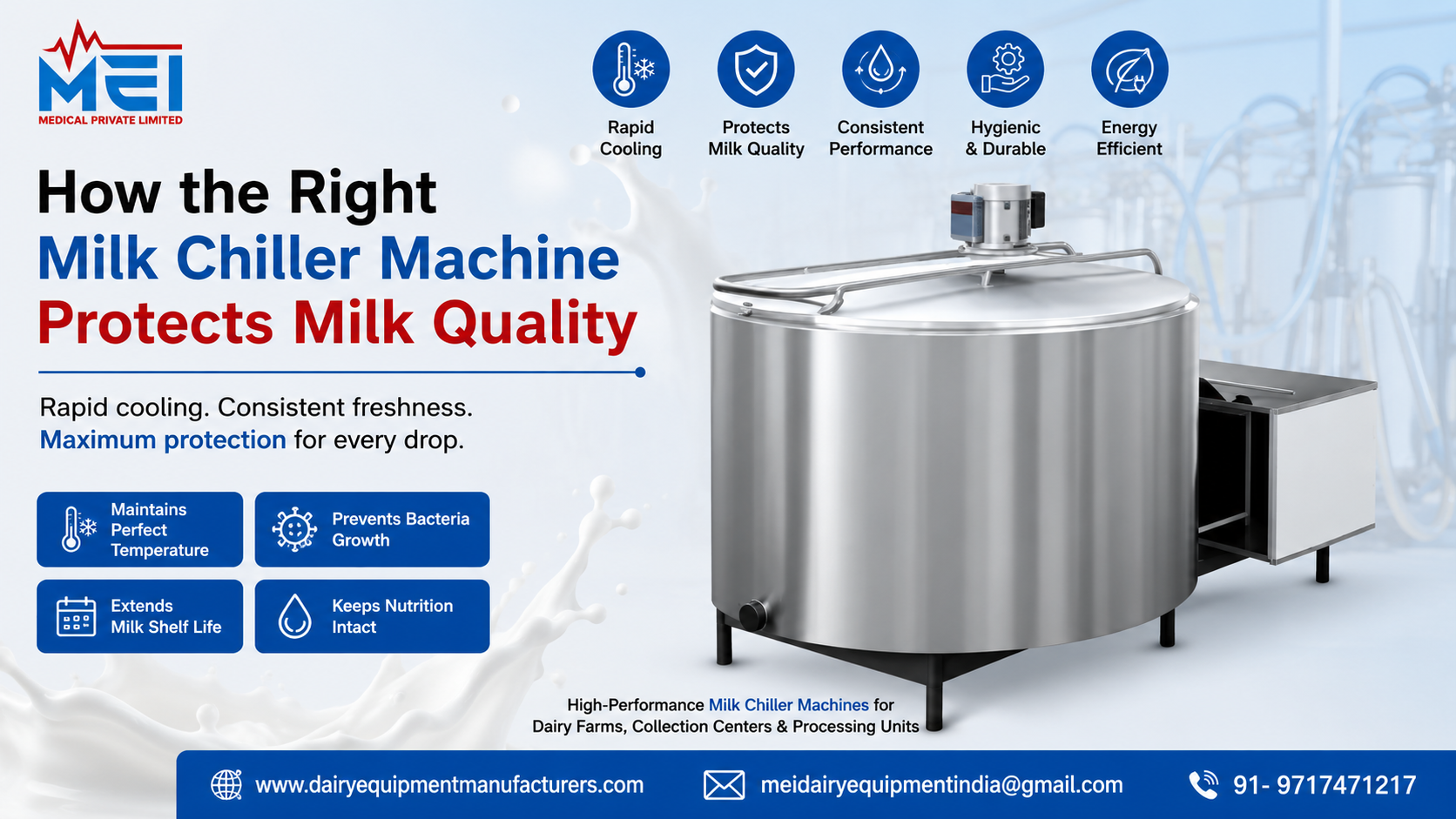
Fresh milk is removed from the animal at body temperature. So this milk is extremely prone to bacteria unless cooled in a timely manner. Delay in cooling at Dairy farms and Milk collection centers can be detrimental to the freshness, quality, and shelf life of milk; this is more so the case when collection rounds are busy in the morning/evenings, or there is a delay in transport. To counter this problem, a Milk Chiller Machine is used to quickly cool down the milk, ensure hygiene and quality until the milk is processed. Hence, for their daily work, dairy companies are opting for established Milk Chiller Manufacturers in India to understand their needs and buy high quality, effective milk cooling equipment.
Why Milk Quality Matters in Dairy Farming
Milk quality is the key factor in the safety of the product and the efficiency of the manufacturing process and it also directly affects the image of each dairy business. Well-preserved and good quality milk produces better quality dairy products and is less likely to be rejected in some quality assurance programs.
Poor storage or delayed cooling can lead to:
- Souring and spoilage
- Off-smell or off-flavour development
- Batch rejection at collection centres/processing plants
- Economic losses to farmers, suppliers and dairy co-operatives
What Is a Milk Chiller Machine?
A Milk Chiller Machine / Milk Cooling Machine is used to process and cool milk quickly and keeps the milk at a constant low temperature before it is stored, transported or processed. When a milk chiller removes heat soon after milking, the bacteria count in milk can be delayed in growth and keeps the milk fresh. Today this machine is used in Dairy farms, Milk collection centers, villages, cooperatives, and processing units etc.
Why Fresh Milk Needs Fast Cooling After Milking
The milk is at 35°C-39°C when it is taken out from the udder. At that temperature, bacteria naturally multiply. Anyway, they are at a high level on hot days, and when milk is on the way.
In most collection centres, the milk stays in cans if coming from the village just before the suppliers arrive. This can be a few hours until cooling occurs, so the quality of the milk before rapid cooling is critical. The speed of cooling ensures the maximum amount of staling protection.
How a Milk Chiller Machine Works
A milk chiller machine cools and stores milk through a simple, automated process:
- Milk Loading: Fresh milk is loaded into the insulated chiller tank.
- Cooling – The rapid cooling of the milk in the cooling system.
- Agitation: Gentle stirring ensures uniform cooling and prevents sedimentation.
- Temperature Control – A computerized controller controls the best temperature for storing the system.
This permits the milk to be kept fresh and in good quality, without going sour or deteriorating until it is transported or processed.
Role of Temperature Control in Milk Quality Protection
Cooling down the milk is an important stage, but it is just as important to maintain the temperature as constant as can be.
The digital temperature controller automatically controls the cooling cycle so it is not false due to multiple changes. The more it is cooled, the more the milk quality can be maintained during storage, especially when transportation trains arrive late.
Cooling Milk to Around 4°C: Why It Matters.
The temperature that milk is generally stored at is 4° C. This reduces the effect of bacteria 1000 times more than any other temperature on the bacteria while not affecting the native properties of the milk.
By holding the milk at this temperature, an extended safe holding period is allowed before processing, as well as maintaining freshness for short periods of holding at farms or collection centres.
Uniform Cooling with Agitator System
A correctly designed agitator circulates the milk gently while it cools.
If transition is not in progress, the warmer portions of the tank may be contained within the vat and bacteria are likely to multiply at a faster rate in these pockets. Controlled stirring will ensure an even temperature throughout the whole volume of milk and minimize turbulence.
SS304 Stainless Steel Body for Better Hygiene
The most common material used in the construction of a Stainless Steel Milk Chiller is SS304 stainless steel, which is the most suited material for dairy usage.
SS304 provides several advantages:
- Hygienic, food-grade contact surface.
- Warehouse: Not reactive with milk, so would not affect its storage and stability.
- Good resistance to corrosion by milk and cleaning agents.
- Easily maintained smooth surfaces for regular cleaning
- Extended operating life during uninterrupted dairy production
For dairy businesses that have their own milk every day, SS304 construction is suitable for both hygiene and durability.
PUF Insulation for Temperature Retention
PUF (Polyurethane Foam) is used as a material for the tank wall insulation to keep heat transfer from the outside world away.
High-quality PUF insulation helps:
- Prolong the keeping of Chilled milk.
- Reduce compressor load
- Enhance energy efficiency
- Maintain stable milk storage even in hot weather
Good insulation provides a safeguard for milk quality and on a day to day basis it makes operation more efficient.
How Milk Chillers Reduce Spoilage Risk
Milk goes off from a combination of factors rather than a single process. Most cases are due to poor cooling, unsteady temperatures, or storage.
A good Milk Chiller Machine satisfies three requirements in quality. It reduces the heat fast, maintains the set storage temperature and keeps the milk in hygienic state until it is delivered. This greatly reduces the risk of any souring, off-tastes or quality-related rejection between collection and processing.
Better Milk Storage Before Transportation
The collection schedule is different from the processing schedule as well. Milk that is collected in the morning milking can take hours to reach the collection centre before a tanker arrives. The milk storage chiller maintains a steady temperature of the milk during this period.
Useful for Dairy Farms and Milk Collection Centres
Different dairy enterprises have different cooling needs. Each farm can (to a certain extent) chill only milk produced that day, while village collection centres can receive milk from several producers in a short timescale. Generally, a larger cooling capacity is needed for dairy cooperatives and bulk supplies. Select an appropriately sized unit to match your demand.
Milk Chiller for Small Dairy Farms
Small Dairy Milk Chiller: A small dairy milk chiller would be suitable for a home dairy, an organic milk producer, a local milk supplier or a small business that produces a reasonable daily amount. Smaller units will provide the same cooling ability as larger units but take up less room and power. Smaller dairy units allow small dairies to keep their milk fresh without the expense of larger equipment.
Commercial Milk Chiller Machine for Larger Dairy Units
Larger farms, co-operatives, and processing centres need to gather, process and ship much higher levels of milk daily, most notably during the marathon two-hour milkings in the morning and evening. A much higher capacity Commercial Milk Chiller Machine is designed to enable them to do so without slowing production down. Larger systems enable the ‘milk collecting, chilling and delivery’ process to be made more efficient.
Milk Chiller Machine Price: What Affects the Cost?
In addition to the purchase price, the Milk Chiller Machine Price in India also depends on;
- Tank capacity –Tanks with a greater volume (cost more) decrease cooling cost/l.
- Compressor Quality- A better-quality compressor will cool quicker. This will go along with giving a longer life.
- SS304 Construction – Maintains cleanliness, durability, and corrosion resistance.
- PUF Insulation – Enhances temperature retention and energy integrity.
- Cooling Speed & Controls – Cutting edge cooling method leads to excellent performance, combined with digital controls.
- Customization – Extra functionalities or special capacities can influence the final price.
To make the estimate as accurate as possible, ask for an estimate based on your daily milk yield and other needs.
Key Features to Check Before Buying a Milk Chiller Machine
Before purchasing a Milk Chiller Machine, evaluate the following features carefully:
- Construction of commercial grade SS304 stainless steel
- High-quality PUF insulation
- The compressor runs reliably when cool enough with sufficient cooling capability.
- Precise digital temperature controller
- Agitator with good design for even cooling
- Fast and efficient cooling performance
- Tank size suitable for your daily milk yield
- Compatibility of CIP (Clean-in-Place) cleaning with the device
- Simple to maintain.
- Reliable after-sales service and technical support
Selecting the optimal combination of these properties ensures consistent performance and reduced operating costs during the life of the machine.
Common Mistakes Buyers Should Avoid
Avoid these common mistakes when choosing a milk chiller:
- Do not go with the cheapest equipment at the expense of performance and durability.
- Choose a tank size that meets your current requirements and also the requirements of expanded use.
- Never scrimp on the quality of the compressor, insulation and hygiene of construction.
- Make sure spare parts, technical support and simple cleaning are available.
Cleaning and Maintenance for Better Milk Hygiene
Of course, routine maintenance is one way that the equipment and milk can be kept in perfect condition.
Good maintenance practices include:
- Wash out the tank immediately after each session to clean once use is over.
- Prevention of milk deposit accumulation inside the tank
- Verifying the digital temperature controller at regular intervals
- Checking the agitator; aim to establish that it operates smoothly and there is no undue wear.
- Servicing the compressor in accordance with the manufacturer's recommendations
- According to the advice provided, the “long-term” performance maintenance book
Regular maintenance, cleaning, and preventive maintenance should be done to achieve hygiene and good cooling during the lifetime.
Why Choose MEI Medicals for Milk Chiller Machines?
MEI Medicals supply robust SS304 Milk Chiller Machines, suitable for Dairy Farm, Milk Collection Centres, Co-operative & Dairy Processing Units. The chillers are suitable for hygienic cooling & storage and available in different capacities.
Get in touch with MEI Medicals now and receive the best milk chiller advice on capacities, features and prices.
Final Thoughts
The preservation of milk quality starts right after the milking. A good Milk Chiller Machine preserves that freshness by quickly cooling the milk, maintaining a consistent temperature, using a hygienic SS304 structure, high quality PUF insulation, and safe storage either for transportation or processing.
Whether you own a small dairy farm or collect milk from a group of farms or own a producer organisation, investing in the right cooling equipment will ensure the quality of your product and avoid losses. Browse MEI Medicals’ selection of milk chiller machines and contact us to find the most suitable solution for your daily milk collection.
- Managerial Effectiveness!
- Future and Predictions
- Motivatinal / Inspiring
- Fitness and Wellness
- Medical & Health
- Manufacturing
- Educação
- Real-Estate
- Food Industry
- Hospitality
- Online Games
- Sports
- Home Services
- Civil Engineering
- Safety and Protection
- Software Products & Services
- Fashion and Jewellery
- Artificial Intelligence
- Entrepreneurship
- Mentoring & Guidance
- Marketing
- Networking
- HR & Recruiting
- Literature
- Shopping
- Career Management & Advancement