

 SkillClick
Why Canadian Businesses Need Custom Mobile Apps
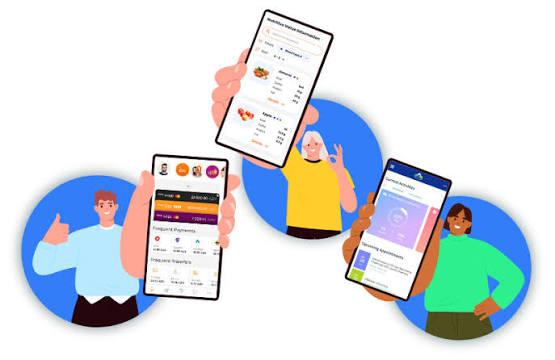
Canadian businesses operate in a market where customers expect fast, convenient, and personalized digital experiences. They want to book services, place orders, access accounts, track deliveries, make payments, and contact support directly from their phones.
A standard website can support many of these activities, but it may not provide the speed, functionality, or engagement that a dedicated mobile application can offer.
Custom mobile apps are designed around a business’s specific customers, workflows, services, and growth plans. Unlike generic platforms, they can connect directly with internal systems, automate business processes, support unique user journeys, and evolve as the organization expands.
For businesses evaluating Mobile App Development Services, the most important question is not whether an app looks modern. It is whether the application solves a meaningful business problem and creates measurable value.
What Is a Custom Mobile App?
A custom mobile app is designed and developed for the specific requirements of one business.
It may be created for customers, employees, suppliers, delivery teams, healthcare professionals, field workers, or business partners. Its features, workflows, integrations, security controls, and user experience are based on how the organization actually operates.
Custom applications may support:
- Customer account management
- Appointment scheduling
- Online ordering
- Digital payments
- Delivery tracking
- Employee communication
- Field service management
- Loyalty programs
- Remote monitoring
- Document sharing
- Inventory management
- Customer support
The main difference between custom and ready-made software is control. A custom application allows the business to decide how the product works, which systems it connects with, and how it will expand over time.
Why Generic Mobile Solutions May Not Be Enough
Ready-made applications and no-code platforms can be useful for simple requirements. They may provide a faster and less expensive starting point for businesses that need standard functions.
However, these platforms can become restrictive when the organization requires unique workflows, advanced integrations, higher security, or a differentiated customer experience.
Common limitations may include:
- Fixed feature sets
- Limited branding options
- Restricted integrations
- Inflexible workflows
- Per-user or transaction fees
- Limited access to data
- Vendor dependency
- Scalability restrictions
- Difficult customization
- Limited control over future updates
A business may initially adapt its processes to fit the software. As operations become more complex, those compromises can create inefficiency.
Custom development allows the application to fit the business instead of forcing the business to operate around the limitations of a generic product.
1. Custom Apps Solve Specific Business Problems
A successful mobile application should begin with a clearly defined problem.
For a restaurant, the problem may be dependence on third-party delivery platforms. For a healthcare provider, it may be high appointment call volumes. For a logistics company, it may be poor delivery visibility. For a field service company, it may be slow communication between the office and technicians.
A custom app can address these problems through purpose-built features.
For example, a field service application may allow technicians to:
- Receive job assignments
- Access customer records
- View service history
- Capture photographs
- Update job status
- Collect customer signatures
- Record parts used
- Generate service reports
This removes the need for paper forms, repeated phone calls, and manual data entry.
The value of the application comes from improving the workflow, not simply transferring the same inefficient process to a mobile screen.
2. Businesses Gain Greater Control Over Customer Experience
Third-party platforms usually control how customers search, compare, purchase, and communicate.
A custom mobile app allows the business to create an experience around its own brand and customer journey.
The organization can control:
- Registration and onboarding
- Navigation
- Product presentation
- Booking steps
- Payment options
- Notifications
- Customer support
- Loyalty rewards
- Personalized recommendations
- Account management
This control helps businesses remove unnecessary steps and make important actions easier to complete.
For example, a service company can allow returning customers to book their preferred service in a few taps. A retailer can display products based on previous purchases. A healthcare organization can present appointment instructions based on the patient’s service type.
A smoother experience can improve customer satisfaction and encourage repeat engagement.
3. Mobile Apps Create a Direct Customer Channel
Businesses that rely entirely on search engines, social platforms, or marketplaces do not fully control their customer relationships.
Platform policies, algorithms, fees, and visibility can change. Customers may also see competing businesses during every interaction.
A mobile app provides a more direct communication channel.
Businesses can use it to send:
- Appointment reminders
- Order updates
- Delivery notifications
- Personalized offers
- Loyalty rewards
- Product announcements
- Account alerts
- Service instructions
Push notifications can be useful when they are timely and relevant. However, excessive or poorly targeted messages can cause users to disable notifications or remove the app.
A custom application allows the business to design communication preferences and give users greater control over the messages they receive.
4. Custom Applications Can Automate Internal Workflows
Mobile apps are not only customer-facing tools. They can also improve internal operations.
Employees may use mobile applications to complete tasks while working in stores, warehouses, healthcare facilities, construction sites, customer locations, or delivery vehicles.
An internal app may support:
- Task assignments
- Approval workflows
- Time tracking
- Inventory updates
- Safety inspections
- Expense submissions
- Employee scheduling
- Document access
- Team communication
- Incident reporting
These capabilities reduce dependence on spreadsheets, paper forms, phone calls, and disconnected messaging tools.
Information can move directly into the company’s central systems, reducing the need for employees to enter the same data again.
5. Integration Connects the App With Existing Systems
A mobile app creates greater value when it works with the technology the business already uses.
Possible integrations include:
- Customer relationship management systems
- Enterprise resource planning software
- Accounting platforms
- Inventory systems
- Payment gateways
- Appointment platforms
- Shipping providers
- Marketing tools
- Customer support software
- Identity verification services
Consider a retail app that accepts orders but does not connect with inventory data. Customers may purchase items that are no longer available.
Similarly, a booking app that does not connect with employee schedules can create overlapping appointments.
Custom development allows the application to exchange information with existing systems in real time or through scheduled updates.
This creates a more connected operating environment and reduces manual coordination.
6. Custom Apps Can Scale With Business Growth
A mobile application that works for a small customer base may struggle when usage increases.
Growth may bring:
- More users
- Higher transaction volumes
- Additional locations
- New services
- More employee roles
- Larger databases
- More integrations
- Expansion into new regions
A custom app can be designed with this future growth in mind.
Scalable architecture makes it easier to add capacity, introduce features, and support more complex operations without rebuilding the entire platform.
This does not mean every future feature must be included in the first release. It means the technical foundation should allow the product to grow without creating unnecessary restrictions.
7. Canadian Businesses Can Address Privacy Requirements Early
Mobile applications may collect personal information such as names, email addresses, locations, payment information, account activity, or health data.
Privacy should therefore influence the application’s design from the beginning.
Canada’s private-sector privacy framework includes principles related to accountability, consent, limited collection, safeguards, transparency, access, and appropriate use of personal information. The exact obligations depend on the business, jurisdiction, data, and activity involved.
A custom application can include privacy controls such as:
- Clear consent requests
- Limited data collection
- Secure login
- Encryption
- Account deletion options
- Data access controls
- Retention settings
- Privacy preference management
- Activity records
- Breach response procedures
Businesses should avoid collecting information simply because it may be useful later. Every type of data should have a clear and legitimate purpose.
8. Accessibility Can Be Built Into the Product
Accessible design helps more people use a mobile application effectively.
Users may have visual, hearing, mobility, cognitive, or temporary limitations. They may also use assistive technologies or larger text settings.
Accessibility considerations may include:
- Screen-reader support
- Clear navigation labels
- Sufficient contrast
- Scalable text
- Captions
- Simple instructions
- Large touch targets
- Alternatives to gesture-only controls
- Error messages that explain how to fix a problem
Canada has federal and provincial accessibility frameworks, although the exact requirements vary by jurisdiction and organization. Accessibility is also an important commercial consideration because inaccessible products can exclude potential customers and increase support requirements.
Custom development allows accessibility to be considered during research, design, development, and testing rather than added as a late correction.
9. Businesses Can Support English and French Experiences
Canadian businesses may need to serve users in English, French, or additional languages.
A multilingual application requires more than translating a few screens.
Language support may affect:
- Navigation
- Buttons
- Forms
- Notifications
- Search
- Customer support
- Legal content
- Date formats
- Address formats
- App store listings
Text length can also vary between languages, which may affect the layout.
A custom app can use a structured content and translation system, allowing administrators to update language versions without changing the complete application.
Planning this capability early reduces the cost of expanding into new regions later.
10. Custom Apps Can Strengthen Customer Loyalty
A mobile application gives businesses an opportunity to provide ongoing value rather than focusing only on individual transactions.
Loyalty features may include:
- Reward points
- Membership levels
- Personalized offers
- Referral benefits
- Early access
- Reordering
- Saved preferences
- Exclusive services
The app can use customer preferences and previous activity to make interactions more relevant.
However, loyalty features must provide genuine value. Users are unlikely to keep an application installed only to receive promotional notifications.
The product should make an important task easier, faster, or more convenient.
11. Mobile Apps Can Support Data-Driven Decisions
Custom applications can collect information about how users interact with features and services.
Businesses may be able to measure:
- Account registrations
- Active users
- Feature usage
- Purchases
- Booking completion
- Cart abandonment
- Customer retention
- Support requests
- App crashes
- User drop-off points
These insights help businesses identify what is working and where users experience difficulty.
For example, a high number of users may begin the checkout process but leave before payment. This may indicate a confusing step, limited payment options, or poor application performance.
Data should be used responsibly and within the application’s privacy commitments. Businesses should collect information that supports clear product and operational decisions.
12. Custom Apps Can Support Industry-Specific Requirements
Different industries need different mobile capabilities.
Healthcare
Healthcare apps may support appointment scheduling, patient communication, intake forms, remote monitoring, and secure record access.
Logistics
Logistics applications can provide route information, shipment tracking, proof of delivery, driver communication, and status updates.
Retail
Retail apps may offer mobile shopping, loyalty programs, inventory visibility, personalized recommendations, and delivery tracking.
Financial Services
Financial apps may provide secure account access, payment processing, document submission, transaction alerts, and financial dashboards.
Field Services
Field applications can support work orders, technician scheduling, customer records, inspection forms, and service documentation.
Real Estate
Real estate apps may include property search, viewing appointments, document exchange, virtual tours, and agent communication.
Custom development allows each industry to create workflows that reflect its users, risks, and business model.
13. Custom Apps Provide Greater Ownership and Flexibility
With third-party software, the vendor may control pricing, feature availability, data access, integrations, and product changes.
Custom development can give the business greater ownership over:
- Source code
- User experience
- Customer data
- Product roadmap
- Integrations
- Features
- Technical infrastructure
The exact ownership terms should be clearly defined in the development agreement.
Businesses should understand who owns the source code, design files, app store accounts, cloud accounts, documentation, and third-party licenses.
Greater ownership can reduce long-term dependency and allow the company to continue evolving the product with its preferred technology partner.
14. Mobile Apps Can Create New Revenue Opportunities
A custom application can support revenue models that may be difficult to manage through existing channels.
Possible models include:
- Direct sales
- Subscriptions
- Premium features
- Memberships
- Service bookings
- Marketplace commissions
- In-app purchases
- Advertising
- Usage-based pricing
The appropriate model depends on the product and audience.
Businesses should not assume that an app will automatically create revenue. The application needs a clear value proposition, market demand, user adoption strategy, and sustainable operating model.
When Does a Canadian Business Need a Custom App?
A custom mobile application may be appropriate when:
- Customers frequently use mobile devices to access services
- Existing platforms do not support the required workflow
- Employees perform work outside the office
- Manual processes are limiting growth
- The business needs advanced integrations
- Customer experience is a competitive priority
- The company requires greater control over data and features
- A mobile product can create a new revenue channel
A custom app may not be necessary when a responsive website or existing platform can solve the problem effectively.
The decision should be based on business value, not market pressure.
How to Plan a Custom Mobile App
Businesses can reduce risk by following a structured planning process.
Define the Main Problem
Identify the exact customer or operational problem the application should solve.
Understand the Users
Determine who will use the product, where they will use it, and what they need to accomplish.
Prioritize Core Features
Separate essential features from capabilities that can be added later.
Identify Integrations
List the internal and third-party systems the application must connect with.
Plan Privacy and Security
Define what data will be collected, how it will be protected, and who can access it.
Create an MVP
Launch a focused initial product that solves the primary problem without unnecessary complexity.
Measure Performance
Track adoption, user behaviour, operational impact, and business results.
Improve the Product
Use real data and feedback to guide future development.
Choosing Mobile App Development Services
A development partner should contribute more than technical execution.
The team should understand the business model, user needs, existing systems, risks, and expected outcomes.
Businesses should evaluate:
- Product strategy capabilities
- Industry experience
- User experience design
- Technical architecture
- Integration expertise
- Privacy and security practices
- Testing processes
- Accessibility knowledge
- Post-launch support
- Communication and transparency
The right partner should challenge unclear assumptions and help the business prioritize features that deliver meaningful value.
Conclusion
Canadian businesses need custom mobile apps when standard platforms cannot support their workflows, customer expectations, integration requirements, or growth plans.
A well-designed application can create a direct customer channel, automate internal work, support new revenue models, improve service delivery, and provide greater control over the digital experience.
However, the value of an app depends on the problem it solves. Businesses should begin with a focused use case, scalable architecture, strong privacy controls, accessible design, and measurable goals.
Professional mobile app development services can help turn those requirements into a reliable digital product that supports both immediate business needs and long-term expansion.
- Managerial Effectiveness!
- Future and Predictions
- Motivatinal / Inspiring
- Fitness and Wellness
- Medical & Health
- Manufacturing
- Education
- Real-Estate
- Food Industry
- Hospitality
- Online Games
- Sports
- Home Services
- Civil Engineering
- Safety and Protection
- Software Products & Services
- Fashion and Jewellery
- Artificial Intelligence
- Entrepreneurship
- Mentoring & Guidance
- Marketing
- Networking
- HR & Recruiting
- Literature
- Shopping
- Career Management & Advancement