

 SkillClick
Construction Invoicing Software: A Complete Guide for Contractors and Builders
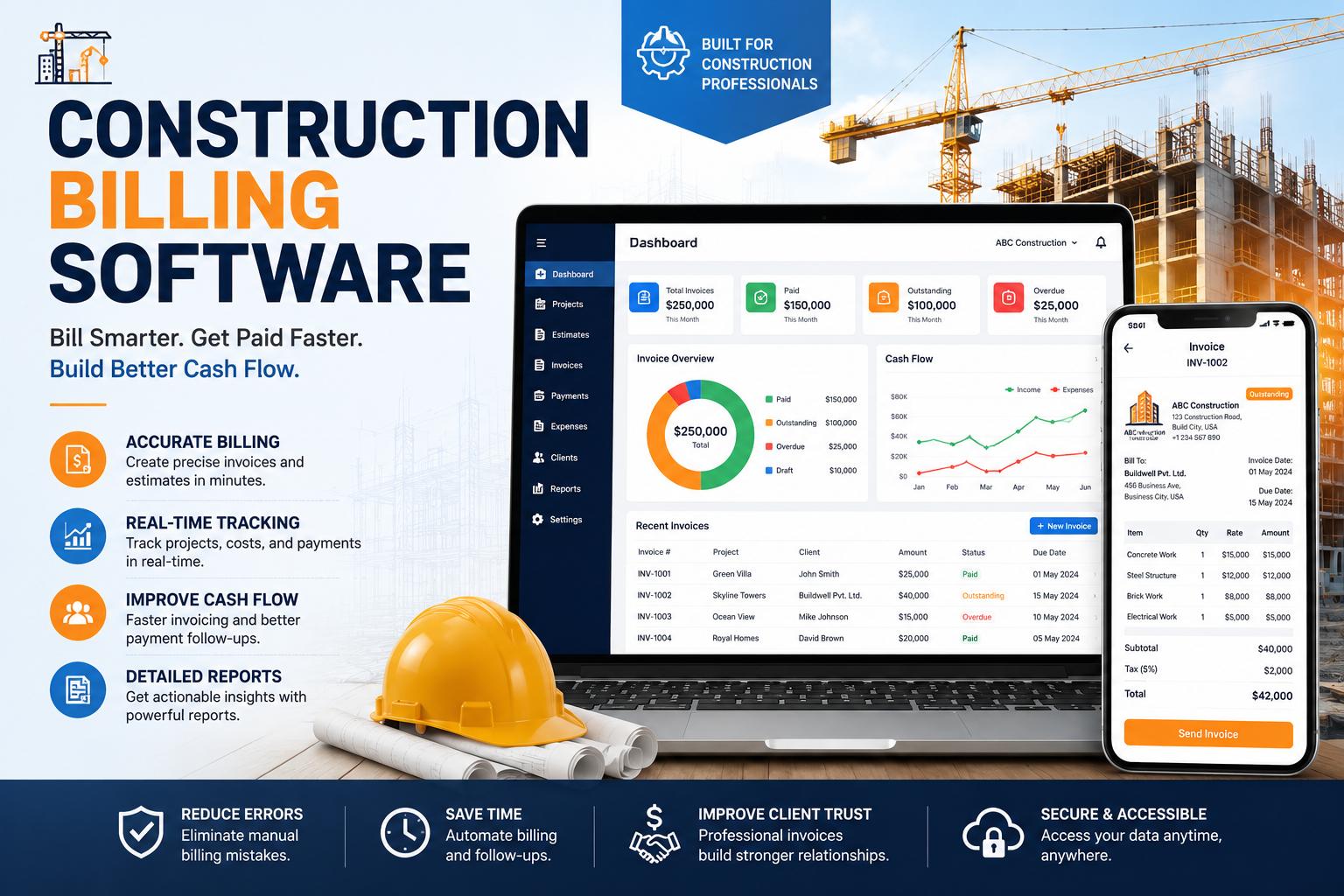
Managing invoices is one of the most important yet challenging parts of running a construction business. Whether you're a general contractor, builder, subcontractor, roofing company, or infrastructure developer, accurate invoicing directly impacts cash flow, profitability, and client relationships.
Many construction companies still rely on spreadsheets, paper invoices, and disconnected accounting tools. While these methods may work for small projects, they often create delays, errors, and payment disputes as businesses grow.
This is where construction invoicing software becomes essential. Modern solutions help contractors automate billing, track project costs, generate professional invoices, and improve overall financial management.
In this guide, we'll explore everything contractors and builders need to know about construction invoicing software, its benefits, key features, and how it fits into a complete construction management ecosystem.
What Is Construction Invoicing Software?
Construction invoicing software is a specialized digital tool designed to create, manage, and track invoices for construction projects.
Unlike standard accounting software, construction billing systems are built specifically for the industry's unique requirements, including:
- Progress billing
- Milestone-based payments
- Change orders
- Retention management
- Subcontractor payments
- Material cost tracking
- Multi-project billing
A modern construction billing software solution allows contractors to generate invoices directly from project data, reducing manual work and minimizing costly mistakes.
Why Traditional Invoicing Methods No Longer Work
Construction projects involve multiple stakeholders, changing scopes, and complex payment schedules. Managing these processes manually can lead to several problems:
Delayed Payments
Manual invoicing often results in late submissions, which can delay payments and disrupt cash flow.
Billing Errors
Incorrect quantities, missing change orders, or calculation mistakes can create disputes between contractors and clients.
Poor Project Visibility
Without centralized invoicing, project managers struggle to track profitability and outstanding payments.
Administrative Burden
Administrative teams spend excessive time preparing invoices, following up on payments, and reconciling accounts.
As construction companies grow, these issues become increasingly difficult to manage.
Key Benefits of Construction Invoicing Software
Faster Invoice Creation
Automated systems generate invoices using project data, reducing hours of manual work.
Improved Cash Flow
Timely invoicing helps contractors receive payments faster and maintain healthy cash reserves.
Better Accuracy
Automated calculations reduce human errors and ensure billing reflects actual project progress.
Real-Time Financial Insights
Contractors can monitor:
- Outstanding invoices
- Payment status
- Project profitability
- Revenue forecasts
Professional Client Experience
Modern invoices look professional and provide clear documentation for clients.
Essential Features to Look For
Not all invoicing systems offer the same capabilities. Contractors should evaluate software based on their operational needs.
Project-Based Billing
The software should allow invoices to be linked directly to specific projects.
Progress Billing
Construction companies often invoice based on project milestones or completion percentages.
Change Order Management
Changes occur regularly during construction projects. The system should automatically reflect approved change orders in invoices.
Cost Tracking
Integration between invoicing and project costing helps contractors understand project profitability.
Companies using comprehensive construction project management software often benefit from connected invoicing, planning, and budgeting tools that keep all project data synchronized.
Mobile Accessibility
Field teams should be able to submit updates and approve billing information from job sites.
Payment Tracking
The software should provide visibility into paid, pending, and overdue invoices.
How Construction ERP Systems Improve Invoicing
Many growing construction firms eventually move beyond standalone invoicing software and adopt complete ERP platforms.
Modern construction ERP systems combine:
- Project management
- Cost estimation
- Planning
- CRM
- Supplier management
- Accounting
- Invoicing
into one centralized environment.
This eliminates duplicate data entry and improves collaboration across departments.
For example, when project managers update work progress, invoice amounts can be generated automatically based on approved milestones.
Construction Expansion and Operational Challenges
The need for efficient invoicing becomes even more important when construction companies expand internationally.
Many contractors entering the European market choose to establish a Dutch entity through Dutch BV formation services to access business opportunities across the EU. A properly structured business foundation helps contractors manage projects, employees, suppliers, and financial reporting more efficiently.
As businesses scale into new markets, invoice management, compliance requirements, and project accounting become increasingly complex, making automation essential.
The Role of Construction ERP Software in Billing Management
While invoicing is critical, it should not operate in isolation.
A complete construction ERP software platform connects billing with:
- Project schedules
- Resource allocation
- Procurement
- Workforce management
- Budget tracking
This integration allows contractors to maintain complete visibility over every stage of the project lifecycle.
When invoices are linked to actual project performance, companies gain greater control over profitability and cash flow.
Common Invoicing Challenges Faced by Contractors
Multiple Active Projects
Managing invoices across several projects simultaneously can create confusion and increase administrative workload.
Change Orders
Untracked change orders often result in lost revenue.
Delayed Approvals
Project approvals that remain pending can delay invoice generation.
Supplier Costs
Without accurate supplier tracking, project margins may suffer.
Many contractors solve this issue by integrating invoicing with supplier management software for construction business, ensuring procurement costs are automatically reflected in project budgets and billing records.
How Construction Invoicing Software Supports Growth
Growing construction businesses need systems that can scale alongside their operations.
Modern invoicing solutions help companies:
- Manage higher project volumes
- Reduce administrative costs
- Improve billing accuracy
- Accelerate payment cycles
- Support multi-location operations
- Enhance financial reporting
This allows management teams to focus on business development rather than manual paperwork.
International Contractors and Business Setup
International builders and contractors frequently enter new markets to pursue infrastructure and commercial projects.
Before starting operations in the Netherlands, many companies use Netherlands company registration services to establish a legal presence and comply with local regulations. Once operational, these businesses require scalable financial systems that can handle project billing, workforce costs, and contractor payments efficiently.
Combining a strong legal structure with digital construction management tools creates a foundation for sustainable growth.
Choosing the Right Construction Invoicing Software
When evaluating software, contractors should consider:
Company Size
Small contractors may require basic invoicing tools, while larger firms often need ERP-level functionality.
Integration Capabilities
The software should integrate with:
- Accounting systems
- Project management tools
- CRM platforms
- Payroll systems
Ease of Use
A user-friendly interface encourages adoption across teams.
Industry Specialization
Solutions designed specifically for construction generally outperform generic accounting platforms.
Scalability
Choose software that can support future growth and additional projects.
Why Builders Are Moving Toward Integrated Platforms
The construction industry is becoming increasingly digital. Contractors no longer want separate tools for invoicing, planning, estimating, and customer management.
Integrated construction ERP solutions allow businesses to manage every aspect of operations from a single platform.
With centralized data, teams can:
- Improve collaboration
- Reduce errors
- Increase efficiency
- Strengthen financial control
- Deliver projects more profitably
Conclusion
Construction invoicing software has evolved from a simple billing tool into a critical component of modern construction management. Contractors who continue relying on spreadsheets and manual processes often face payment delays, administrative inefficiencies, and reduced profitability.
Today's leading construction businesses use integrated systems that combine invoicing, project management, cost tracking, and financial reporting into one platform.
Whether you're a small contractor or a large infrastructure company, investing in the right construction invoicing software can improve cash flow, streamline operations, and support long-term growth. As construction projects become more complex and competitive, digital invoicing solutions are no longer optional—they are essential for sustainable success.
- Managerial Effectiveness!
- Future and Predictions
- Motivatinal / Inspiring
- Fitness and Wellness
- Medical & Health
- Manufacturing
- Education
- Real-Estate
- Food Industry
- Hospitality
- Online Games
- Sports
- Home Services
- Civil Engineering
- Safety and Protection
- Software Products & Services
- Fashion and Jewellery
- Artificial Intelligence
- Entrepreneurship
- Mentoring & Guidance
- Marketing
- Networking
- HR & Recruiting
- Literature
- Shopping
- Career Management & Advancement