

 SkillClick
How Fuel Cell Powertrains Are Advancing Clean Mobility
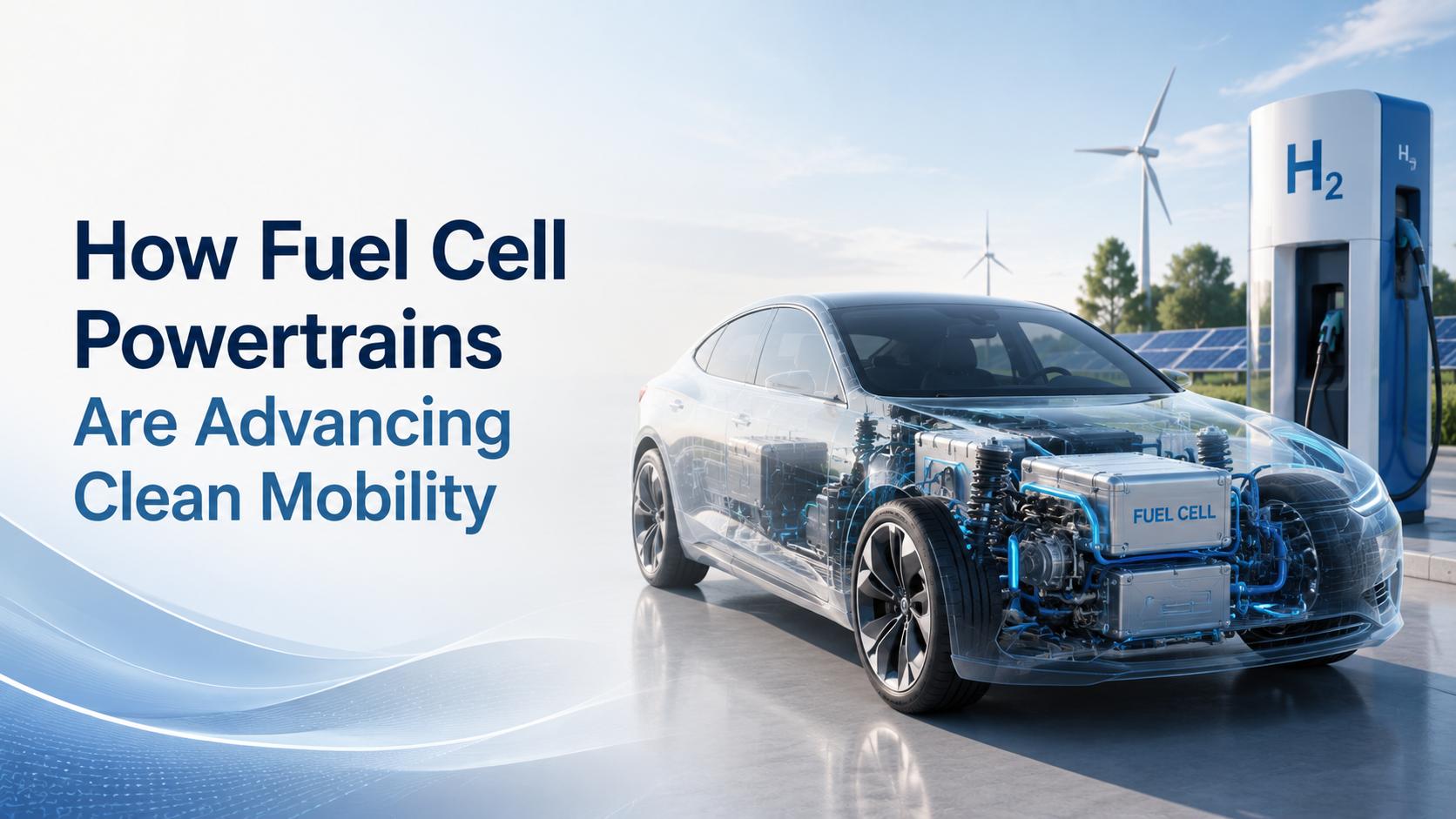
The transition toward lower-emission transportation is encouraging vehicle manufacturers and mobility stakeholders to examine propulsion technologies beyond conventional internal combustion engines. Fuel cell powertrains are becoming part of this discussion because they combine electric propulsion with hydrogen-based electricity generation. Their relevance is particularly visible in transportation applications where driving range, vehicle utilization, and refueling time influence operational decisions.
Unlike battery-only vehicles that primarily store electricity before a journey, fuel cell electric vehicles generate electricity onboard through an electrochemical process. Growing interest in hydrogen mobility powertrain technologies reflects broader efforts to assess how alternative propulsion systems can support cleaner transport. The resulting electricity powers an electric motor, while a battery may assist with energy recovery and temporary power requirements.
Research published by MarkNtel Advisors estimates the fuel cell powertrain sector at around USD 688 million in 2026 and projects it to reach approximately USD 928 million by 2032, representing a CAGR of 5.11% during 2026–2032. These figures indicate continued attention toward hydrogen-based propulsion as manufacturers, component developers, infrastructure providers, and policymakers examine practical pathways for transport decarbonization.
Understanding the Fuel Cell Powertrain Architecture
A fuel cell powertrain is an electric propulsion system in which hydrogen is converted into electrical energy. The fuel cell stack forms the central part of the system, supported by hydrogen storage, air supply, thermal management, power electronics, battery components, and an electric drive motor. Each component must operate in coordination to maintain power delivery, vehicle efficiency, and thermal stability under changing driving conditions.
Polymer electrolyte membrane fuel cells are commonly associated with vehicle applications. Hydrogen enters the anode side of the fuel cell, while oxygen is supplied to the cathode. An electrochemical reaction separates hydrogen into protons and electrons. The movement of electrons through an external circuit produces electricity, while protons eventually combine with oxygen and electrons to form water and heat. The U.S. Department of Energy explains that hydrogen fuel cells can generate electricity efficiently while producing water at the point of operation.
Why Heavy-Duty Transport Is Receiving Attention
Heavy commercial vehicles operate under different conditions from passenger cars. Long-distance routes, substantial payloads, predictable duty cycles, and limited tolerance for prolonged downtime create specific propulsion requirements. Hydrogen fuel cell systems are being evaluated for these applications because stored hydrogen can supply onboard electricity without depending entirely on a large traction battery for the full driving range.
Refueling characteristics also influence the discussion around fuel cell trucks and buses. Fleet operators generally prioritize vehicle availability and route continuity, making energy replenishment time an important operational consideration. The U.S. Department of Energy's Alternative Fuels Data Center notes that fuel cell electric vehicles use hydrogen to produce electricity and can refuel in a manner closer to conventional vehicle operations than lengthy battery charging cycles.
However, the suitability of fuel cell powertrains varies by vehicle application. Urban passenger vehicles with regular access to charging may follow a different electrification pathway from long-haul trucks, intercity buses, or high-utilization commercial fleets. This distinction is encouraging technology developers to evaluate propulsion solutions according to duty cycle rather than treating all road transport requirements as technically identical.
Fuel Cell Systems Are Becoming More Integrated
Powertrain development increasingly focuses on complete system integration rather than fuel cell stack performance alone. Air compressors, pumps, humidification systems, cooling circuits, hydrogen controls, batteries, and power electronics affect overall efficiency and reliability. Engineers therefore examine how the stack and balance-of-plant components interact under acceleration, braking, cold starts, temperature changes, and sustained high-load operation.
Hybridization is another important aspect of fuel cell vehicle design. A battery can capture energy through regenerative braking and provide additional power during periods of rapid acceleration. The fuel cell system can then operate within a managed power range while continuously supplying electrical energy. This combination allows designers to balance fuel cell sizing, battery capacity, energy recovery, and expected vehicle performance.
Hydrogen Infrastructure Remains a Critical Factor
The technical capability of a fuel cell vehicle does not independently determine adoption. Hydrogen production, transportation, storage, and refueling infrastructure must develop alongside vehicle deployment. A commercial fleet may require dependable access to hydrogen at depots or along major freight corridors, while passenger vehicle adoption generally depends on a broader public refueling network.
Hydrogen production pathways also affect the wider environmental assessment of fuel cell mobility. Electrolysis can produce hydrogen using electricity, but the emissions profile depends significantly on the source of that electricity. According to the U.S. Department of Energy, electrolysis linked with renewable or nuclear energy can provide low-emission hydrogen pathways, although production cost and energy efficiency remain important considerations.
Engineering Priorities Are Shaping Future Development
Durability, power density, system cost, cold-start capability, and hydrogen storage continue to influence fuel cell powertrain engineering. Vehicle systems must withstand repeated load changes and extensive operating hours without compromising performance. These requirements become particularly demanding in buses and heavy trucks, where daily utilization can place sustained stress on propulsion components and supporting thermal management systems.
Manufacturing scale is equally important. Fuel cell stacks rely on specialized materials, catalysts, membranes, bipolar plates, and precisely engineered supporting components. Improvements in material utilization and manufacturing processes can influence system economics. Greater standardization across selected components may also help suppliers develop more consistent production methods as vehicle programs progress from demonstration projects toward wider commercial deployment.
A Complementary Path Within Transport Electrification
Fuel cell powertrains are unlikely to replace every propulsion technology with a single universal solution. Instead, hydrogen-based electric propulsion is developing as one option within a broader transport electrification landscape. Battery-electric vehicles, fuel cell systems, and other lower-emission technologies may serve different operating environments depending on route length, infrastructure access, payload requirements, and energy availability.
The continuing development of fuel cell powertrains highlights how clean mobility is becoming increasingly application-specific. Progress in stack design, balance-of-plant integration, hydrogen availability, and commercial vehicle engineering will influence where the technology is technically and operationally suitable. As transport systems pursue lower emissions, fuel cell propulsion is likely to remain an important area of engineering evaluation, particularly for demanding and high-utilization mobility applications.
- Managerial Effectiveness!
- Future and Predictions
- Motivatinal / Inspiring
- Fitness and Wellness
- Medical & Health
- Manufacturing
- Education
- Real-Estate
- Food Industry
- Hospitality
- Online Games
- Sports
- Home Services
- Civil Engineering
- Safety and Protection
- Software Products & Services
- Fashion and Jewellery
- Artificial Intelligence
- Entrepreneurship
- Mentoring & Guidance
- Marketing
- Networking
- HR & Recruiting
- Literature
- Shopping
- Career Management & Advancement