

 SkillClick
Panasonic vs Dawlance Air Conditioner: Which One Should You Buy?
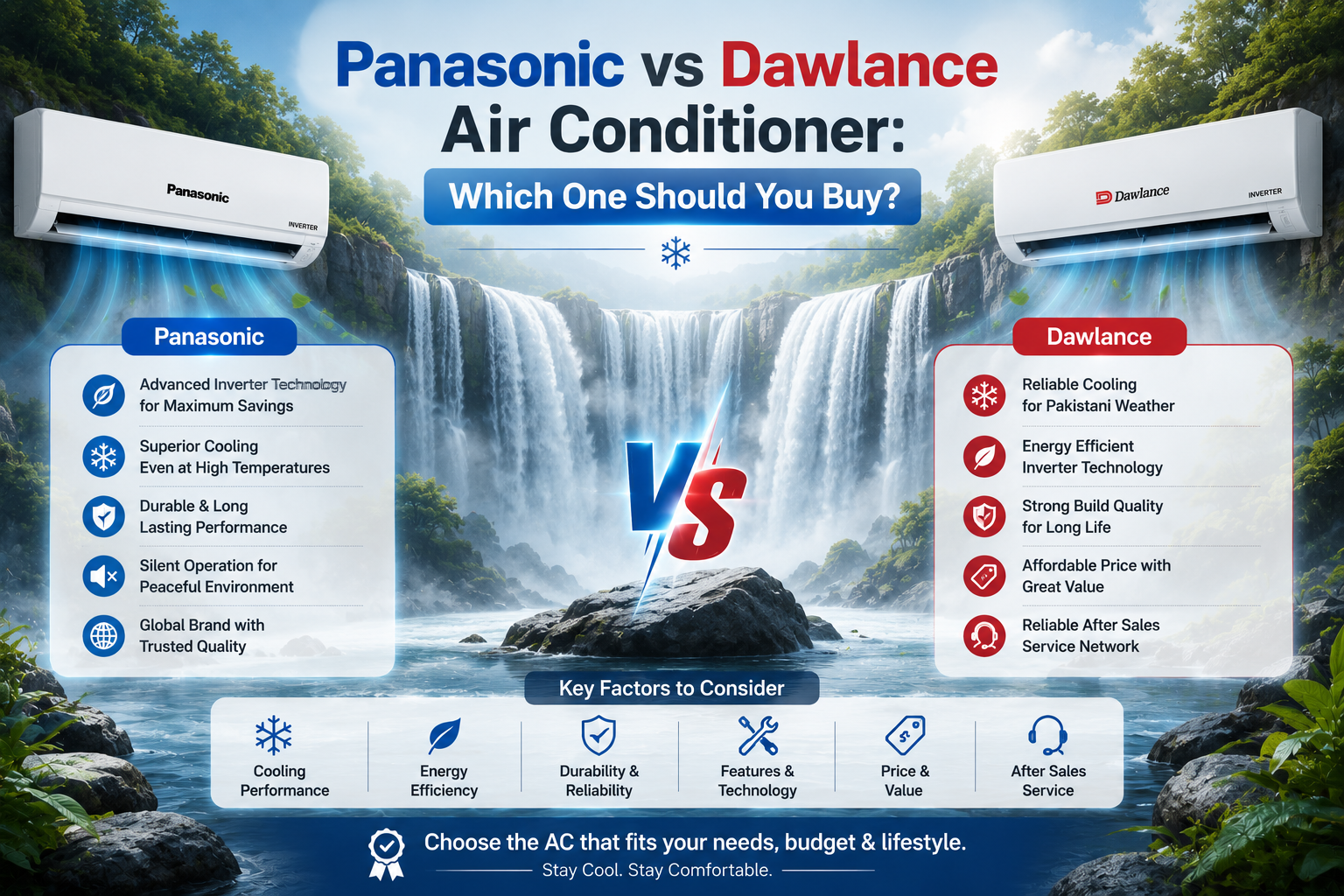
When it's time to buy a new air conditioner in Pakistan, two brands consistently come up in almost every conversation: Panasonic and Dawlance. One brings decades of Japanese engineering and a premium global reputation, while the other has built its name on local manufacturing expertise and value-focused reliability. Both are solid choices, but they cater to slightly different priorities. This guide breaks down how they compare so you can decide which fits your home and budget better.
Brand Background: Global Engineering vs Local Expertise
Panasonic is a Japanese multinational with a long history of precision engineering across electronics and home appliances. Its air conditioners are known for smart, sensor-driven cooling and a strong focus on air quality, reflecting decades of R&D investment in climate technology.
Dawlance, on the other hand, is a Pakistani manufacturer that has been producing home appliances locally for decades. This local manufacturing base gives Dawlance a distinct edge in one important area: its air conditioners are engineered specifically around Pakistani conditions, including extreme heat, dusty environments, and unstable voltage supply, rather than being adapted from designs meant for milder climates.
Neither approach is inherently better — it depends on whether you value global brand engineering or locally-tuned reliability at a more accessible price point.
Inverter Technology: How They Compare
Both brands offer strong inverter lineups, and the core benefit is the same regardless of which you choose: a Dawlance inverter AC or a Panasonic inverter model both continuously adjust compressor speed to match room cooling demand, rather than cycling on and off like older fixed-speed units. This results in lower electricity bills, quieter operation, and more consistent room temperatures for both brands.
Where they tend to differ is in specific technology emphasis:
- Panasonic leans heavily on Econavi sensor technology, which detects human presence and sunlight intensity to fine-tune cooling output automatically, minimizing wasted energy in empty or shaded rooms.
- Dawlance focuses more on climate resilience, with features like T3 Tropical Compressors rated for ambient temperatures up to 53°C and Low Voltage Startup (LVS) technology that keeps units running smoothly even when voltage drops significantly — a common issue in many parts of Pakistan.
If your priority is smart, adaptive energy-saving, Panasonic has an edge. If your priority is dependable operation during extreme heat and unstable power supply, Dawlance is purpose-built for exactly that.
Feature Comparison
Both brands pack their inverter models with features designed to improve daily comfort, though the specifics differ:
Air Quality – Panasonic's Nanoe-G technology and PM 2.5 filters are specifically designed to neutralize odors, inhibit bacteria growth, and capture fine particulate matter, making it a strong choice for households concerned about allergies or air pollution. Dawlance's Self-Cleaning technology focuses more on preventing mold and dust buildup inside the unit itself, which indirectly supports cleaner air over time.
Heating Function – Many Dawlance models include a reversible Heat & Cool function as standard, turning the AC into a year-round appliance rather than a seasonal one. Panasonic also offers heat pump models, though availability varies more by specific model line.
Corrosion Protection – Dawlance's Gold Fin coating on both condenser and evaporator coils is a consistent feature across most inverter models, protecting against rust in humid or dusty conditions. Panasonic offers similar coil protection technology, though it's often marketed under different naming depending on the series.
Noise Levels – Both brands offer dedicated Sleep or Quiet modes, though Panasonic units are generally noted for slightly quieter operation at lower fan speeds, which matters for bedroom installations.
Capacity Guide: Choosing the Right Tonnage
Regardless of which brand you lean toward, getting the tonnage right matters just as much as the brand itself:
- 1 Ton (12,000 BTU): Suitable for smaller bedrooms, roughly up to 150 sq. ft.
- 1.5 Ton (18,000 BTU): Better for larger bedrooms or lounges, generally 150-250 sq. ft.
- 2 Ton and above: Recommended for open living rooms, offices, or spaces with heavy sunlight exposure.
An undersized unit — from either brand — will run constantly without properly cooling the room, increasing electricity costs and shortening compressor life. An oversized unit cools quickly but doesn't dehumidify well, leaving the room feeling damp.
Pricing: Where the Real Difference Shows Up
This is where the two brands separate most clearly. Dawlance AC price points are generally more accessible across most tonnage categories, reflecting its local manufacturing base and focus on value-driven pricing. Panasonic units, being imported and built around premium technology, typically sit at a higher price bracket for comparable capacity.
Neither brand's pricing is fixed for long, since costs shift due to currency fluctuations, import duties, and seasonal demand during summer. It's always worth checking current pricing from a trusted store before deciding, rather than relying on numbers you may have seen a few months ago. Beyond the sticker price, also compare:
- Compressor warranty length (Dawlance often offers extended warranties up to 10-12 years on select models)
- Local service center availability and spare parts access
- Energy efficiency ratio, which affects your long-term running costs
- Whether installation is included in the quoted price
Installment Options for Both Brands
Whichever brand you choose, spreading out the cost has become a popular way to make ownership more manageable. Many retailers offer Dawlance AC on installment plans as well as similar installment options for Panasonic units, allowing buyers to pay in monthly amounts rather than one large upfront sum. This has made it significantly easier for middle-income households to access modern inverter technology, regardless of which brand they prefer.
Before committing to any plan, compare the total payable amount against the cash price to check for markup, confirm the advance payment required, and review the monthly installment amount along with the total tenure.
So, Which One Should You Choose?
If your budget is a primary concern and you live in an area with frequent voltage fluctuations or extreme summer heat, Dawlance's locally-tuned engineering and more accessible pricing make it a practical choice. If you're prioritizing air quality features, smart sensor-based efficiency, and don't mind paying a premium for globally trusted engineering, Panasonic is worth the extra investment.
For many Pakistani households, the decision ultimately comes down to balancing upfront cost against specific feature priorities — both brands are capable of delivering reliable, energy-efficient cooling when matched correctly to your room size and usage pattern.
Frequently Asked Questions
1. Which brand offers better value for money, Panasonic or Dawlance? Dawlance generally offers more competitive pricing across comparable tonnage, while Panasonic commands a premium for its sensor technology and air purification features.
2. Are Dawlance ACs as reliable as Panasonic in extreme heat? Yes, many Dawlance models use T3 Tropical Compressors specifically rated for ambient temperatures up to 53°C, making them well-suited for Pakistan's harsh summers.
3. Can I buy either brand on installments? Yes, both Dawlance and Panasonic ACs are commonly available through installment plans at various retailers, allowing you to pay in manageable monthly amounts.
4. Does Panasonic offer better air quality features than Dawlance? Panasonic's Nanoe-G technology and PM 2.5 filters are specifically focused on air purification, giving it an edge for buyers concerned about allergies or pollution.
5. Which brand is better for areas with unstable electricity supply? Dawlance's Low Voltage Startup (LVS) technology is specifically designed to handle voltage drops, making it a strong choice for areas with frequent power fluctuations.
- Managerial Effectiveness!
- Future and Predictions
- Motivatinal / Inspiring
- Fitness and Wellness
- Medical & Health
- Manufacturing
- Education
- Real-Estate
- Food Industry
- Hospitality
- Online Games
- Sports
- Home Services
- Civil Engineering
- Safety and Protection
- Software Products & Services
- Fashion and Jewellery
- Artificial Intelligence
- Entrepreneurship
- Mentoring & Guidance
- Marketing
- Networking
- HR & Recruiting
- Literature
- Shopping
- Career Management & Advancement