

 SkillClick
Common Challenges in Enterprise Software Development and How to Overcome Them
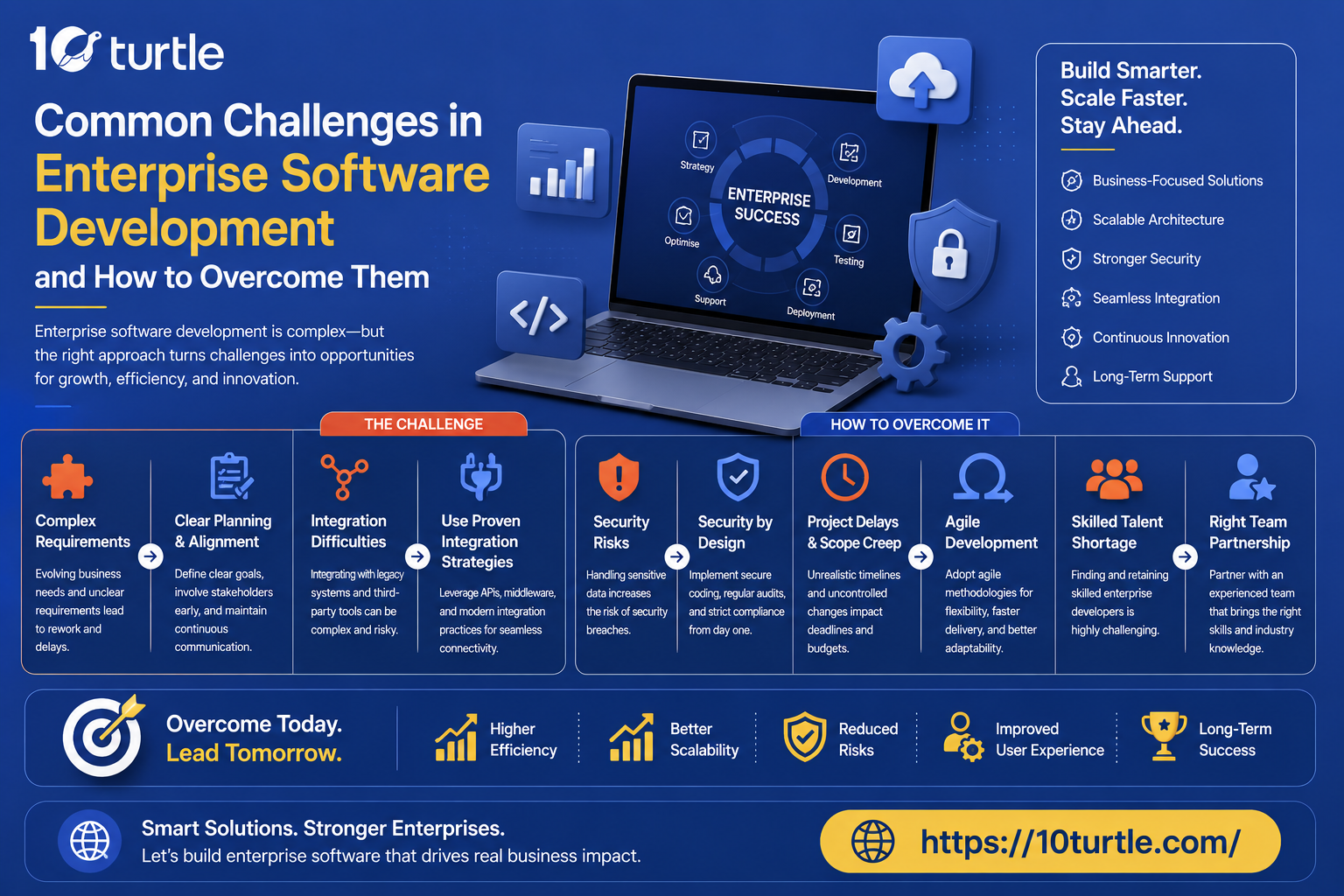
Building software for a large organization is nothing like building an app for a small startup. Enterprise software development involves complex systems, multiple stakeholders, legacy infrastructure, and strict compliance requirements that can slow down even the most experienced teams. Companies across the United States are investing heavily in digital transformation, yet many still struggle with delayed timelines, budget overruns, and systems that fail to scale. Partnering with a team that offers custom enterprise software solutions can help businesses avoid the most common pitfalls before they turn into costly setbacks. In this blog, we'll walk through the biggest challenges enterprises face during software development and practical ways to solve them.
Why Enterprise Software Projects Are So Complex
Unlike small business applications, enterprise systems typically need to support thousands of users, integrate with dozens of internal tools, and meet strict security standards. A single project might touch HR, finance, sales, and customer support departments at the same time. This complexity is exactly why so many enterprise software development projects run into trouble, and why choosing the right development partner matters so much.
1. Legacy System Integration
One of the most persistent problems in enterprise IT is connecting new applications with old, outdated infrastructure. Many US-based companies still rely on decades-old mainframes or on-premise databases that were never designed to talk to modern cloud platforms.
How to overcome it:
- Use middleware or API gateways to bridge old and new systems
- Migrate data in phases instead of all at once
- Run legacy and new systems in parallel during transition periods
2. Scalability and Performance Issues
An application that works fine for 500 users can completely break down at 50,000 users. Poor architecture decisions made early in a project often surface only after the software goes live, when fixing them becomes far more expensive.
How to overcome it:
- Choose a microservices architecture instead of a monolithic structure
- Conduct load testing before launch, not after
- Build with cloud-native scalability from day one
3. Data Security and Compliance
Enterprise applications often handle sensitive customer data, financial records, or healthcare information. In the US, businesses must comply with regulations like HIPAA, SOC 2, and CCPA, and a single security gap can lead to lawsuits, fines, or reputational damage.
How to overcome it:
- Build security into the development lifecycle from the start, not as an afterthought
- Run regular penetration testing and code audits
- Train development teams on current compliance frameworks
4. Budget Overruns and Scope Creep
It's common for a project that starts with a clear scope to balloon into something much larger halfway through. New feature requests, shifting business priorities, and unclear requirements are among the top reasons enterprise software budgets spiral out of control.
How to overcome it:
- Define a detailed project scope and requirements document upfront
- Use agile sprints with fixed budgets per cycle
- Set a formal change-request process for new feature additions
5. Poor Communication Between Stakeholders
Enterprise projects usually involve multiple departments, external vendors, and technical teams working together. When communication breaks down, teams end up building the wrong features or duplicating work.
How to overcome it:
- Assign a single point of contact for project decisions
- Hold weekly cross-functional check-ins
- Use shared project management tools for full visibility
6. Talent Shortages and Skill Gaps
Finding developers who understand both modern development frameworks and enterprise-grade architecture is harder than it sounds. Many US companies report difficulty hiring skilled engineers fast enough to meet project deadlines.
How to overcome it:
- Partner with an outsourced or nearshore development team
- Invest in ongoing training for in-house staff
- Use experienced software vendors for specialized modules
7. Resistance to Change from End Users
Even a technically excellent enterprise application can fail if employees refuse to adopt it. Poor user experience, confusing workflows, and lack of training are common reasons for low adoption rates.
How to overcome it:
- Involve end users early in the design and testing process
- Provide clear onboarding materials and training sessions
- Gather ongoing feedback after launch and iterate quickly
What's New: The Shift Toward AI-Assisted Development
A growing trend among American enterprises in 2026 is the use of AI-assisted coding tools and automated testing frameworks to speed up delivery timelines. Businesses are increasingly combining low-code platforms with custom development to reduce the time it takes to launch internal tools, while still keeping mission-critical systems built on fully custom code. This hybrid approach is helping enterprises cut development costs without sacrificing performance or security, and it's becoming a standard part of how modern software teams plan their roadmaps.
Frequently Asked Questions
Q1: What is enterprise software development?
Enterprise software development is the process of designing, building, and maintaining large-scale applications used by organizations to manage business operations such as finance, HR, sales, and customer service.
Q2: How long does it take to build enterprise software?
Timelines vary widely depending on complexity, but most enterprise projects take anywhere from six months to over a year, especially when legacy system integration is involved.
Q3: What is the biggest risk in enterprise software projects?
Scope creep and poor requirement planning are among the biggest risks, often leading to delays and budget overruns that could have been avoided with clearer upfront planning.
Q4: Should enterprises build software in-house or outsource it?
It depends on internal resources and expertise. Many companies choose a hybrid model, keeping strategic decision-making in-house while outsourcing specialized development work to experienced teams.
Q5: How can businesses reduce enterprise software development costs?
Using agile methodology, phased rollouts, and reusable code components can significantly lower costs while keeping quality high.
Final Thoughts
Enterprise software development will always come with challenges, but most of them are predictable and preventable with the right planning, tools, and team. Companies that invest in proper architecture, security practices, and clear communication from the start are far more likely to deliver software that scales with their business rather than holding it back. Whether you're modernizing legacy systems or building something entirely new, addressing these challenges early on is the key to long-term success.
- Managerial Effectiveness!
- Future and Predictions
- Motivatinal / Inspiring
- Fitness and Wellness
- Medical & Health
- Manufacturing
- Ausbildung
- Real-Estate
- Food Industry
- Hospitality
- Online Games
- Sports
- Home Services
- Civil Engineering
- Safety and Protection
- Software Products & Services
- Fashion and Jewellery
- Artificial Intelligence
- Entrepreneurship
- Mentoring & Guidance
- Marketing
- Networking
- HR & Recruiting
- Literature
- Shopping
- Career Management & Advancement