

 SkillClick
Choosing the Right Database Architecture Services for Your Business
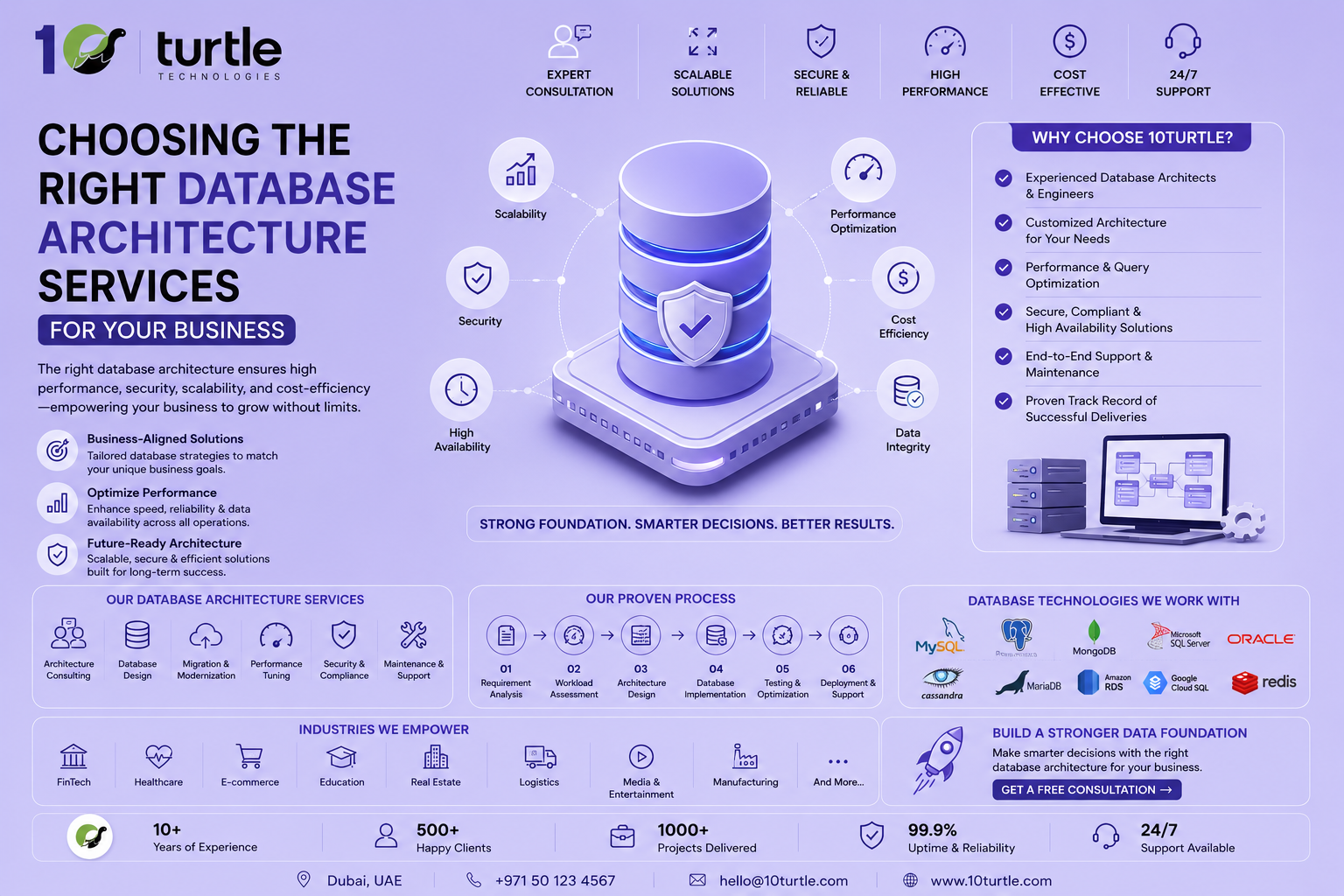
Every growing company in the United States eventually hits the same wall: the database that worked fine at 100 customers starts breaking down at 10,000. That's exactly why database architecture services exist to help you design a system that scales, stays secure, and doesn't fall apart the moment your traffic spikes. Whether you're a startup in Austin or an enterprise in New York, picking the right database design and consulting partner can be the difference between smooth growth and constant firefighting. In this guide, we'll break down what these services actually include, how to choose one, and what's changing in 2026.
What Are Database Architecture Services?
Database architecture services cover the planning, design, and structuring of how your business stores, organizes, and retrieves data. This isn't just about picking MySQL vs PostgreSQL it's a full process that includes:
- Data modeling and schema design
- Choosing between relational, NoSQL, or hybrid databases
- Cloud database migration (AWS, Azure, Google Cloud)
- Performance tuning and query optimization
- Backup, disaster recovery, and security planning
- Ongoing database management and monitoring
A good architecture doesn't just store data it makes sure your applications run fast, your reports are accurate, and your systems can grow without a total rebuild every two years.
Why This Matters More in the USA Right Now
American businesses are dealing with a few pressures that make database architecture decisions higher-stakes than they used to be:
1. Data privacy laws are getting stricter. With the California Consumer Privacy Act (CCPA), Virginia's VCDPA, and similar state-level laws spreading across the country, how you architect your database especially around data access controls and encryption now has legal weight, not just technical weight.
2. Cloud costs are under scrutiny. Many US companies over-provisioned cloud database resources during the 2021–2023 boom and are now actively re-architecting to cut costs without losing performance. A well-designed database can cut cloud spend by 20–40% simply through better indexing and storage tiering.
3. AI workloads need different database structures. Companies integrating AI features (chatbots, recommendation engines, predictive analytics) are finding that traditional relational databases alone aren't enough they need vector databases or hybrid setups alongside their existing systems.
4. Compliance requirements are industry-specific. Healthcare companies need HIPAA-compliant architecture, fintech companies need SOC 2 and PCI-DSS alignment, and any business handling EU customer data needs GDPR-ready structures even while operating from the US.
Types of Database Architecture
Relational Databases (SQL)
Best for businesses needing strict data consistency think financial records, inventory systems, or anything involving transactions. Examples: PostgreSQL, MySQL, Microsoft SQL Server.
NoSQL Databases
Ideal for flexible, high-volume, unstructured data like user activity logs, product catalogs, or content management. Examples: MongoDB, Cassandra, DynamoDB.
NewSQL and Hybrid Architectures
A newer approach combining SQL's consistency with NoSQL's scalability increasingly popular for e-commerce and SaaS platforms handling millions of daily transactions.
Cloud-Native Database Architecture
Built specifically for platforms like AWS RDS, Azure SQL, or Google Cloud Spanner, offering auto-scaling, managed backups, and built-in redundancy a common choice for companies avoiding the overhead of managing physical servers.
How to Choose the Right Database Architecture Service Provider
When comparing top database architecture consulting companies in the USA, look for these things:
- Industry experience a healthcare-focused provider will understand HIPAA far better than a generalist.
- Cloud certifications AWS Certified Database Specialty, Azure Database Administrator, or Google Cloud certifications indicate real hands-on expertise.
- Scalability planning ask how they design for 10x growth, not just current needs.
- Security-first approach encryption at rest and in transit should be non-negotiable.
- Transparent pricing avoid vague retainer models; ask for clear deliverables tied to cost.
- Post-launch support architecture isn't a one-time job; ongoing monitoring and tuning matter just as much as the initial build.
Common Mistakes Businesses Make
- Choosing a database type based on trends rather than actual data needs
- Skipping load testing before going live
- Ignoring backup and disaster recovery until after an incident happens
- Underestimating the cost of database migration downtime
- Not planning for regulatory compliance from day one
The Cost of Getting Database Architecture Wrong
A poorly designed database doesn't just slow things down it creates real financial risk. Downtime from database failures can cost mid-sized US businesses thousands of dollars per hour in lost transactions, and a security breach caused by weak database access controls can lead to regulatory fines plus reputational damage that's much harder to recover from than the technical fix itself.
Frequently Asked Questions
Q1: How much do database architecture services cost in the USA?
Costs vary widely small business projects can start around $5,000–$15,000 for a full redesign, while enterprise-level architecture with cloud migration and compliance work can run into six figures. Ongoing management is usually billed monthly or hourly.
Q2: How long does it take to redesign a database architecture?
A small to mid-sized project typically takes 4–12 weeks, depending on data volume, migration complexity, and whether you need zero-downtime deployment.
Q3: Do I need a custom database architecture, or can I use an off-the-shelf solution?
If your business has standard needs (basic CRM, simple inventory), managed cloud databases work fine. Custom architecture becomes worth it once you're dealing with complex relationships, high transaction volume, or strict compliance rules.
Q4: What's the difference between database architecture and database administration?
Architecture is the design phase how data is structured and organized. Administration is the ongoing maintenance backups, updates, performance monitoring. Most businesses need both, often from the same provider.
Q5: Can database architecture services help reduce cloud costs?
Yes. Poor indexing, redundant storage, and inefficient queries are common causes of inflated cloud bills. A proper architecture review often identifies savings within the first month.
Final Thoughts
Picking the right database architecture service isn't just an IT decision it's a business decision that touches security, cost, and how fast you can grow. Take the time to evaluate providers based on real experience, not just marketing claims, and make sure whatever system you build today can still handle your business three years from now.
- Managerial Effectiveness!
- Future and Predictions
- Motivatinal / Inspiring
- Fitness and Wellness
- Medical & Health
- Manufacturing
- Onderwijs
- Real-Estate
- Food Industry
- Hospitality
- Online Games
- Sports
- Home Services
- Civil Engineering
- Safety and Protection
- Software Products & Services
- Fashion and Jewellery
- Artificial Intelligence
- Entrepreneurship
- Mentoring & Guidance
- Marketing
- Networking
- HR & Recruiting
- Literature
- Shopping
- Career Management & Advancement